Samson et Cie.
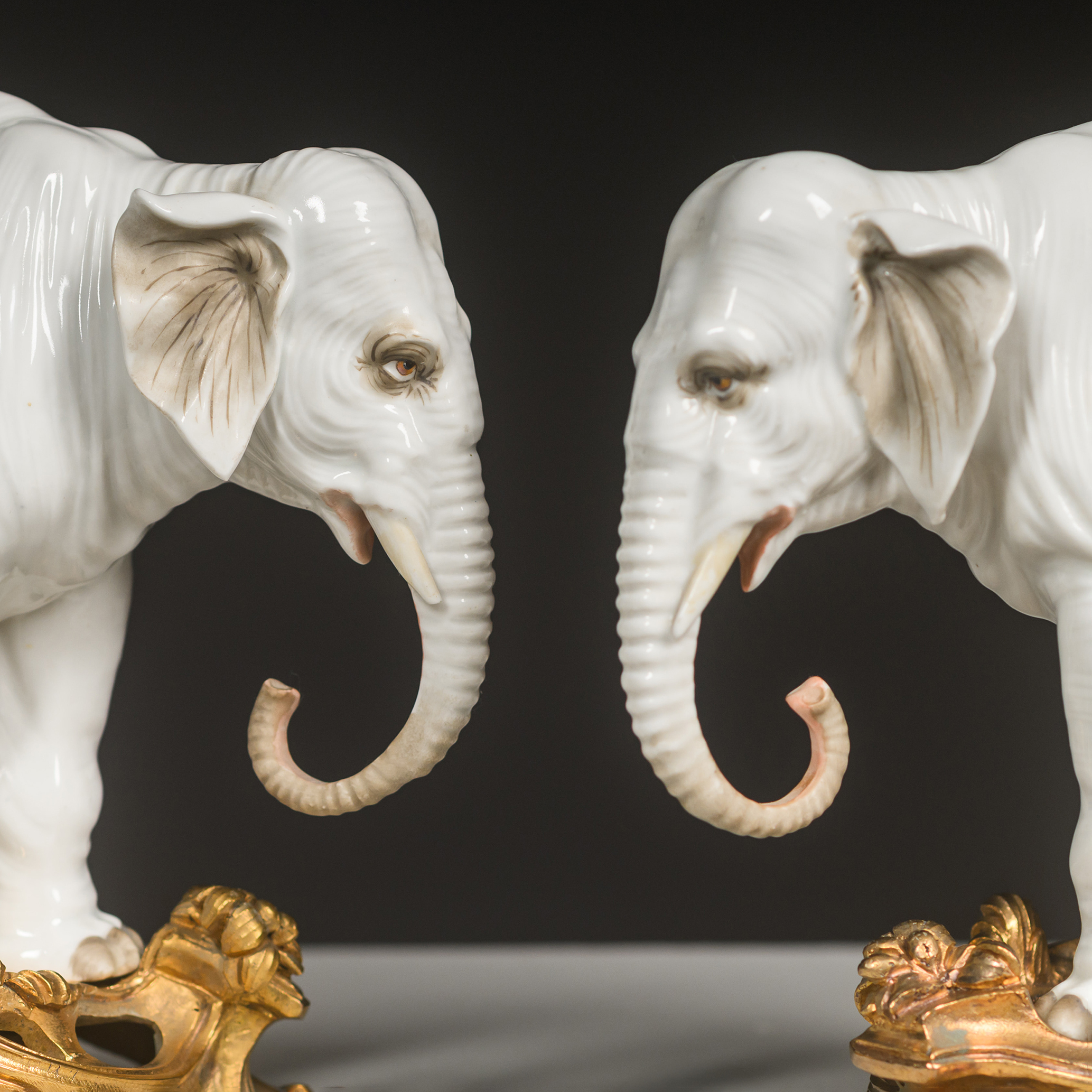
A Pair of Porcelain Elephants, Attributed to Samson
£16,000
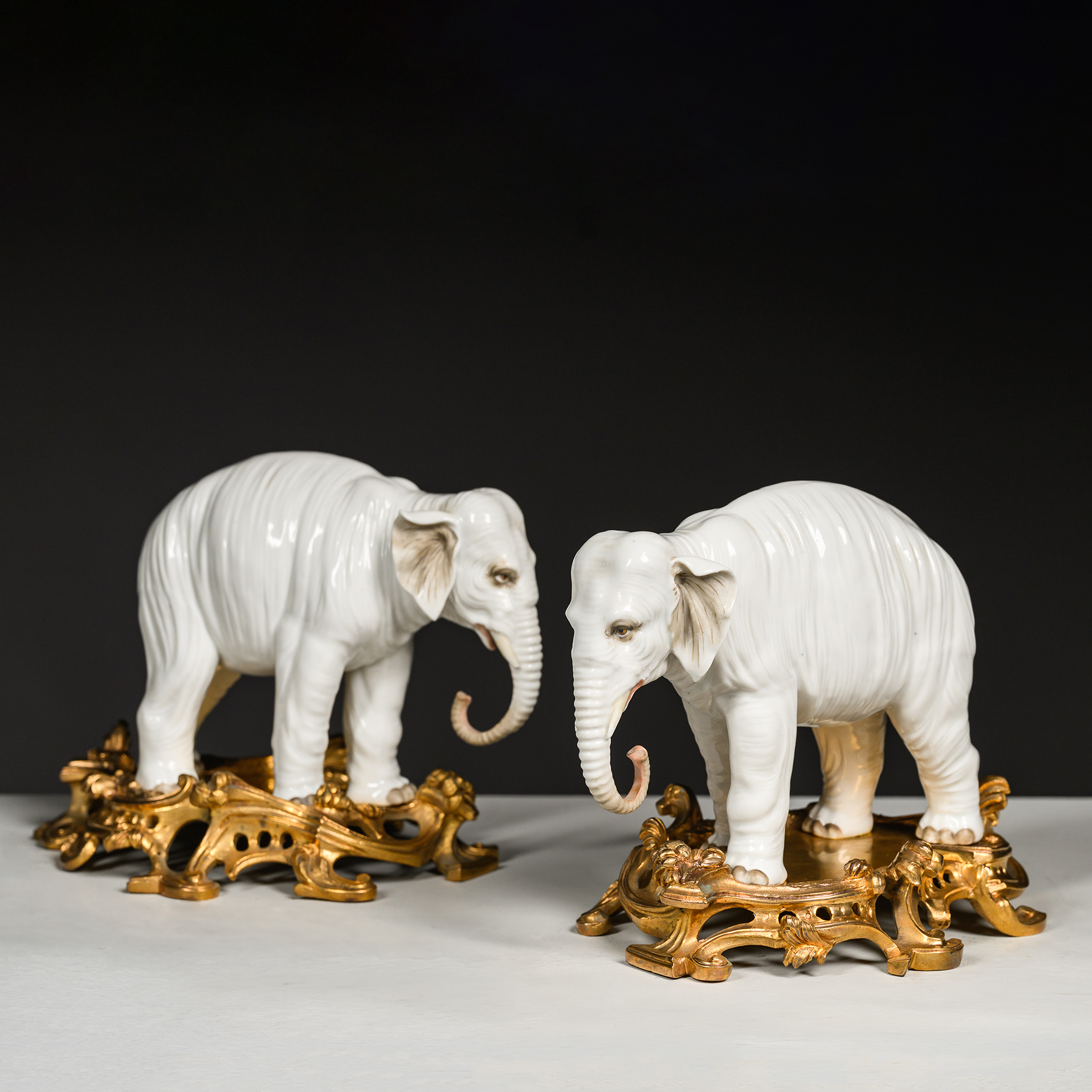
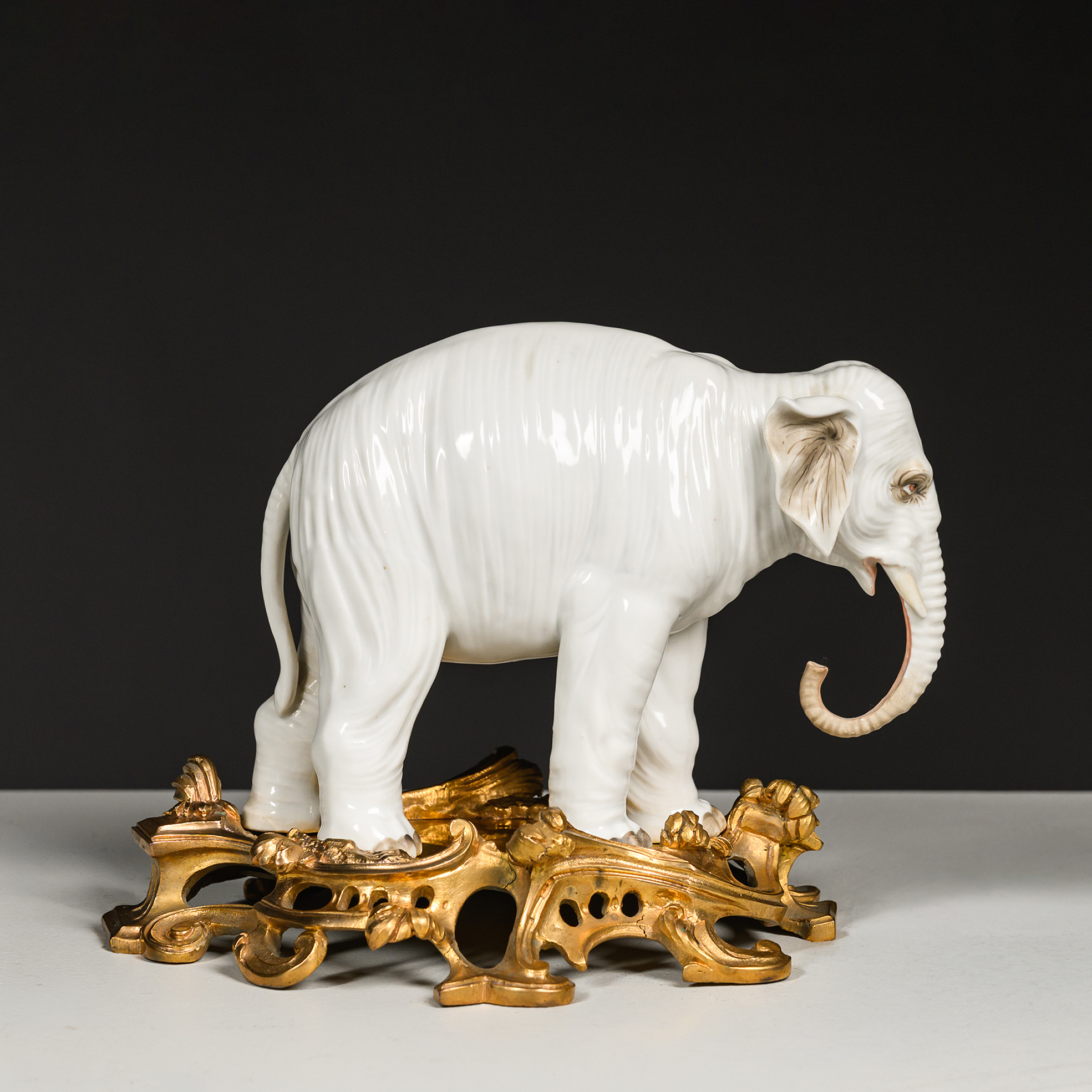
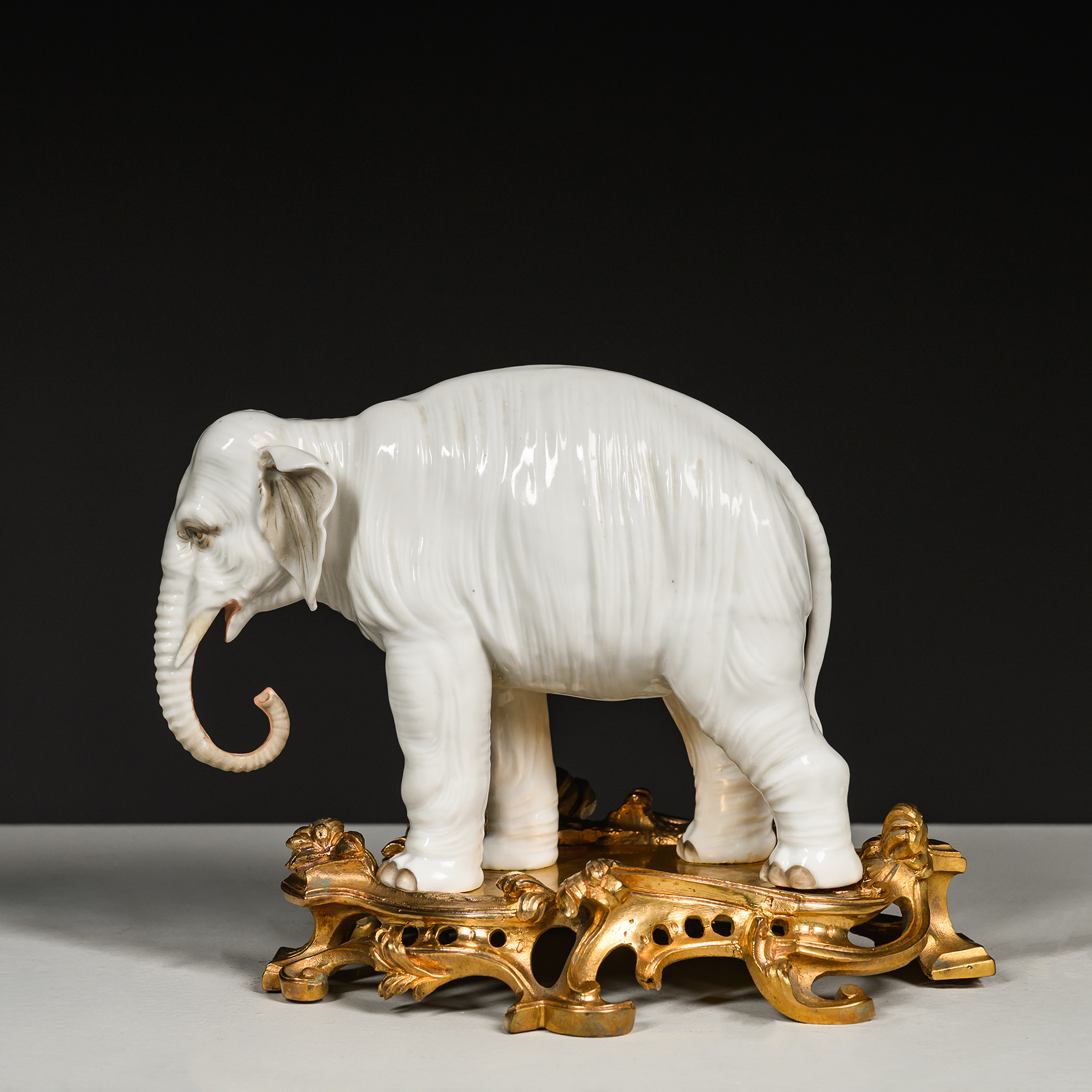
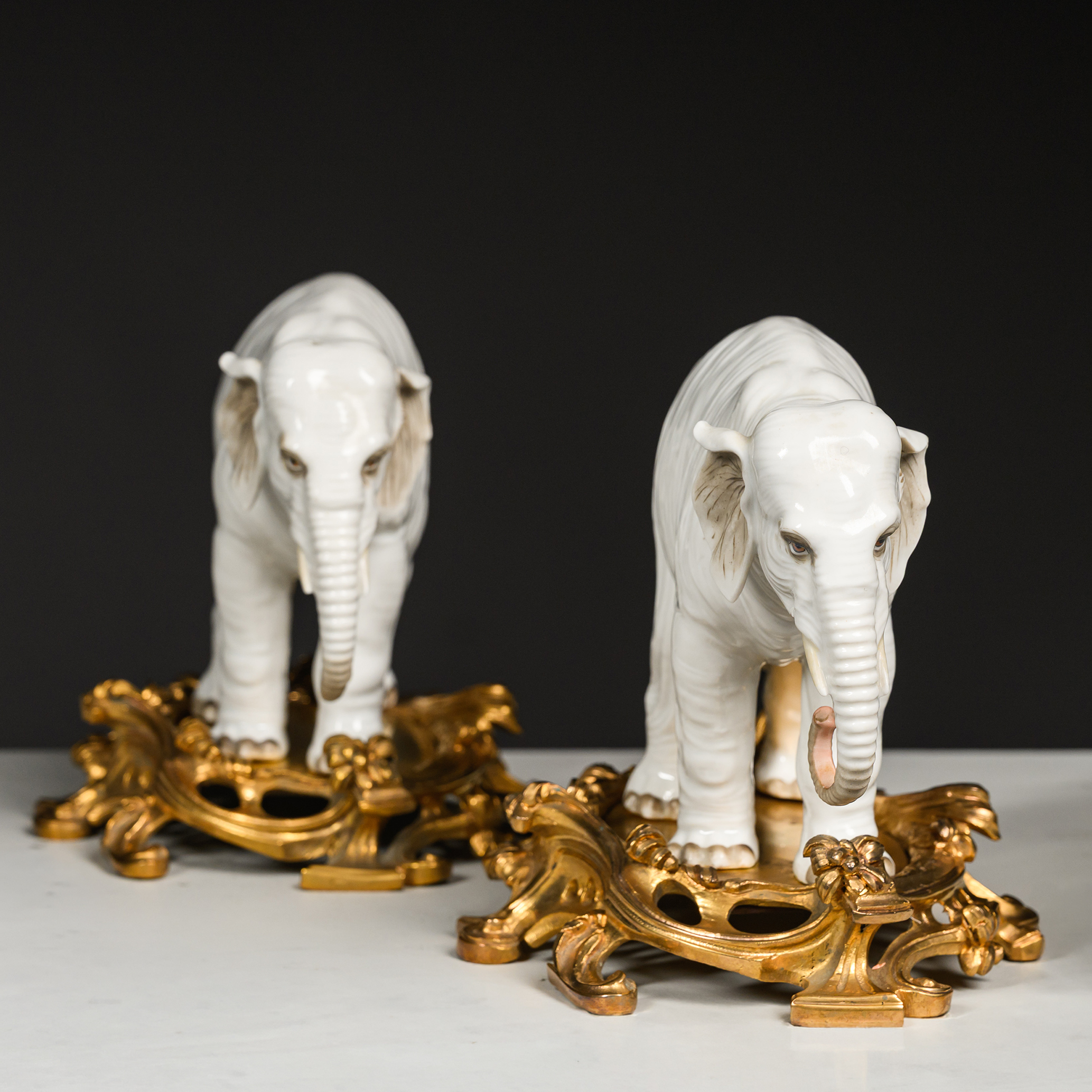
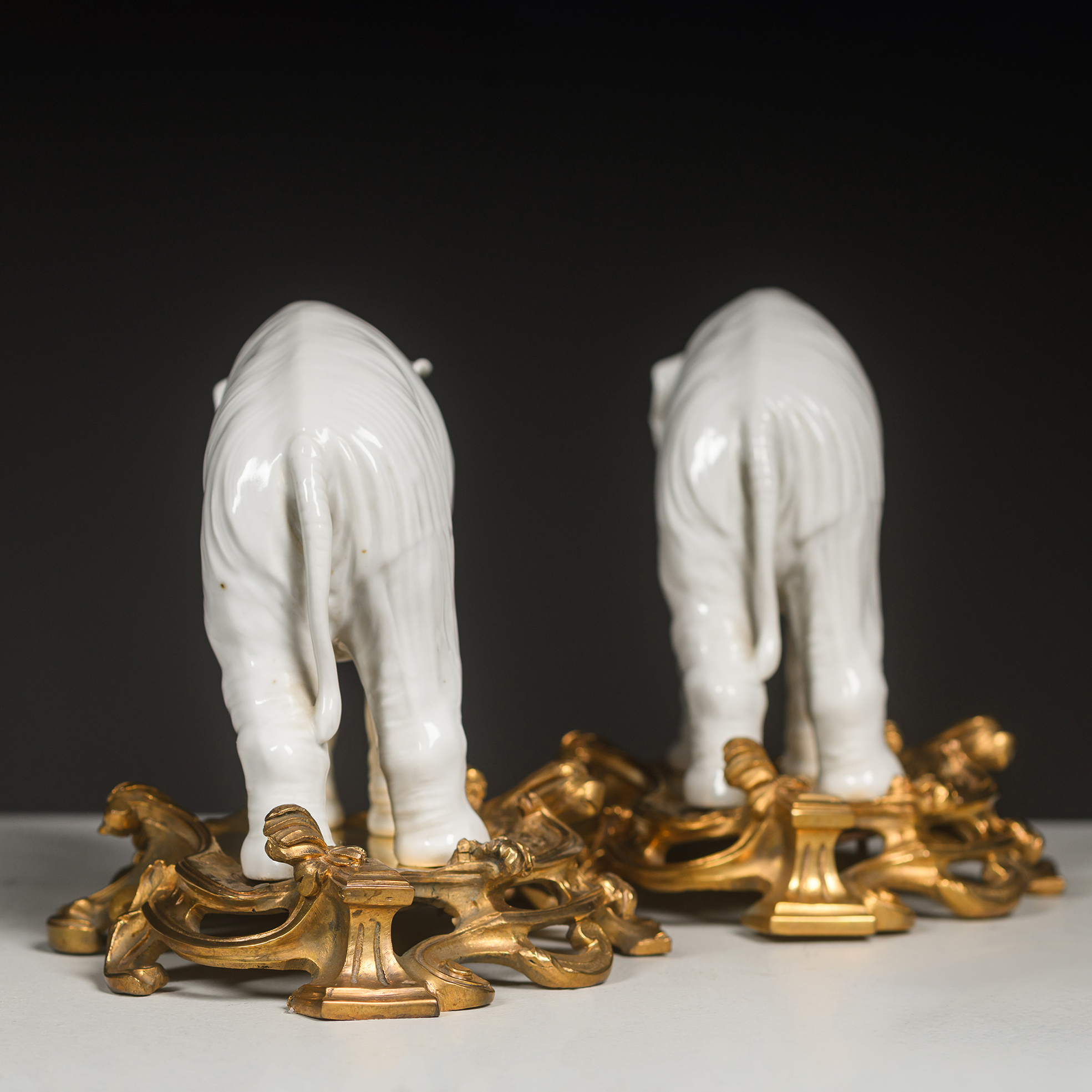
A Pair of White Glaze Porcelain Elephants On Gilt-Bronze Bases, Attributed to Samson.Naturalistically modelled, the gilt-bronze bases cast with strapwork...
Dimensions
Height: 17 cm (7 in)Width: 22 cm (9 in)
Depth: 16 cm (7 in)
Weight: 1.5 kg

 Print
Description
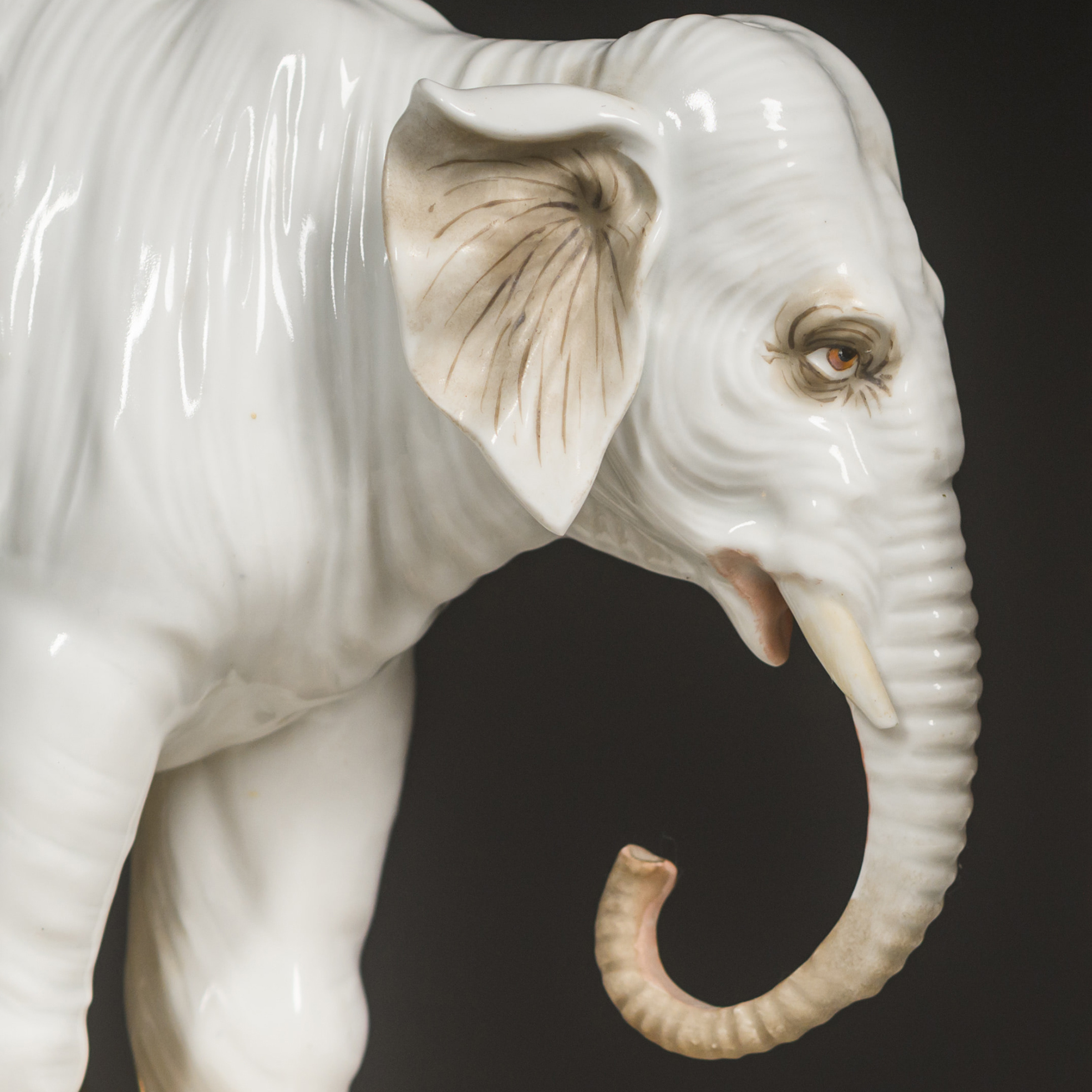
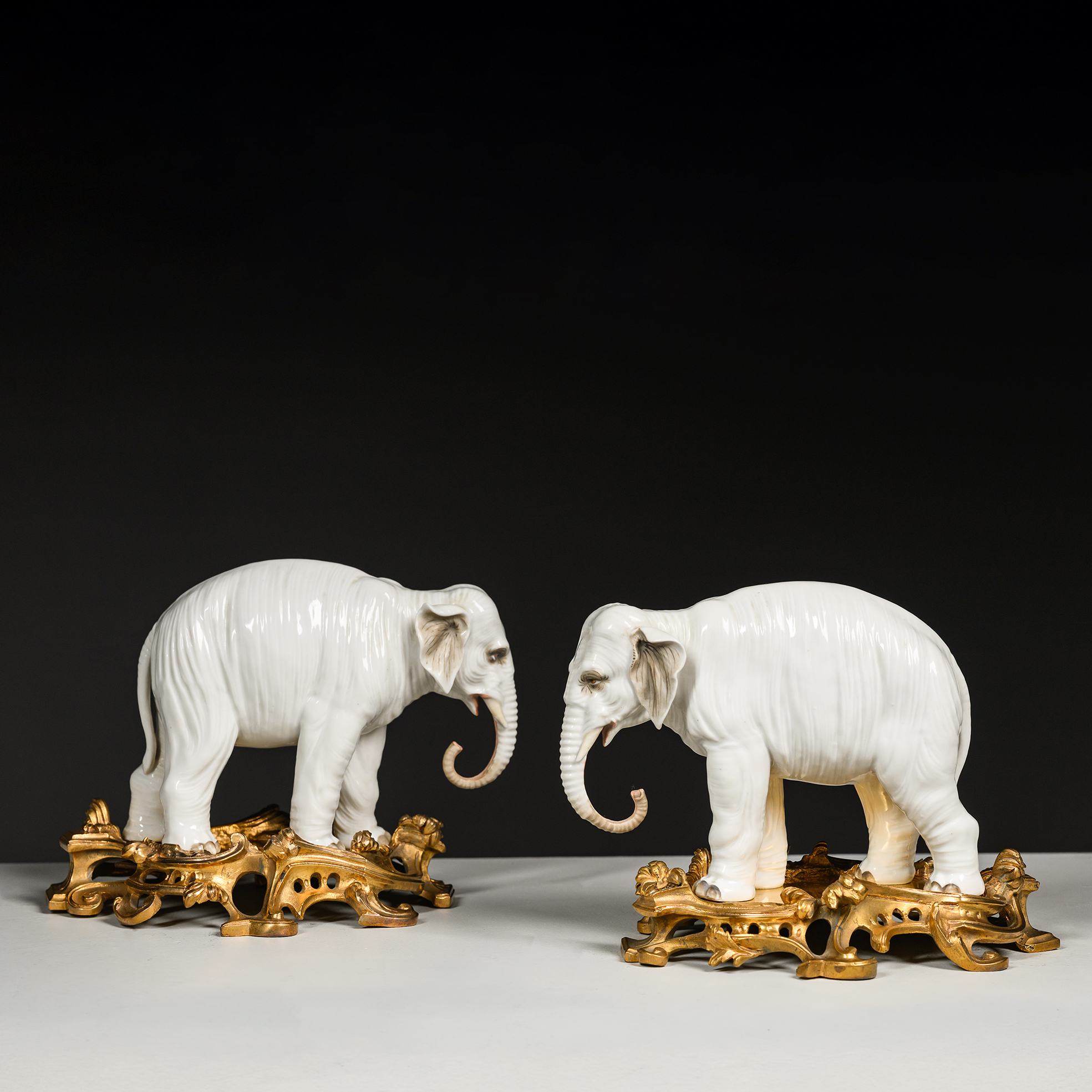
A Pair of White Glaze Porcelain Elephants On Gilt-Bronze Bases, Attributed to Samson.
Naturalistically modelled, the gilt-bronze bases cast with strapwork and scrolls.
France, Circa 1880.
These charmingly modelled elephants are attributed to the Samson porcelain manufactory established in Paris 1845. Samson specialised in making high-quality artistic copies of rare and historic ceramics including of Asian and Middle Eastern styles and from European factories such as Sèvres, Meissen, Chelsea and Worcester.
These elephants recall various models produced by the Meissen manufactory in the 18th century, following the European trend for exoticism and menageries. Numerous elephant models were produced; the first model recorded as early as 1731 was sculpted by Johann Gotlieb Kirchner (1706-1768)1
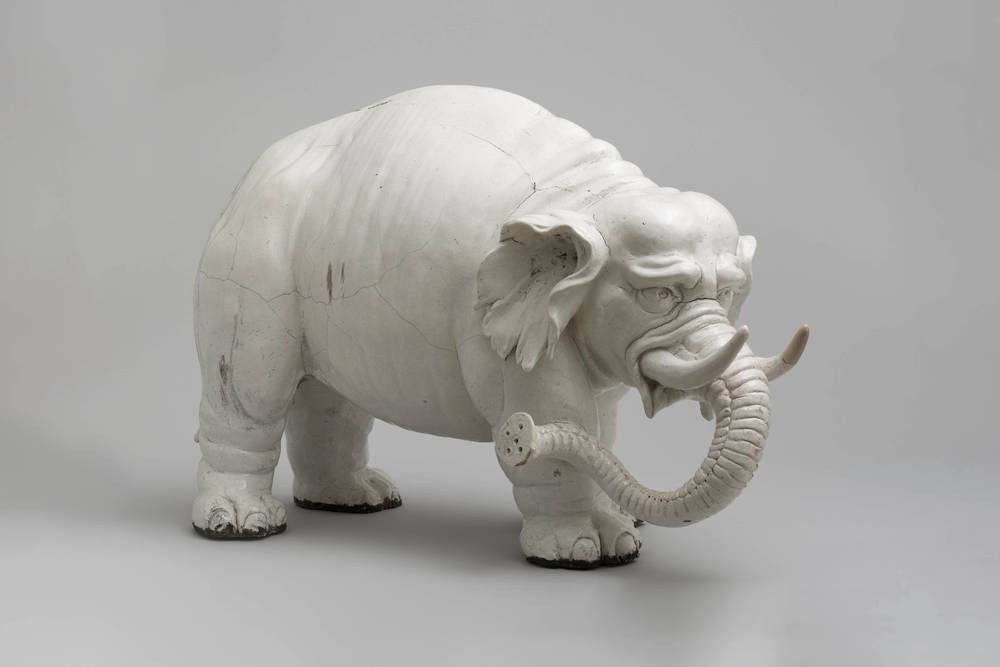
White ceramic Elephant modelled by Johann Gottlieb Kirchner for Meissen, 1731 (© Staatliche Kunstsammlungen Dresden).
Other examples attributed to Samson have sold from the the collections of The Marquis and Marquise de Ravenel; Glin Castle, County Limerick, Ireland; and from Hôtel Lambert, Paris.
Footnote:
1. S Wittwer, The Gallery of Meissen Animals, Munich, 2004, p. 308.
Date
Circa 1880
Origin
France
Medium
Gilt-Bronze and Porcelain
The French porcelain manufactory of Edmé Samson et Cie. was established by Edmé Samson (1810 – 1891) at 7 rue Vendôme (later rue Béranger) in Paris. In 1864, the factory was moved to Montreuil by Samson’s son, Emile Samson (1837-1913).
The firm specialised in re-creating important and rare porcelain from museums and private collections. They reproduced works including faience and majolica, Hispano-Moresque pottery, Meissen, Sevres, Chelsea, Worcester, and Derby factories often to exacting standards. They also copied early Quing dynasty famille rose, famille vert Chinese porcelains and Japanese ‘Imari’ wares.
Often these items were produced in hard-paste porcelain, while many of the originals would have been in soft-paste porcelain.
The company continued to produce porcelain and pottery until 1969, with the factory and contents being sold in 1980.
Literature:
Florence Slitine, ‘The Samson House in Paris 1845-1980 and its imitation wares’, The International Ceramics Fair and Seminar, London, 2000, 36-43.
Florence Slitine, Samson : génie de l’imitation, Paris, 2002.
- S Wittwer, The Gallery of Meissen Animals, Munich, 2004, p. 308
YOU MAY ALSO LIKE
- £38,000 Add to cart
 Émile-Coriolan-Hippolyte Guillemin
A Large Orientalist Patinated-Bronze Figural Torchère
- £29,000 Add to cart
 François Linke
A Louis XVI Style Mahogany Vitrine Cabinet
- £55,000 Add to cart
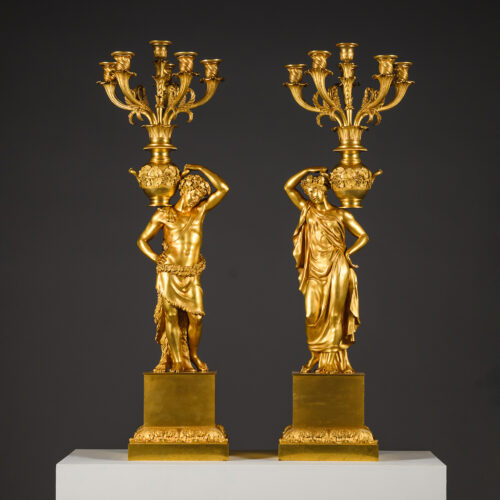 Attributed to Pierre-Philippe Thomire
A Pair of Large Charles X Period Gilt-Bronze Figural Six-Light Candelabra