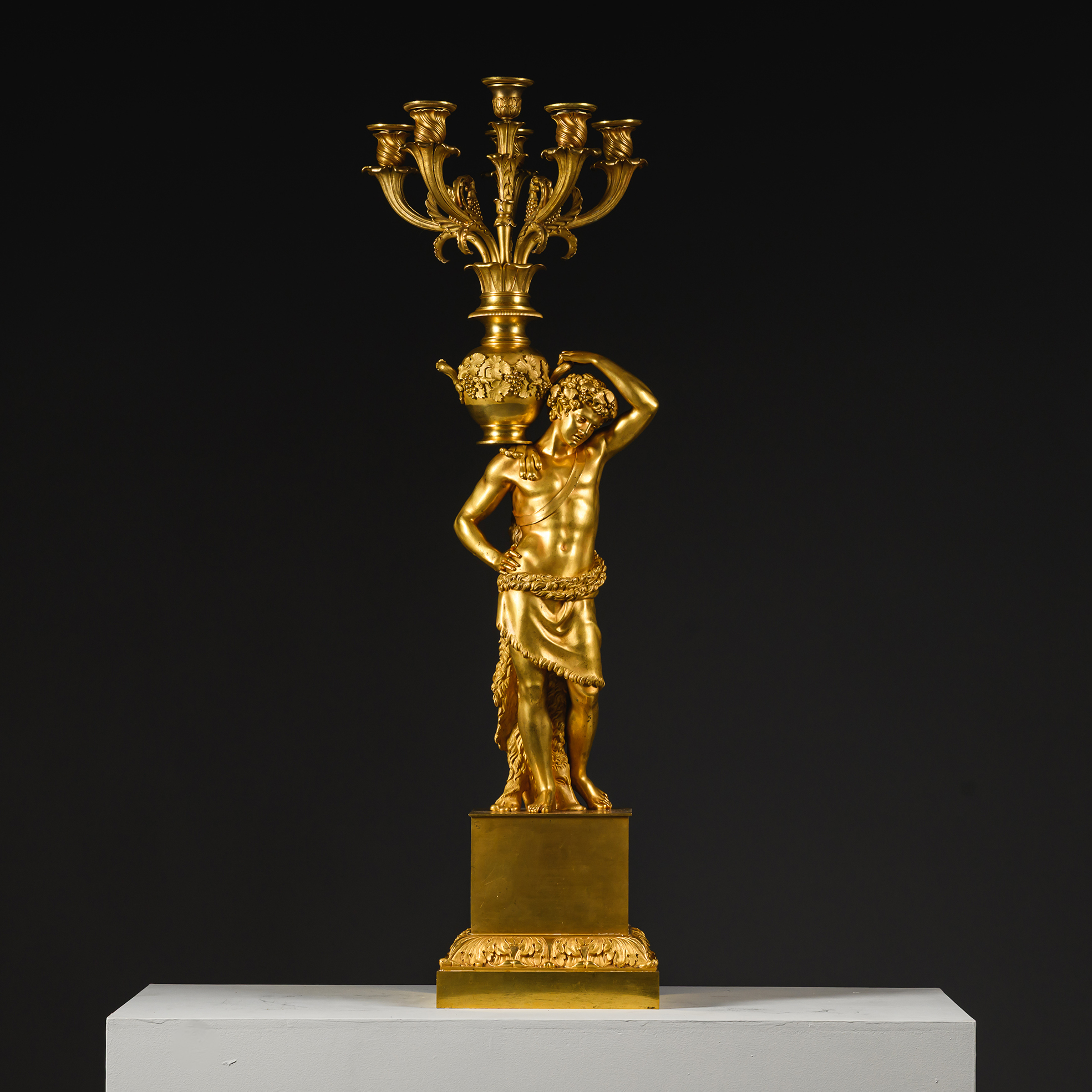
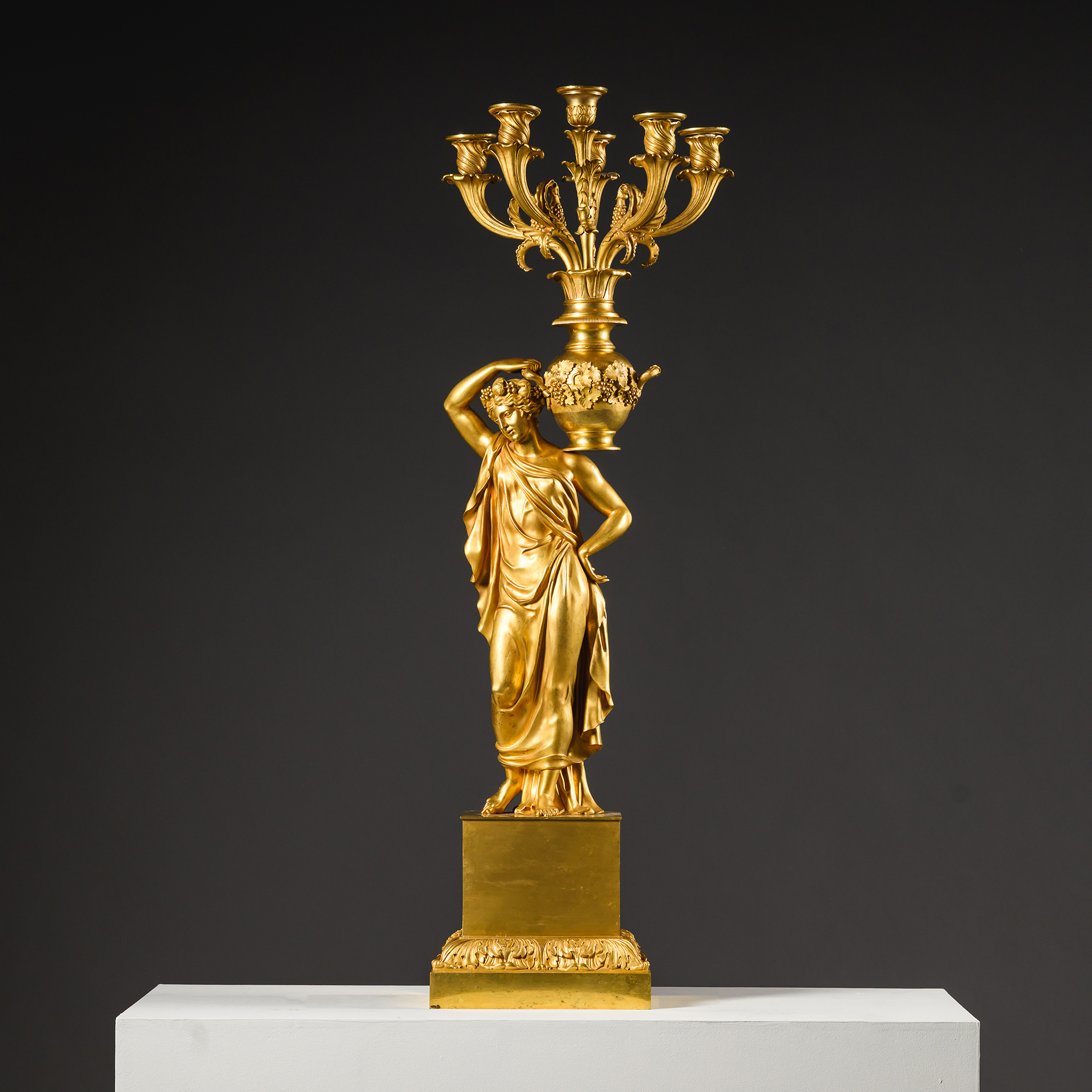
Attributed to Pierre-Philippe Thomire
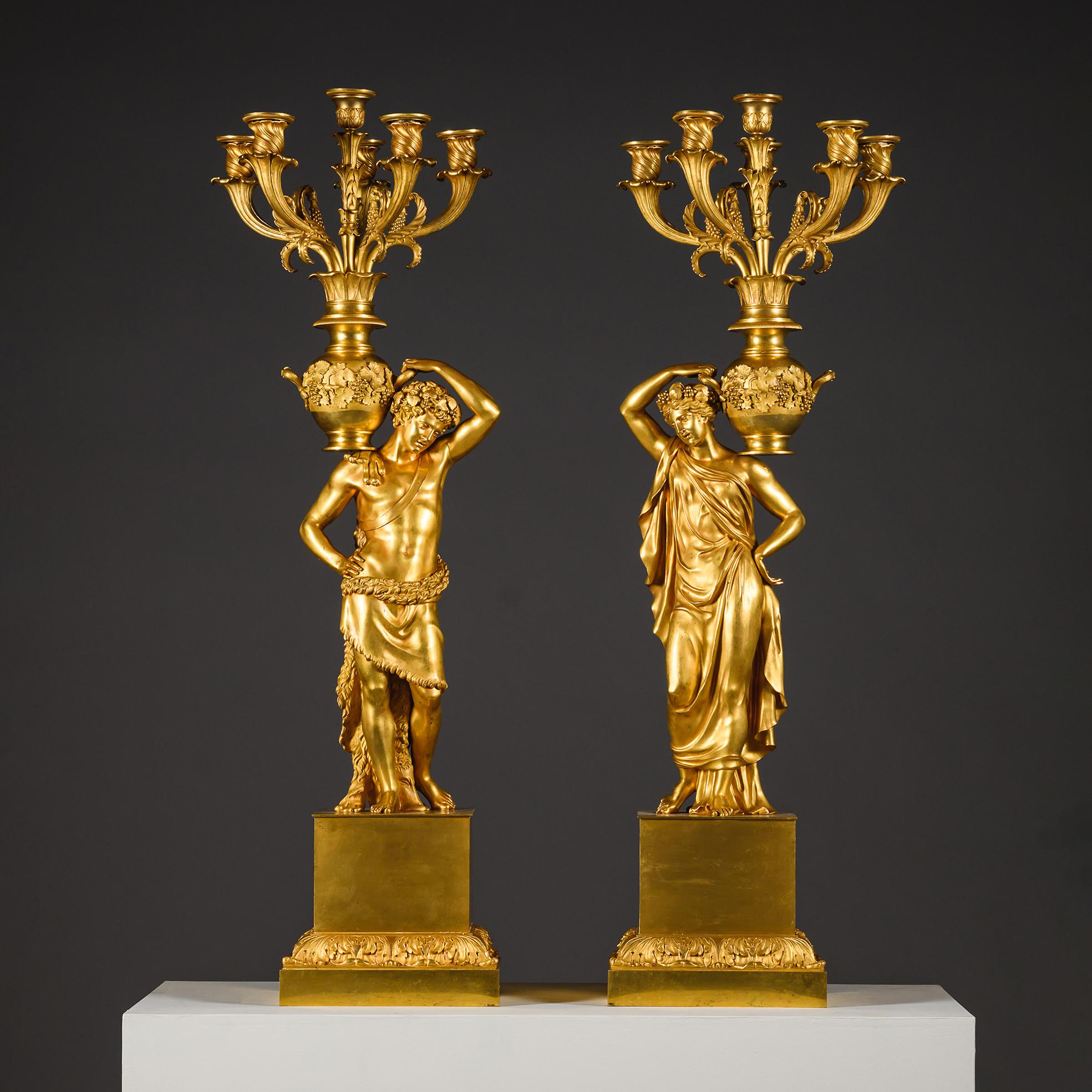
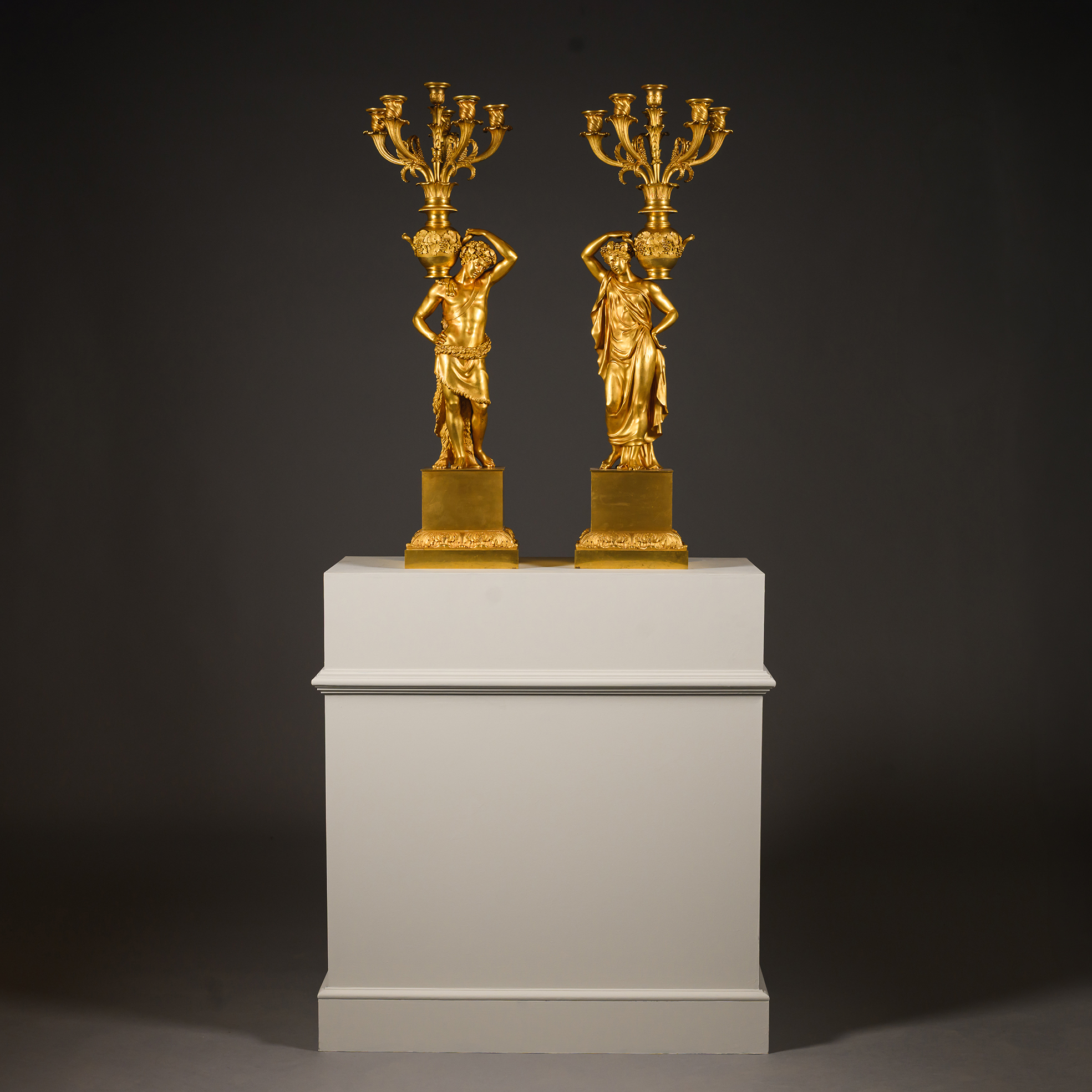
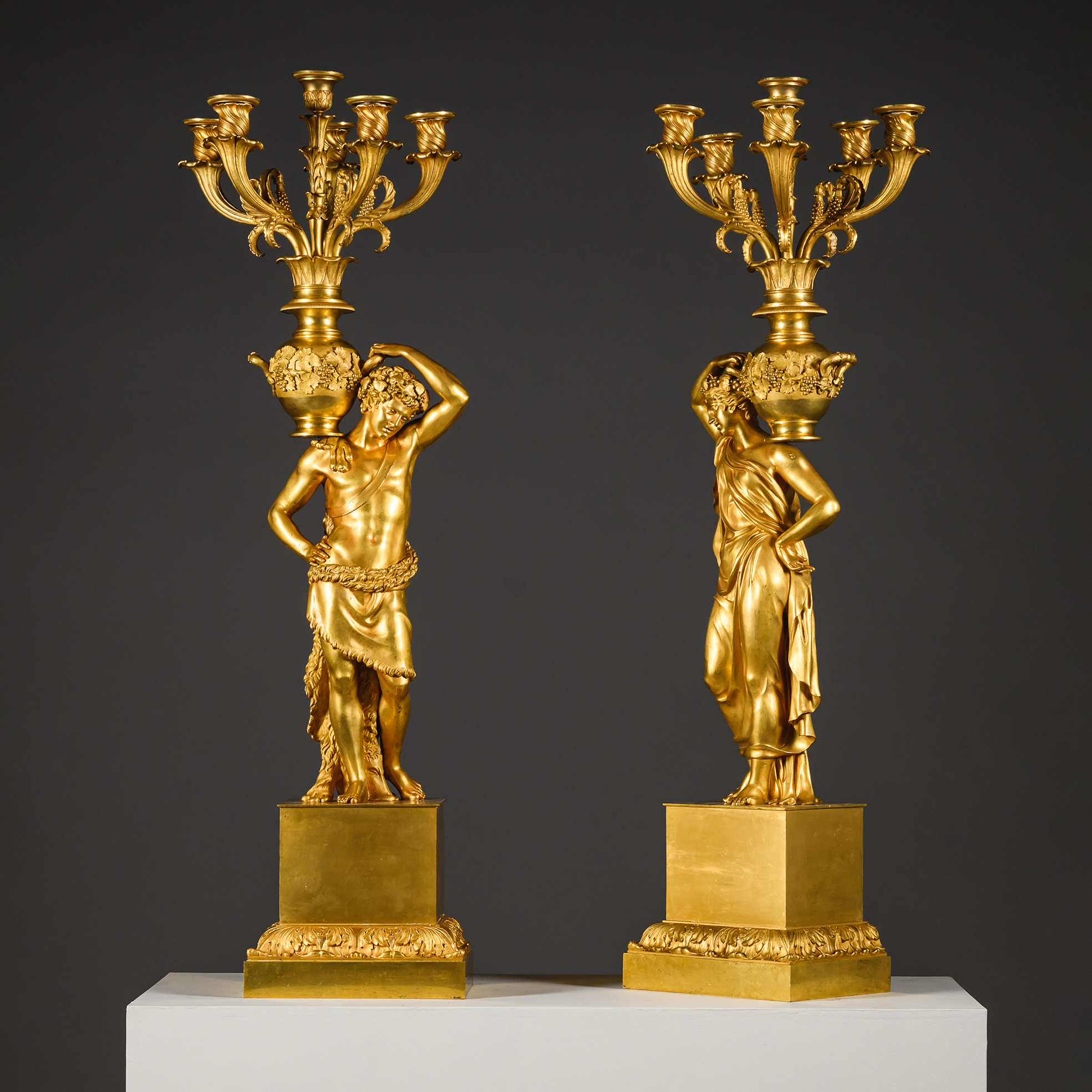
A Pair of Large Charles X Period Gilt-Bronze Figural Six-Light Candelabra
£55,000
A Pair of Large Charles X Period Gilt-Bronze Figural Six-Light Candelabra, Attributed to Pierre-Philippe Thomire (1751-1843).Modelled with classical...
Dimensions
Height: 101 cm (40 in)Width: 30 cm (12 in)
Depth: 32 cm (13 in)

 Print
Description
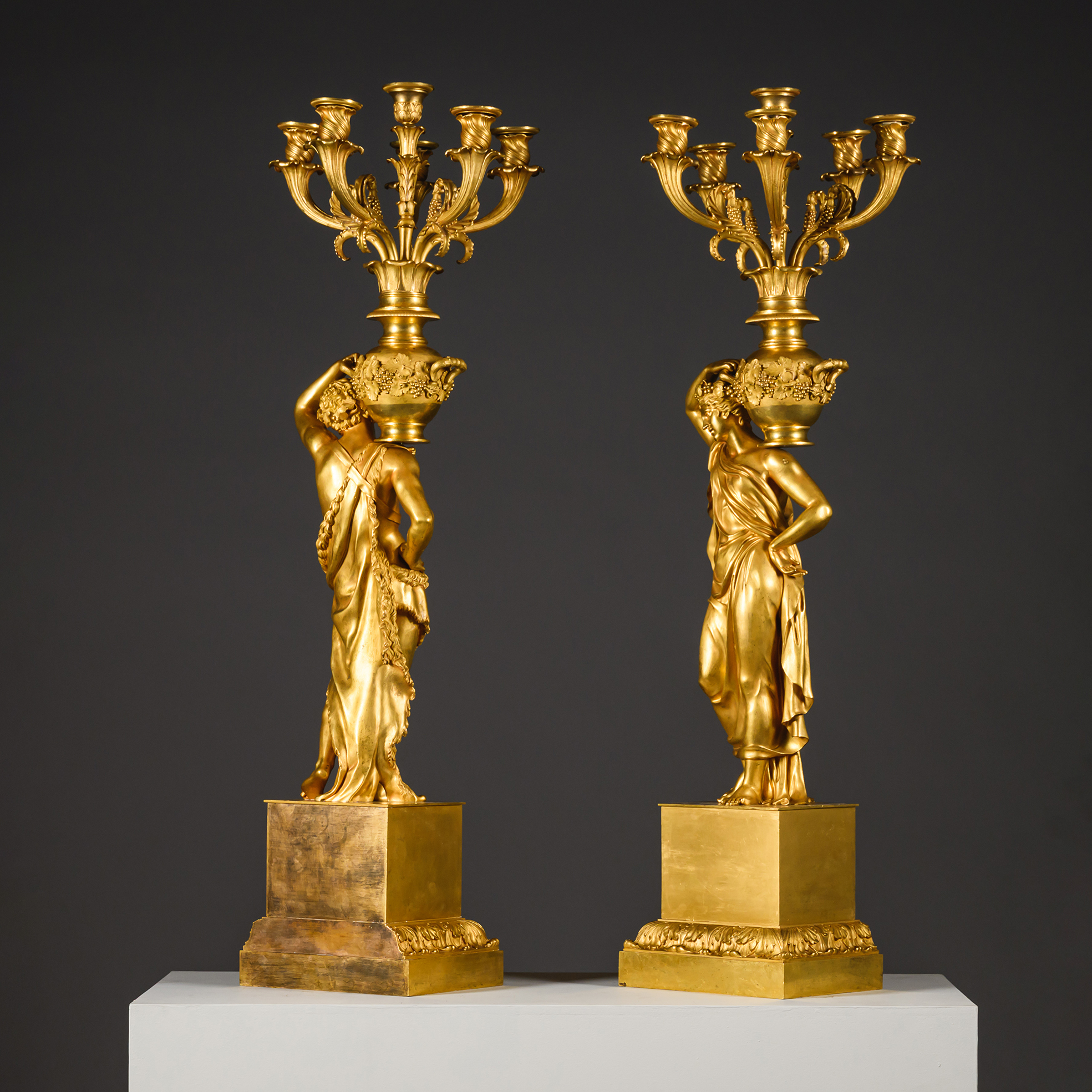
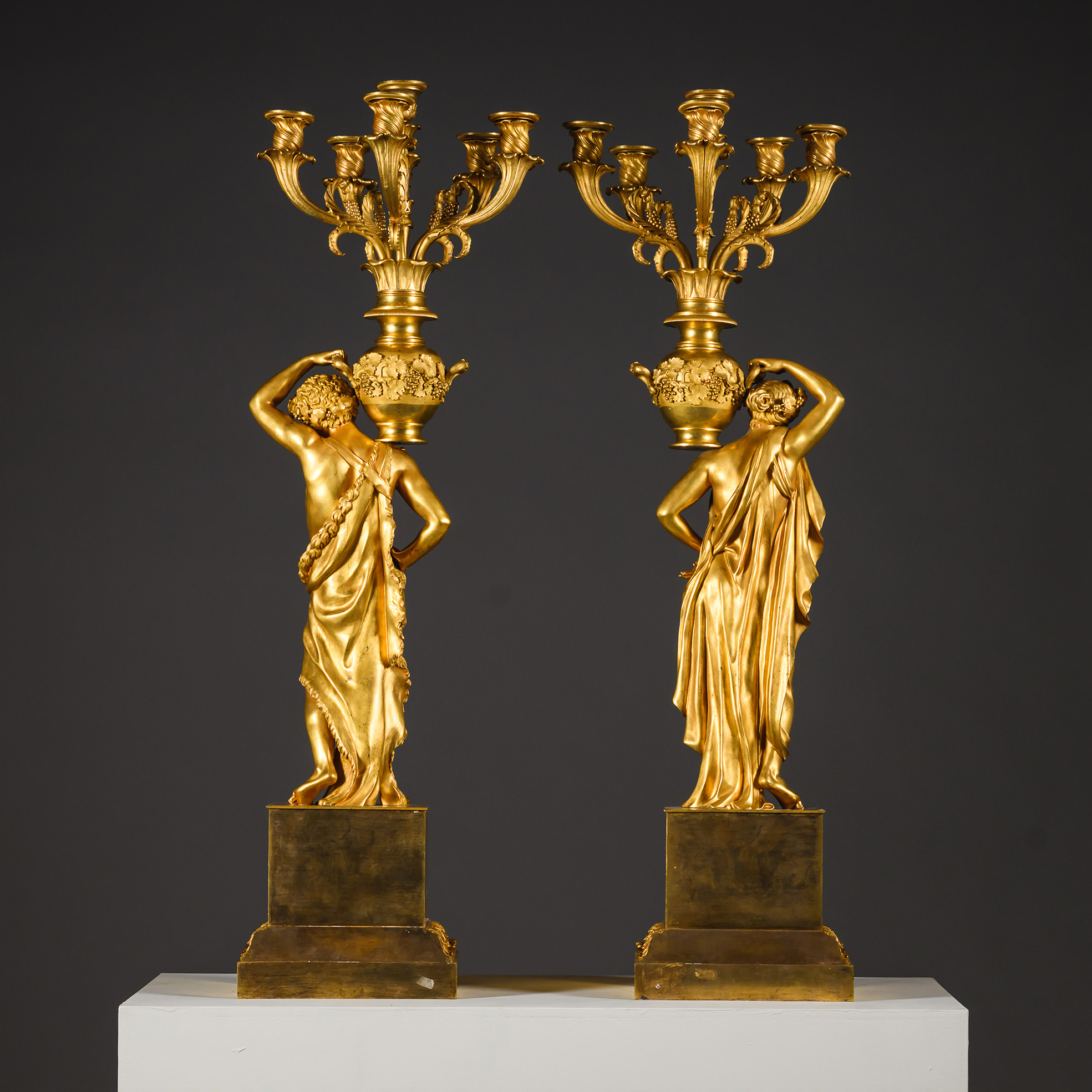
A Pair of Large Charles X Period Gilt-Bronze Figural Six-Light Candelabra, Attributed to Pierre-Philippe Thomire (1751-1843).
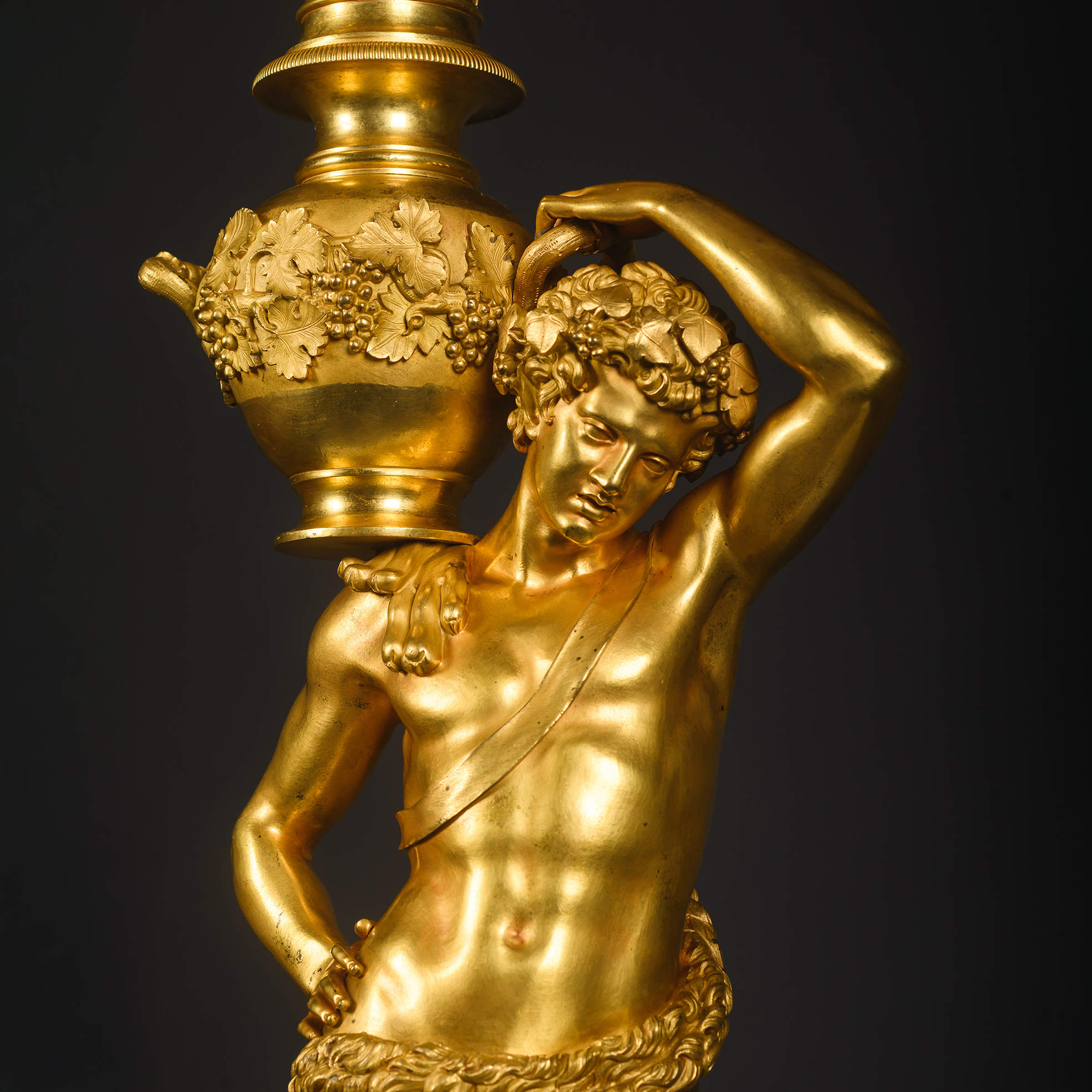
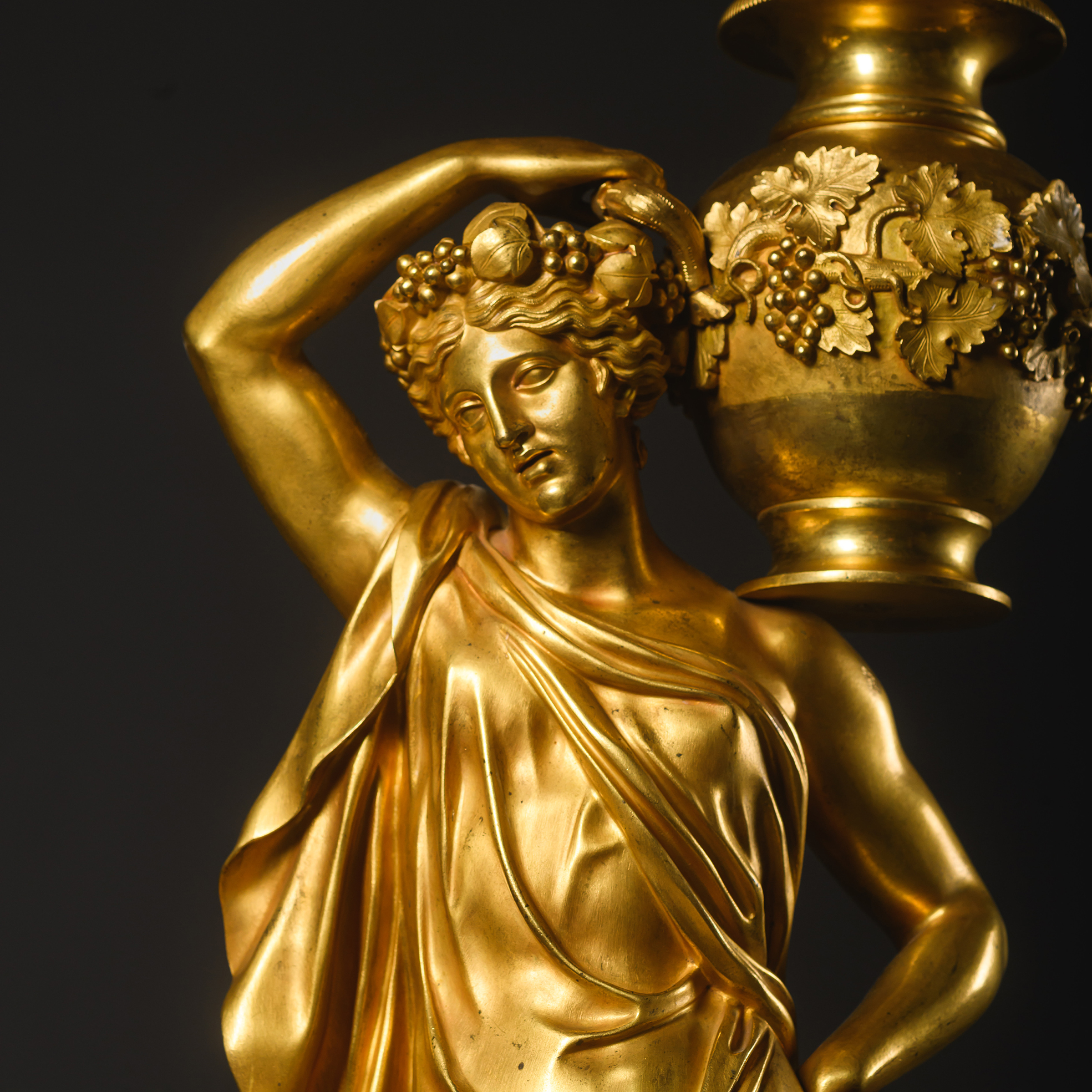
Modelled with classical figures with arms raised supporting an amphora issuing a candelabrum. The male figure is draped in a lion pelt, referencing Hercules, and the female figure wears a diaphanous robe. The figures stand on square-section plinths enriched with finely cast fronded acanthus.
France, Circa 1830.
The fashion for large bronze figural candelabra modelled with heroic figures was part of the neoclassical revival during the Louis XVI period. Drawn from classical mythology, figures themed around harvest and fertility, such as Bacchus and Ceres, holding candelabra were fitting for lighting a dining room.
The modelling of classical figures such as these would be credited to a sculptor who in turn would engage a foundry to cast them in bronze. Sculptors who modelled similar compositions through the Louis XVI and Empire periods include Louis Simon Boizot (1743-1809) and Claude Michel, known as Clodion, (1738–1814). 1 Referencing the superb casting, gilding and chased detail to the present figures, an attribution for the founder can be made to Pierre-Philippe Thomire (1751-1843).
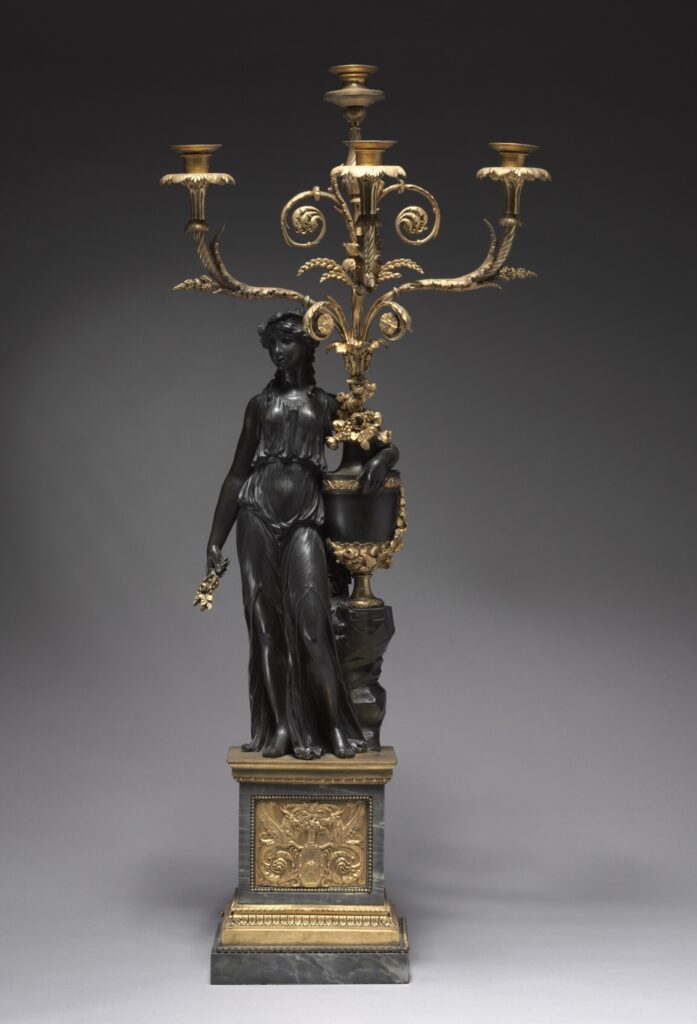
Sculpted by Clodion and cast by Thomire, this candelabrum (one of a pair) with a figure in the ancient Greek style, dates to circa 1785. An early example of a new phase in the fashion for antiquity that would continue well into the 19th century. With provenance to Sir Richard Wallace, today are in the Cleveland Museum of Art.
https://www.clevelandart.org/art/1942.58
Thomire worked for Louis XVI, but he is most readily associated with Emperor Napoleon I to whom he supplied a large number of pieces. 2 By this time Thomire was sometimes, if not always, signing his work and this has contributed to his legacy. The Empire Period saw a strengthening of classical ideas and influences, primarily in the decorative arts with Napoleon’s court adopting classical designs discovered in the archaeological excavations of Pompeii and Herculaneum. The ancient forms of the classical Greeks and Romans, discovered in these ruins, gained a new popularity during the Empire period. Typical Empire motifs included the acanthus leaf, anthemion (stylised honeysuckle), animal-paw feet, cornucopia, classical figures, dolphin, eagle, lyre and rosette. For ornamentation, ormolu was a prerequisite. Thomire continued to produce bronzes in the heroic idiom following the Bourbon restoration, with Louis-Philippe making him a Knight of the Legion of Honour in 1834, before passing his business to his sons-in-law until it closed in 1852.
At over one metre in height, these candelabra have an imposing presence, their scale and sculptural quality making them particularly impressive as a pair. The figures combining classical sculpture with strong architectural vocabulary, are especially well detailed. Other casting details, such as the stippling to the leaves, are indicative of exceptional quality. The large scale befits production of the Restauration period, under Louis XVIII and Charles X, giving a date of circa 1830.
- H. Ottomeyer P. Pröschel et al., Vergoldete Bronzen, Munich, 1986, vol. I, pp. 284-285.
- https://www.getty.edu/art/collection/person/103K27
Date
Circa 1830
Origin
France
Medium
Gilt Bronze
Pierre-Philippe Thomire (1751-1843) was the son of the Parisian decorative sculptor Luc Philippe Thomire and a member of a family which produced many notable sculptors, carvers and bronze founders. Although trained as a sculptor, Pierre-Philippe Thomire decided to follow his father into the potentially more lucrative profession of a bronze caster.
He was the most prominent bronzier, or producer of ornamental patinated and gilt-bronze objects and furniture mounts of the First French Empire. His fashionable neoclassical and Empire style bronzes established the highest standard in refined finish in the craft that the French called that of the fondeur-ciseleur.
Thomire studied under Houdon and Paju at the Académie de St. Luc, and then went on to receive further training in the workshop of Pierre Gouthière, the outstanding Parisian ciseleur-doreur.
In 1776 he established his own business and he gradually assumed the leading position of his former master. In 1783–84 he received his first notable commission, casting and finishing the gilt-bronze handles modelled by Boizot for a pair of Sèvres porcelain vases, today divided between the Musée du Louvre and Palazzo Pitti. He also received a commission for the execution of the cradle for the King of Rome, which was designed by Pierre Paul Prud’hon and for which Thomire collaborated with the Imperial silversmith Odiot.
Thomire’s big break had come when he began assisting Jean-Claude-Thomas Duplessis, the artistic director of the Sèvres Porcelain Manufactory, in making mounts. When Duplessis died in 1783, Thomire took over his job, supplying all the gilt bronze mounts for the porcelain. One of his first important commissions was to sculpt the bronze decoration on the state coach of King Louis XVI (1775).
He exhibited at the 1806 Exposition Publique des Produits de l’Industrie in Paris, the first time a bronzier was permitted among the exhibiters, and was awarded a gold medal for his bronze and malachite sculptures.
In 1809 the Emperor Napoleon made him ciseleur de l’empereur (Engraver to the Emperor); because of the large number of pieces Thomire supplied to the palaces, his firm became fournisseur de leurs majestés (Furniture Suppliers to their Majesties) two years later.
He produced many bronzes in the heroic idiom during the Napoleonic era, remaining in favour after the restoration of the Bourbons to sculpt a magnificent surtout (table decoration) for Louis XVIII in 1823. Thomire relinquished control of his business that year to his sons-in-law and the firm continued to win numerous medals at various exhibitions, before it finally ceased to trade in 1852.
H. Ottomeyer P. Pröschel et al., Vergoldete Bronzen, Munich, 1986, vol. I, pp. 284-285.
YOU MAY ALSO LIKE
- £65,000 Add to cart
 Maison Beurdeley
A Louis XV Style Gilt-Bronze Mounted Mahogany Bureau à Caissons
- POA Read more
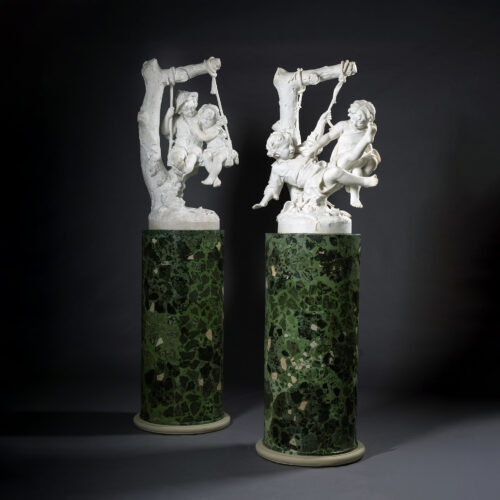 Alessandro Lazzerini
A Pair of Large Carrara Marble Figural Groups Of Children on Swings
- £24,000 Add to cart
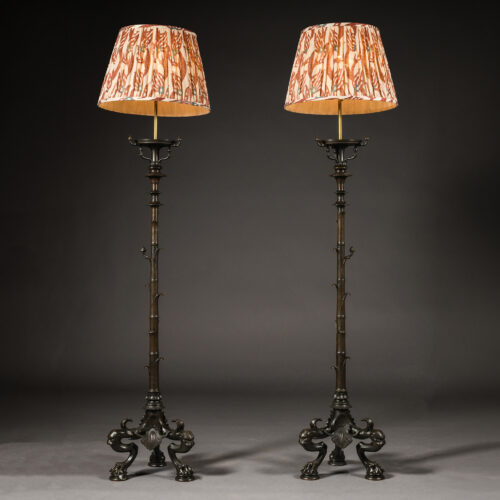 Ferdinand Barbedienne
A Pair of Neo-Pompeiian Patinated Bronze Torchères, Fitted as Lamps