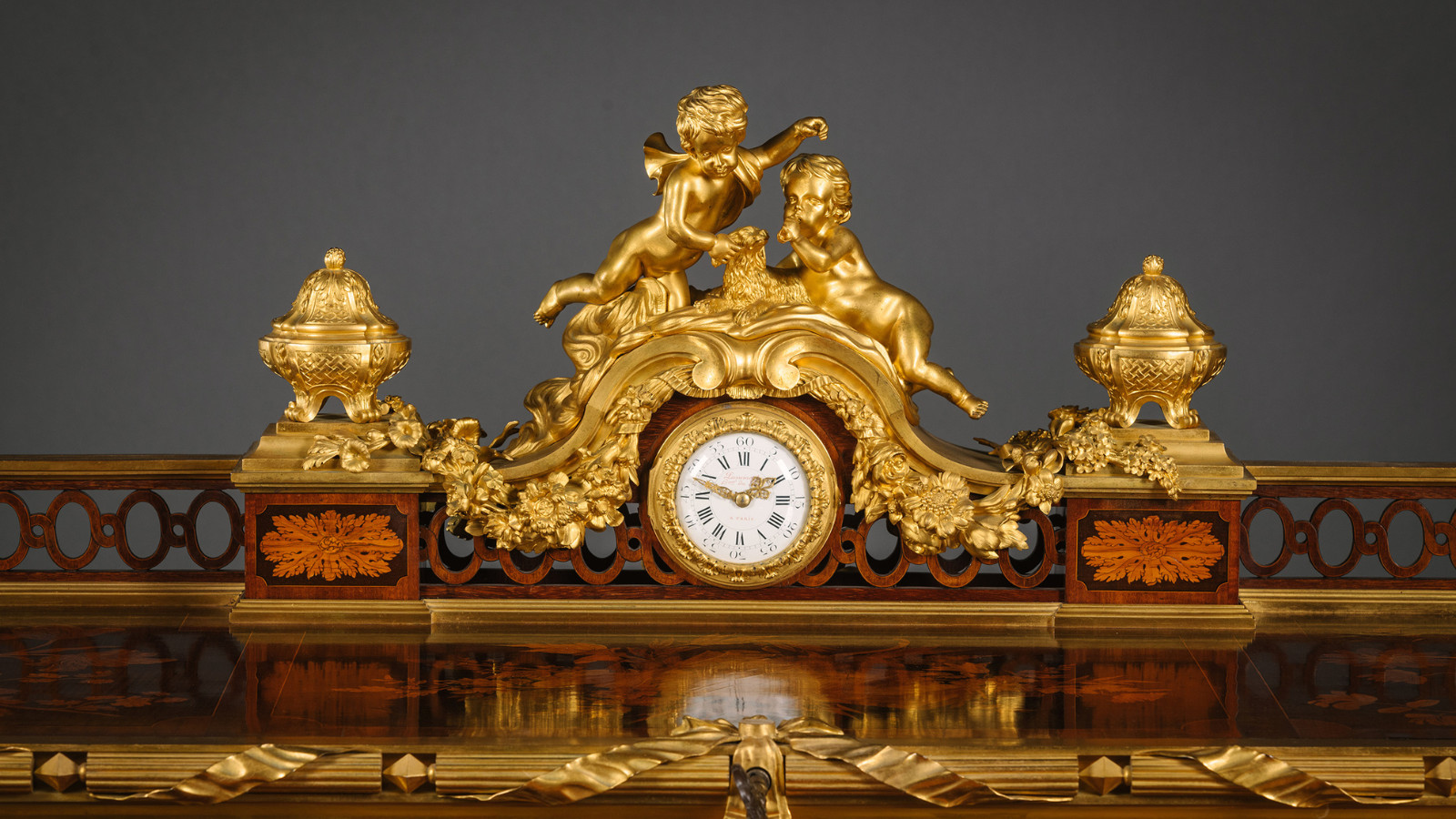
The Age of Opulence
Gold, velvet, marble, mirrors and an extraordinary appetite for decoration. The Second Empire created some of the nineteenth century’s most spectacular interiors. Today, its influence is being rediscovered in a very different way.
There is something wonderfully unapologetic about a Napoléon III interior.
Gold catches the light. Dark polished wood provides a dramatic backdrop. Mirrors multiply the glow of chandeliers, while velvet, porcelain, marble and gilt bronze compete for attention. Nothing seems particularly interested in being quiet.
And yet, walk into some of the most successful contemporary interiors today and the spirit of the Second Empire is surprisingly easy to recognise.
Not in rooms recreated as nineteenth-century stage sets, but in interiors where a monumental antique mirror sits beneath a contemporary painting, where a dark ebonised cabinet provides a dramatic contrast to pale walls, or where an extravagant chandelier becomes the one deliberately excessive element in an otherwise restrained room.
The secret is not to reproduce Napoléon III.
It is to borrow from it.
The Second Empire understood something that contemporary interiors sometimes forget: a room is not simply a collection of furniture. It is an atmosphere.
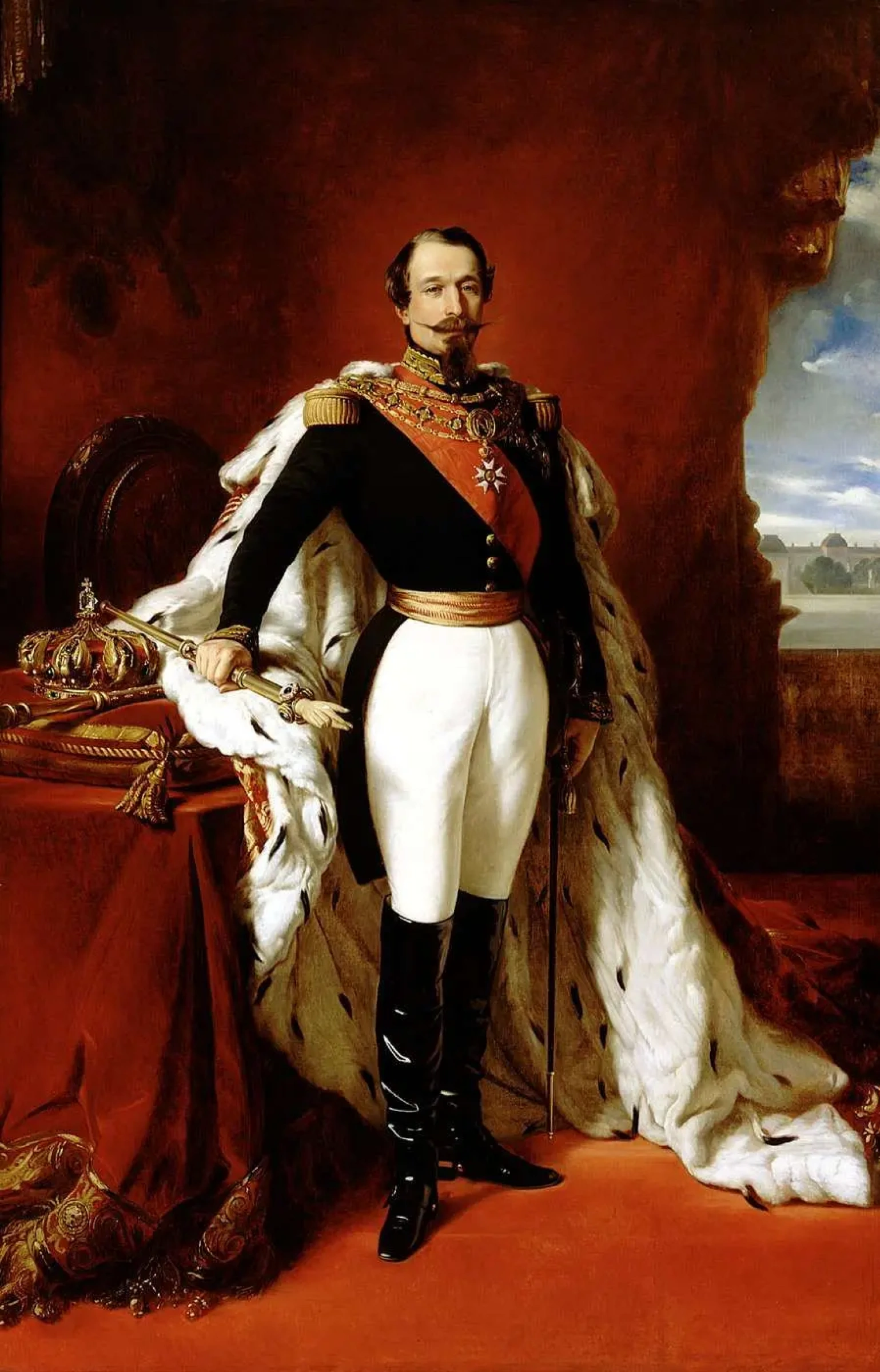
Portrait of Napoléon III, circa 1853, by Franz Xaver Winterhalter (1805-1873).
(Public Domain / Wikipedia)
Paris, 1860
To understand the appeal of Napoléon III, it helps to imagine Paris in the middle of the nineteenth century.
The city was changing at extraordinary speed. Baron Haussmann’s boulevards were cutting through the old streets; new railway lines were bringing people and goods into the capital; department stores, cafés, theatres and restaurants were transforming urban life.
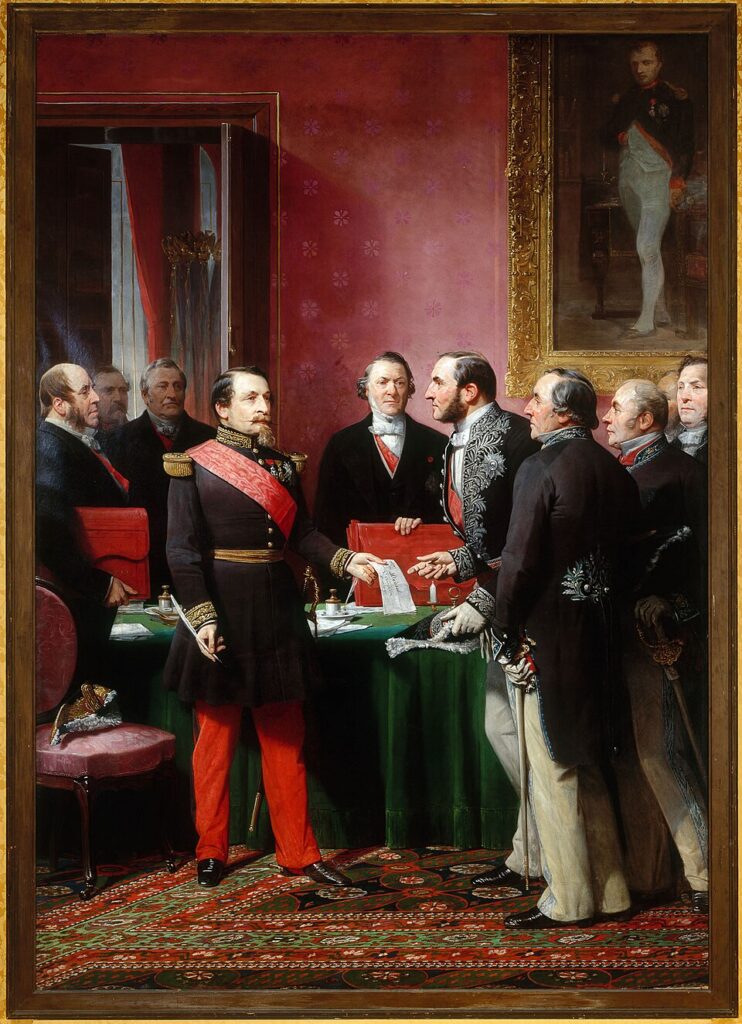
Adolphe Yvon (1817-1893), ‘Napoléon III remettant au baron Haussmann le décret d’annexion des communes’ (16 février 1859)’. 1865. Paris, musée Carnavalet.
And at the centre of it all was an emperor who understood the power of spectacle.
Louis-Napoléon Bonaparte, nephew of Napoleon I, became Napoleon III in 1852. His Second Empire lasted until 1870, a relatively short period that nevertheless left a remarkable mark on French architecture and the decorative arts. The Musée d’Orsay describes the period as one of extraordinary experimentation, prosperity and spectacle, in which historicism, technological progress and the luxury industries developed side by side.
The great interiors created during these years were designed for entertaining. They were rooms in which dinners, balls, concerts and receptions could take place, and where wealth and status could be communicated without anyone needing to say a word.
The Louvre preserves perhaps the most extraordinary surviving expression of this world.
The so-called Napoléon III apartments in the Richelieu Wing were created between 1858 and 1861 by the architect Hector-Martin Lefuel, under the direction of Napoleon III for Achille Fould, his Minister of State (1852-1860).
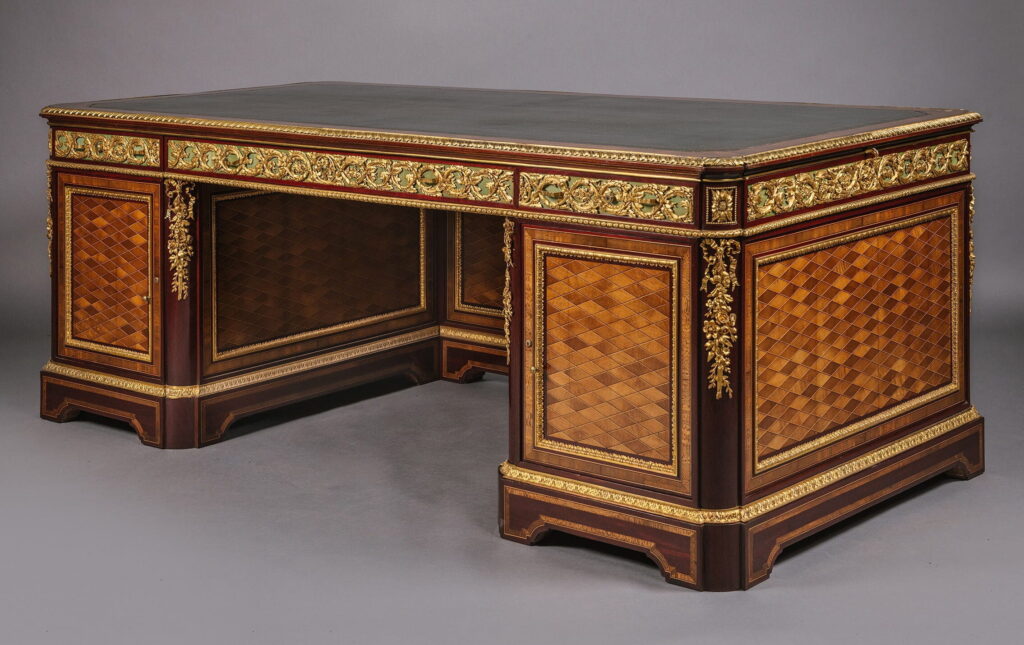
A grand parquetry pedestal desk by Maison Grohé, Provenance Achille Marcus Fould (1800–1867) Napoleon III’s Minister of State. Collection Adrian Alan.
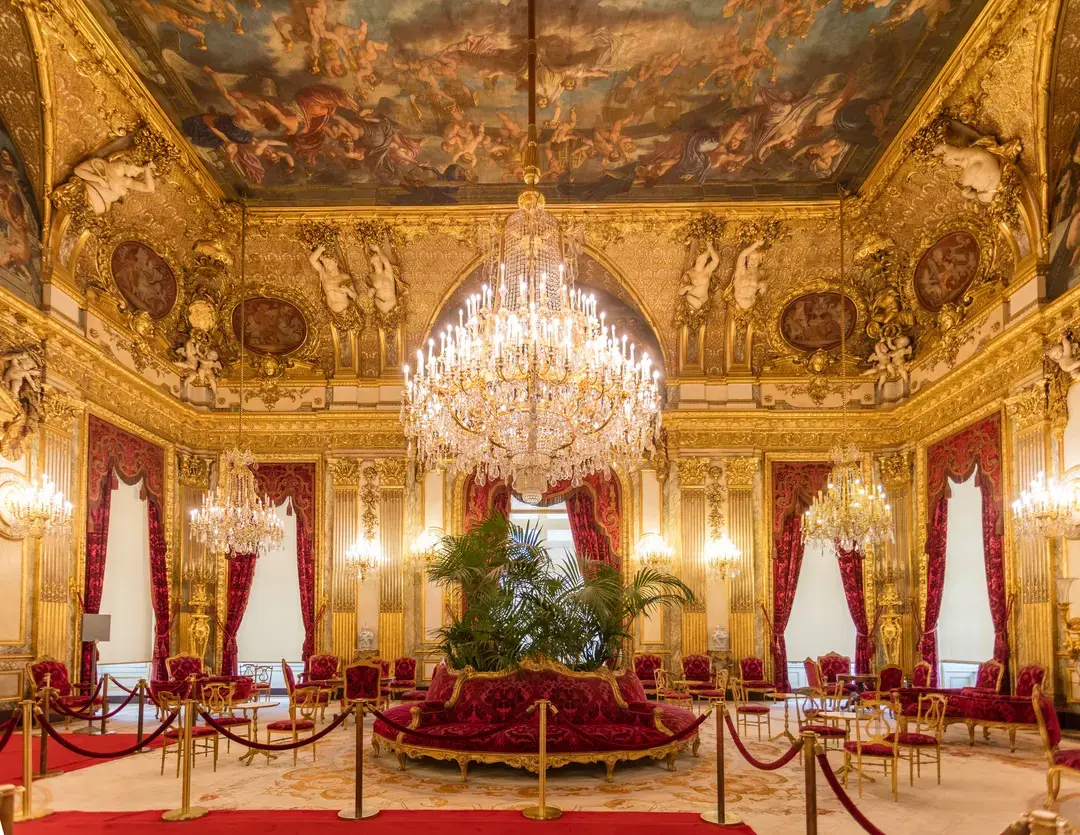
Their private rooms are comparatively restrained, but beyond them the atmosphere changes dramatically. The grand reception rooms erupt into gilding, velvet, paintings, stucco and chandeliers. The great salon could even be transformed into a theatre, accommodating more than 250 spectators as the Musée du Louvre records.
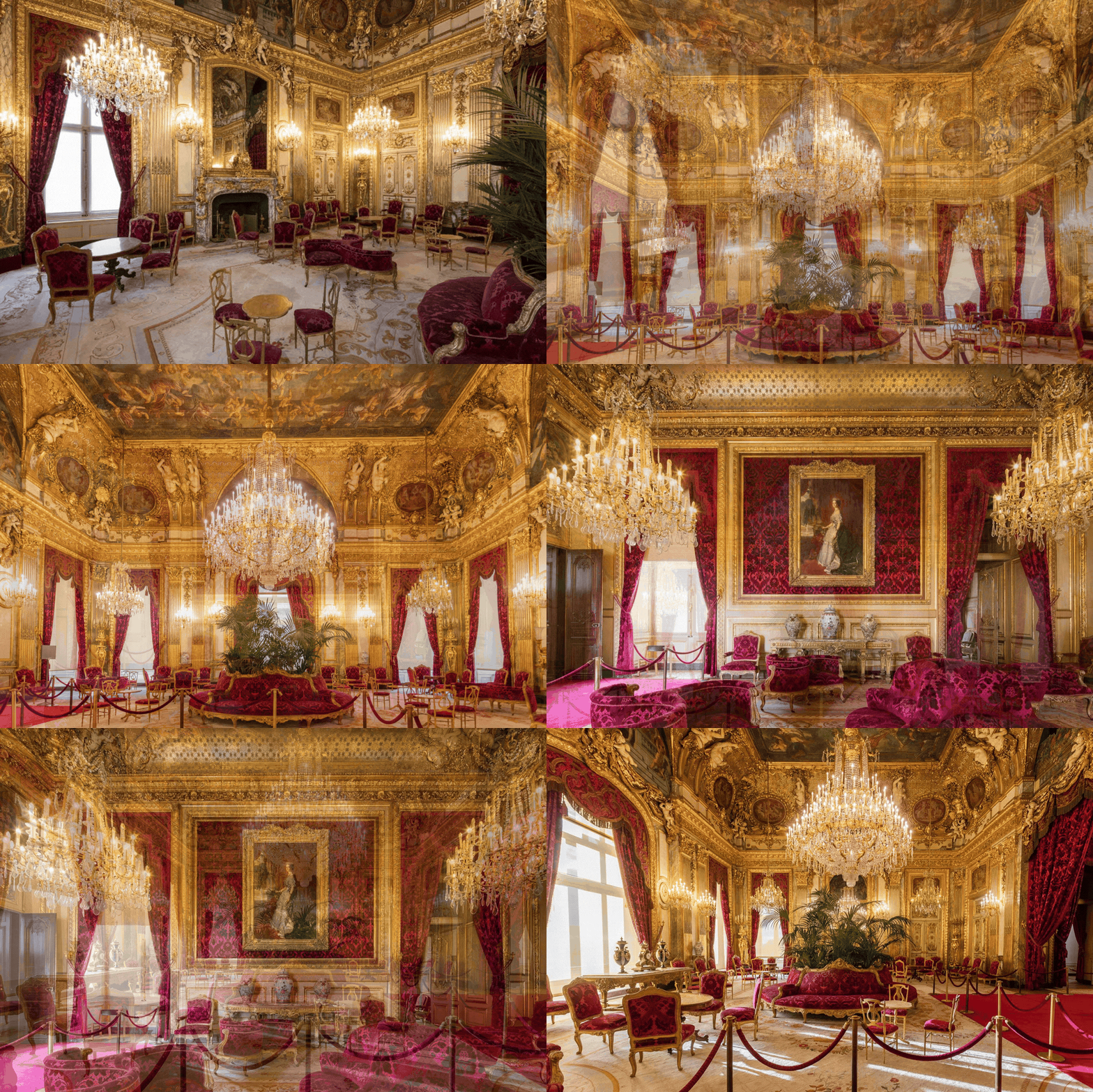
The Napoléon III Apartments, Musée du Louvre, Paris. The apartments remain one of the most complete surviving expressions of Second Empire interior decoration.
It is difficult to imagine a more theatrical approach to interior decoration.
But perhaps that was the point.
Eugénie and the romance of the past
There was another influence at work in the interiors of the Second Empire: nostalgia.
The Empress Eugénie had a particular fascination with the eighteenth century and with Marie Antoinette. The taste of the Imperial Court consequently looked backwards towards Versailles, Louis XVI and the final years of the ancien régime.
It is one of the great contradictions of the period.
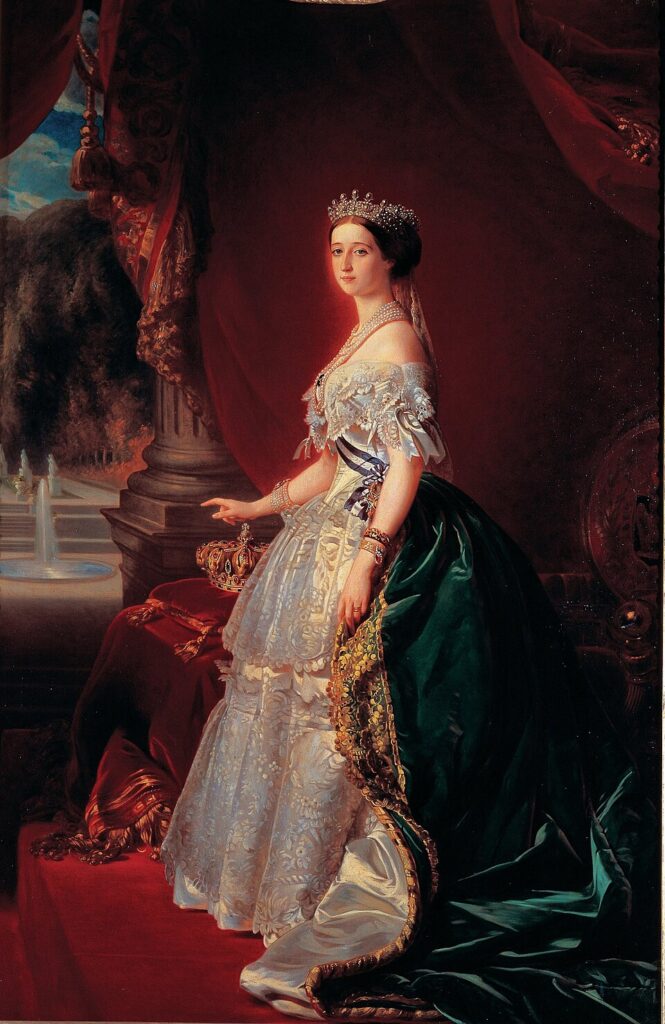
Franz Xaver Winterhalter (1805-1873), Portrait of Empress Eugénie, 1853. Source Wikipedia – Public Domain.
The Second Empire was associated with modernity, industry and technological progress, yet its interiors looked increasingly towards history.
The answer was not simple imitation.
Nineteenth-century craftsmen took historical forms and reinvented them. A Louis XVI cabinet might be enlarged and enriched with spectacular gilt-bronze mounts. A Renaissance design might be combined with newly fashionable materials. Ancient motifs could appear alongside Rococo ornament.
The result was an interior that felt historical without belonging to any one historical period.
This eclecticism is perhaps the defining characteristic of Napoléon III.
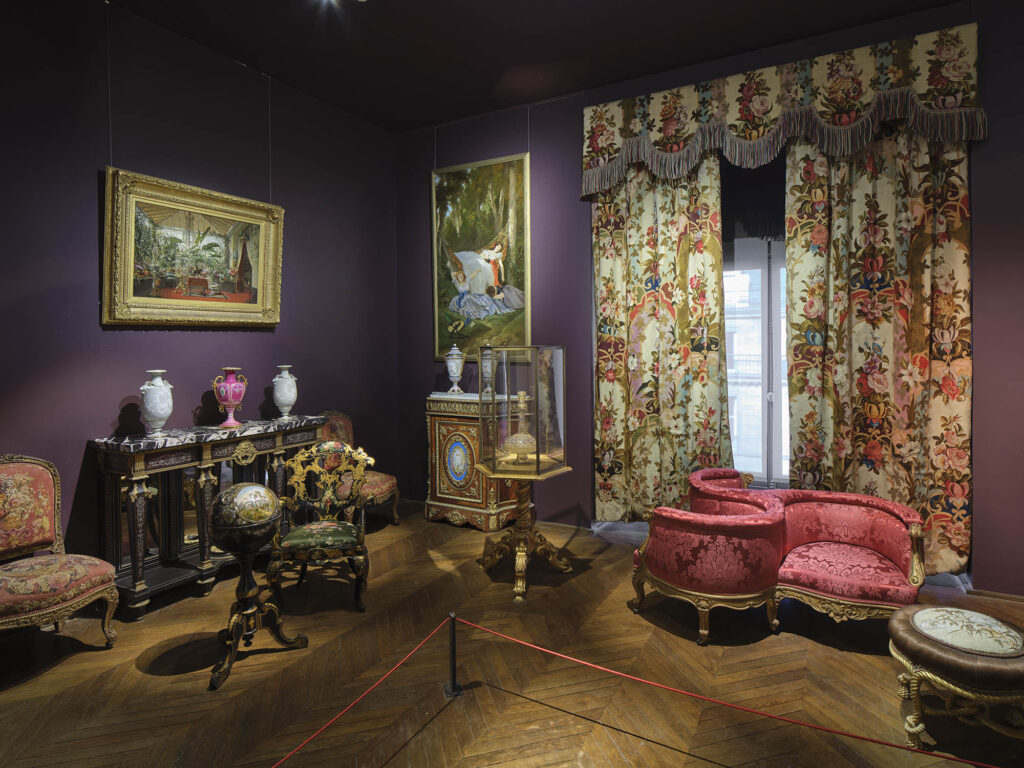
A Second Empire Drawing Room, © Musée des Arts Décoratifs. An identical ‘Boulle’ marquetry console table by Gervais-Maximilien-Eugène Durand to the one illustrated, (possibly the pair), is in the Adrian Alan collection. [Ref: B77110]
The designers of the period had the whole history of European decoration at their disposal and they were not afraid to use it.
The Musée d’Orsay describes this as one of the defining qualities of the Second Empire, with Greek Revival, Gothic Revival, Renaissance, Orientalist and Japoniste influences appearing alongside Louis XV and Louis XVI revivals.
The Empress’s influence was particularly significant. Eugénie surrounded herself with eighteenth-century royal furniture, contemporary interpretations and copies of pieces associated with the French monarchy, helping establish what became known as the Louis XVI-Empress style.
Édouard Kreisser
A Rare and Important Napoléon III
Gilt-Bronze and Sèvres Style Porcelain-Mounted
Mahogany and Lemon Wood Bonheur Du Jour
France, Circa 1855.
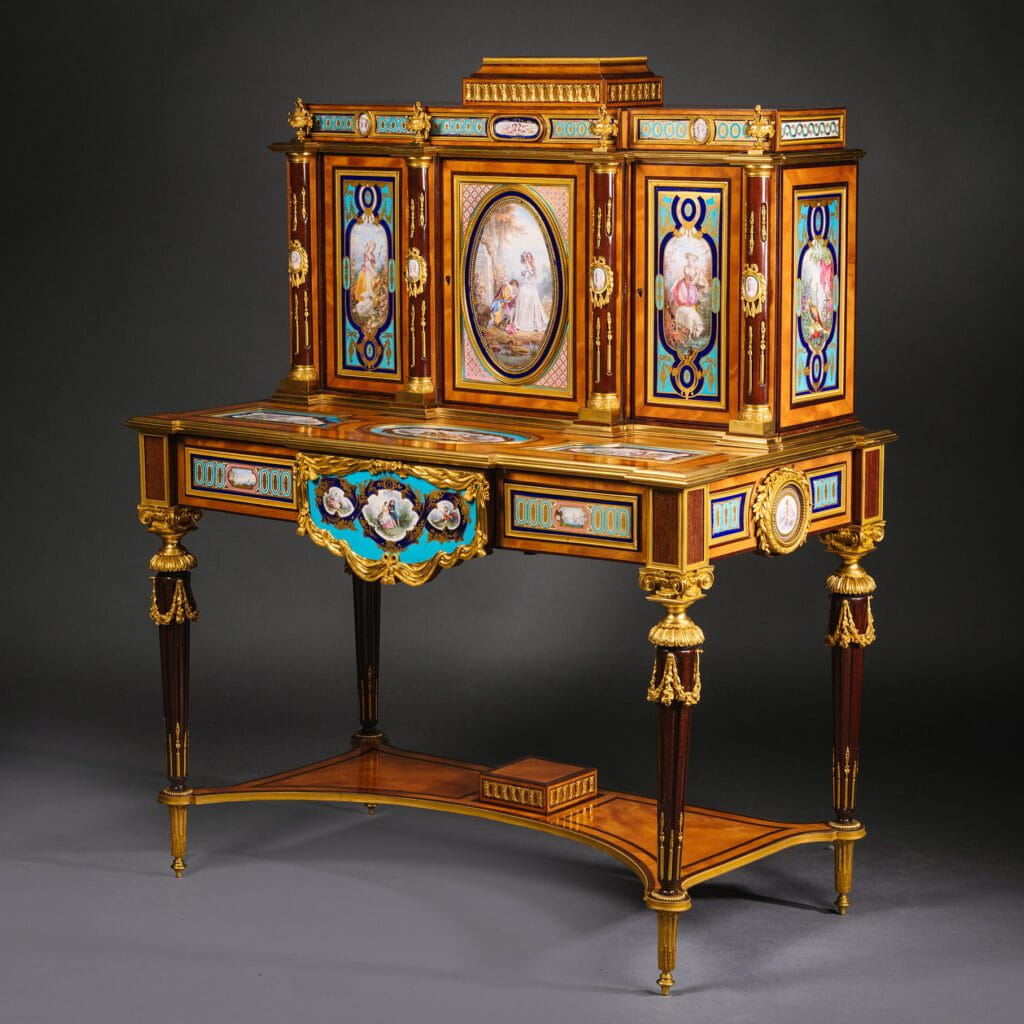
Black, gold and stone
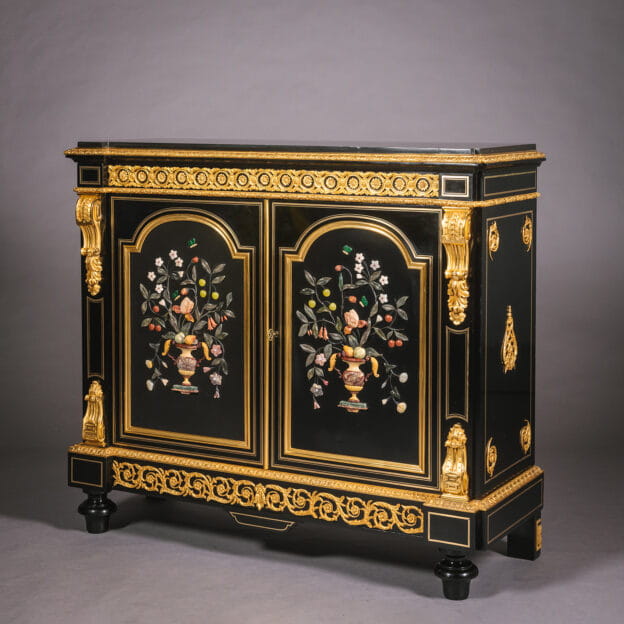
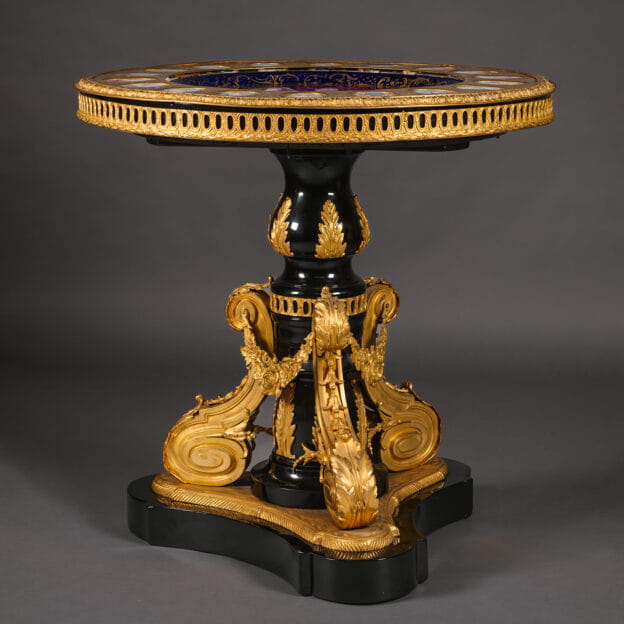
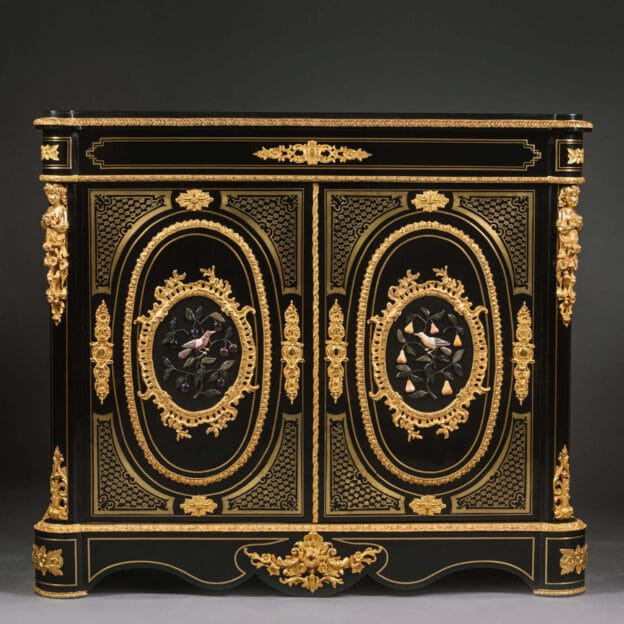
Among the most beautiful combinations of the period is the contrast between ebonised wood and gilt bronze.
The almost-black surface of the wood absorbs the light; the gilt bronze catches it. Add marble or coloured hardstone and the effect becomes even more dramatic.
It is easy to see why this combination continues to work.
Placed in a nineteenth-century room, it becomes part of the decoration.
Placed against a quieter contemporary background, it becomes almost sculptural.
That difference is important.
The modern way of using Napoléon III is often less about recreating the room around an object and more about allowing the object to become the room’s moment of drama.


A little more drama
Perhaps the easiest way to misunderstand Napoléon III is to think that every element has to be equally elaborate.
The opposite can be much more effective.
A contemporary room with pale walls, simple upholstery and modern art can accommodate one extraordinarily ornate cabinet. A restrained dining room can be transformed by a pair of nineteenth-century candelabra. A contemporary sitting room can take on an entirely different character beneath an imposing gilt-bronze chandelier.
The antique becomes more powerful because everything around it is quieter.
This is an approach increasingly visible in contemporary interiors, particularly in Paris, where nineteenth-century architecture provides an unusually rich backdrop for modern decoration.
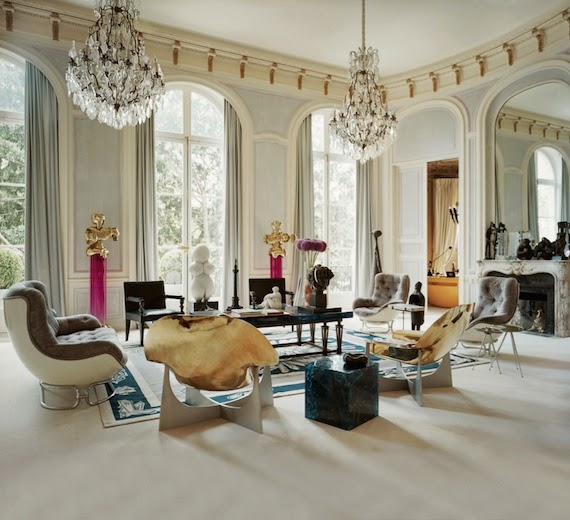
Yves Gastou’s, Paris apartment. AD France Oct. 2008. Photo by Vincent Leroux.
The most successful interiors often allow historic decoration to sit comfortably alongside contemporary art and furniture. Rather than recreating the past, they create a dialogue between historic objects and modern life.
This distinction is important.
Historic decoration does not have to mean historic living.
The mantelpiece becomes a stage
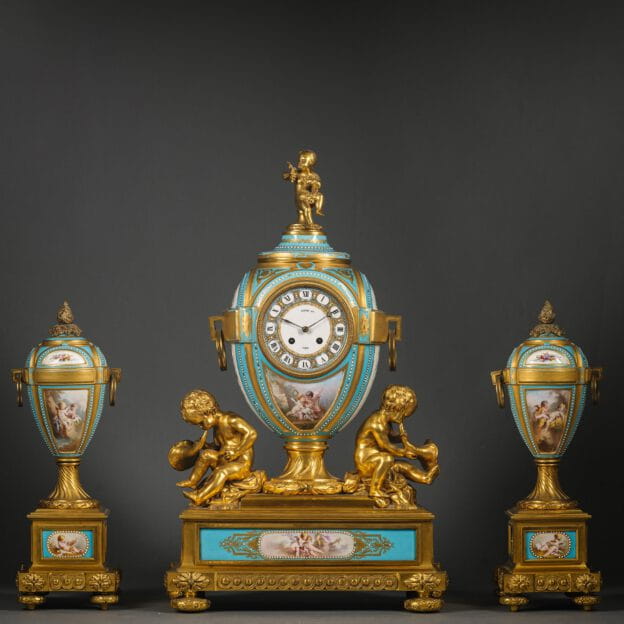
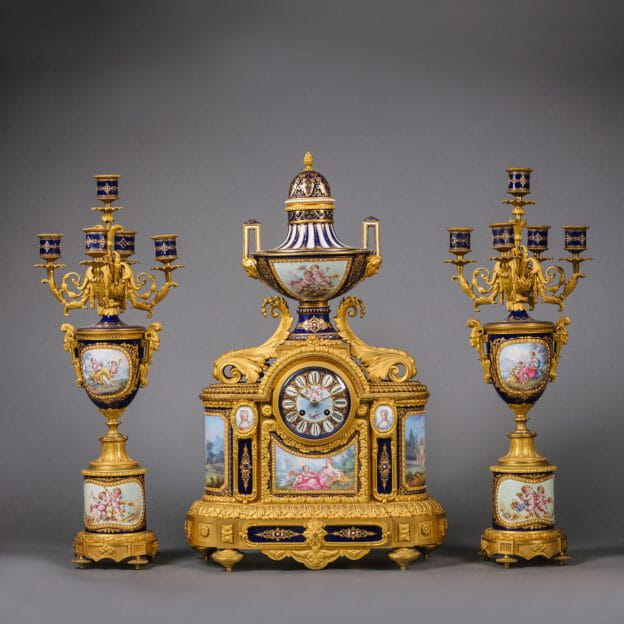
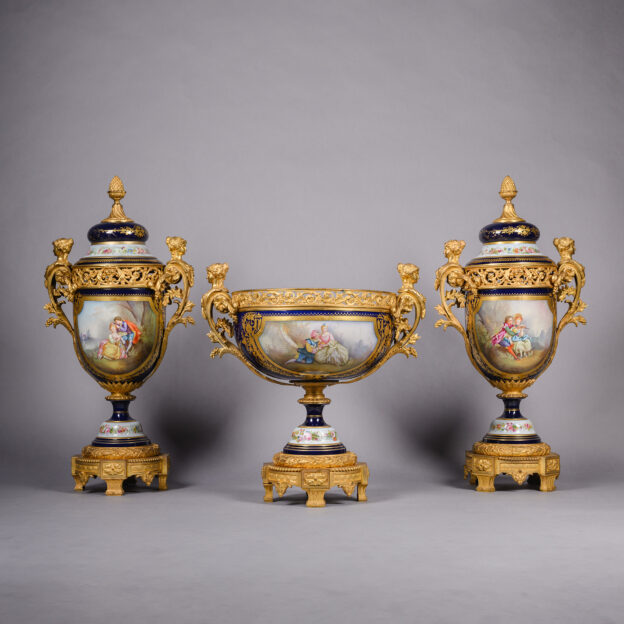
If there was one place where the Second Empire could indulge its love of spectacle, it was the mantelpiece.
A clock was no longer simply a clock.
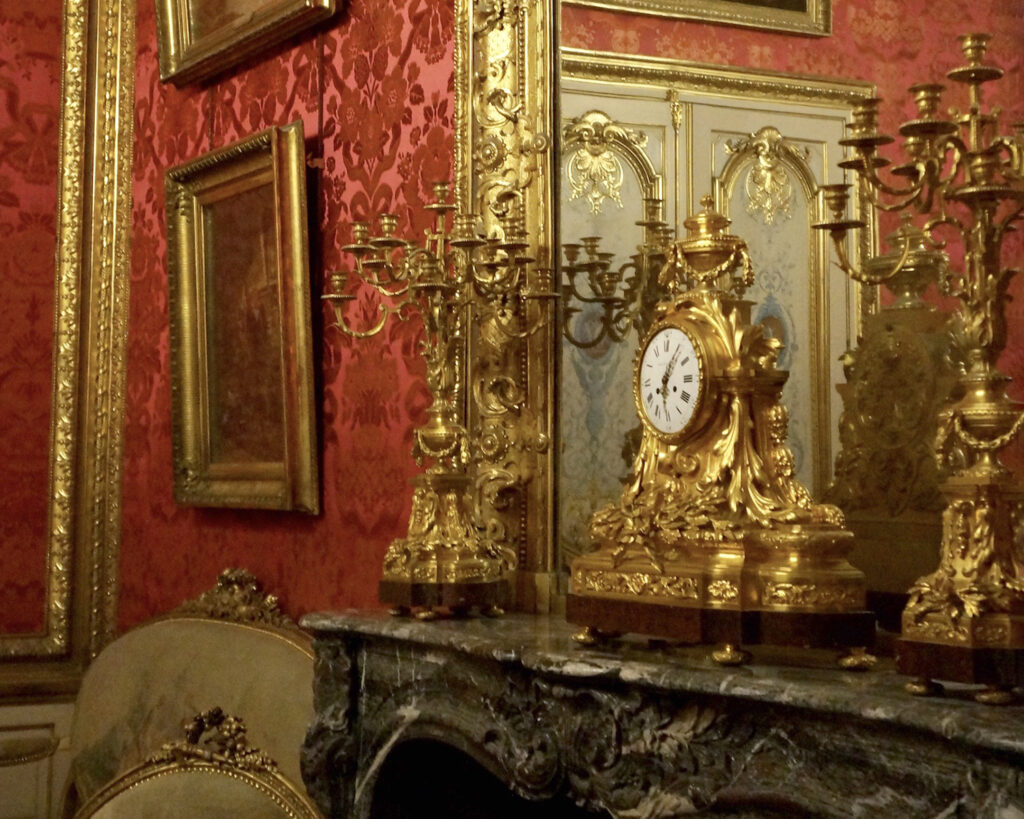
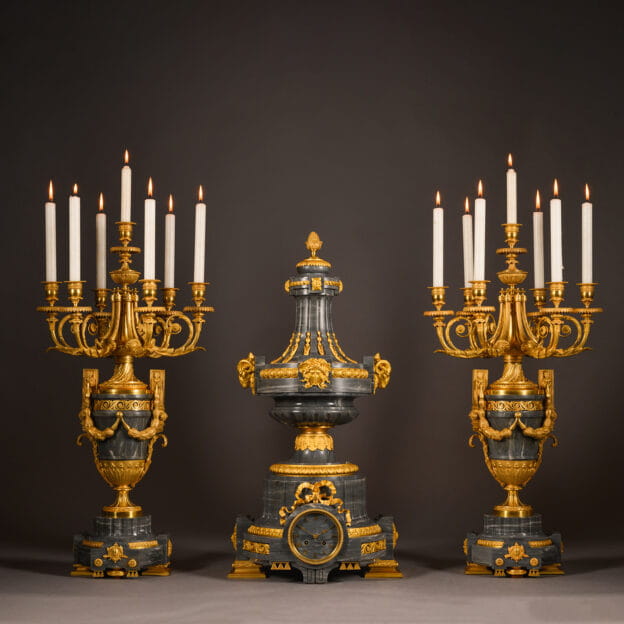
A mantelpiece with clock garniture, apartments Napoleon III, Louvre
It might be surrounded by porcelain vases, candelabra, flowers and figures, all reflected in the mirror above. The mantelpiece became a carefully balanced composition in which every object contributed to the whole.
It is easy to imagine the effect by candlelight.
The mirror behind the mantelpiece catches the flames.
The gilt bronze begins to shimmer.
The porcelain glows against the darker furniture.
Suddenly the mantelpiece is no longer a collection of objects.
It is a scene.
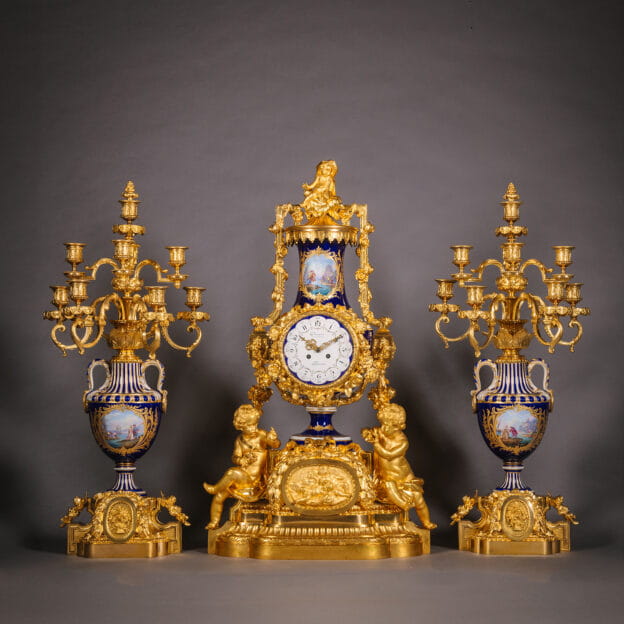
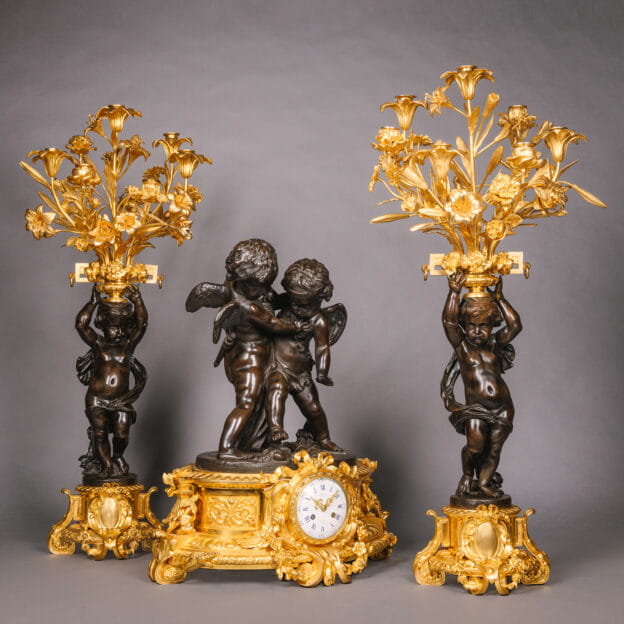
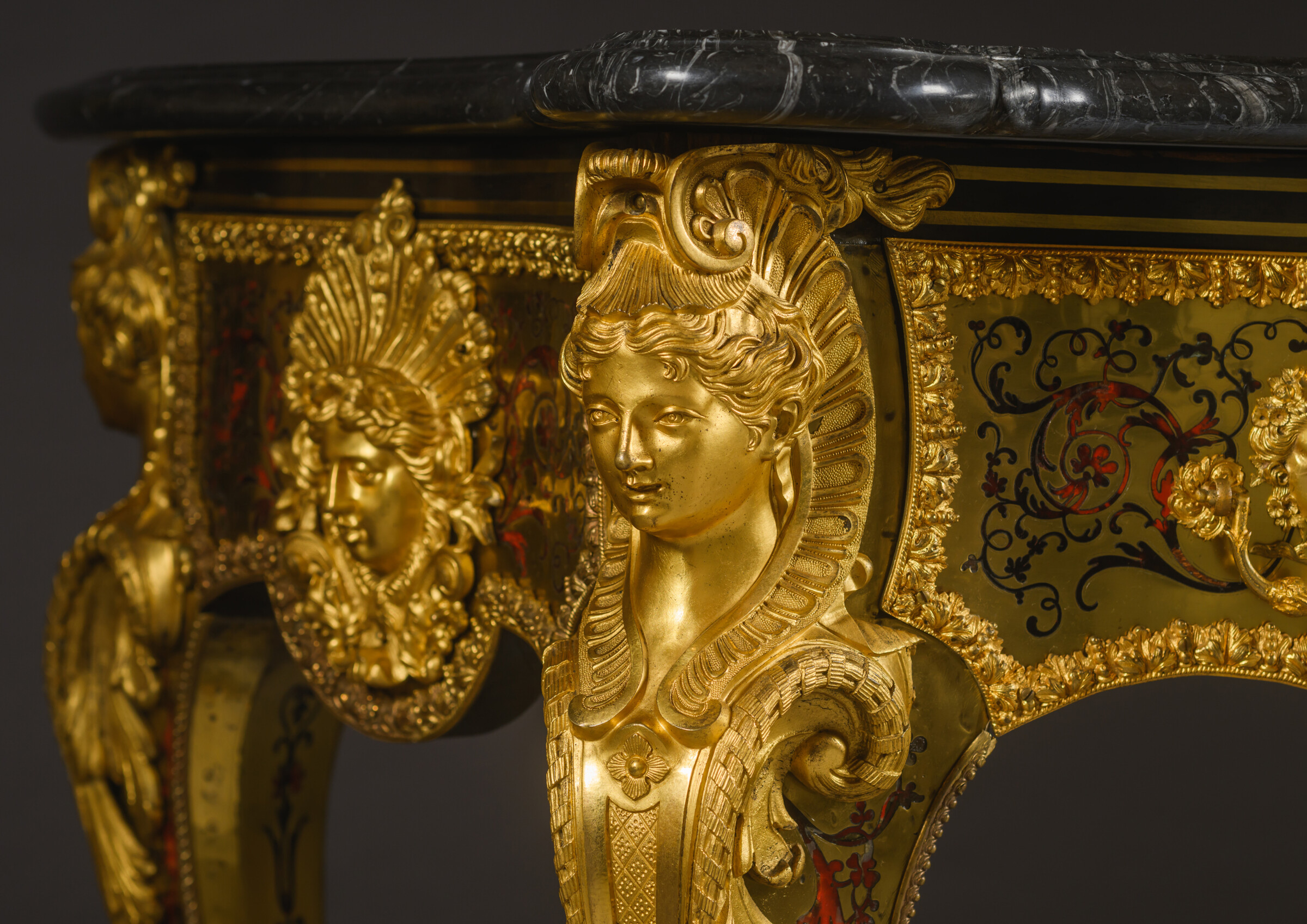
Detail of a Napoléon III Gilt-Bronze Mounted Cut-Brass ‘Boulle’ Marquetry Console Table. Collection Adrian Alan.
When Boulle came back
The Second Empire’s fascination with the past extended to the greatest cabinetmakers of the French monarchy.
Few names carried more prestige than André-Charles Boulle.
The cabinetmaker to Louis XIV had created a distinctive language of ebony, brass, tortoiseshell and gilt bronze, and by the nineteenth century his work had become an essential reference point for French historicist design.
Boulle was not simply being remembered.
He was being revived.
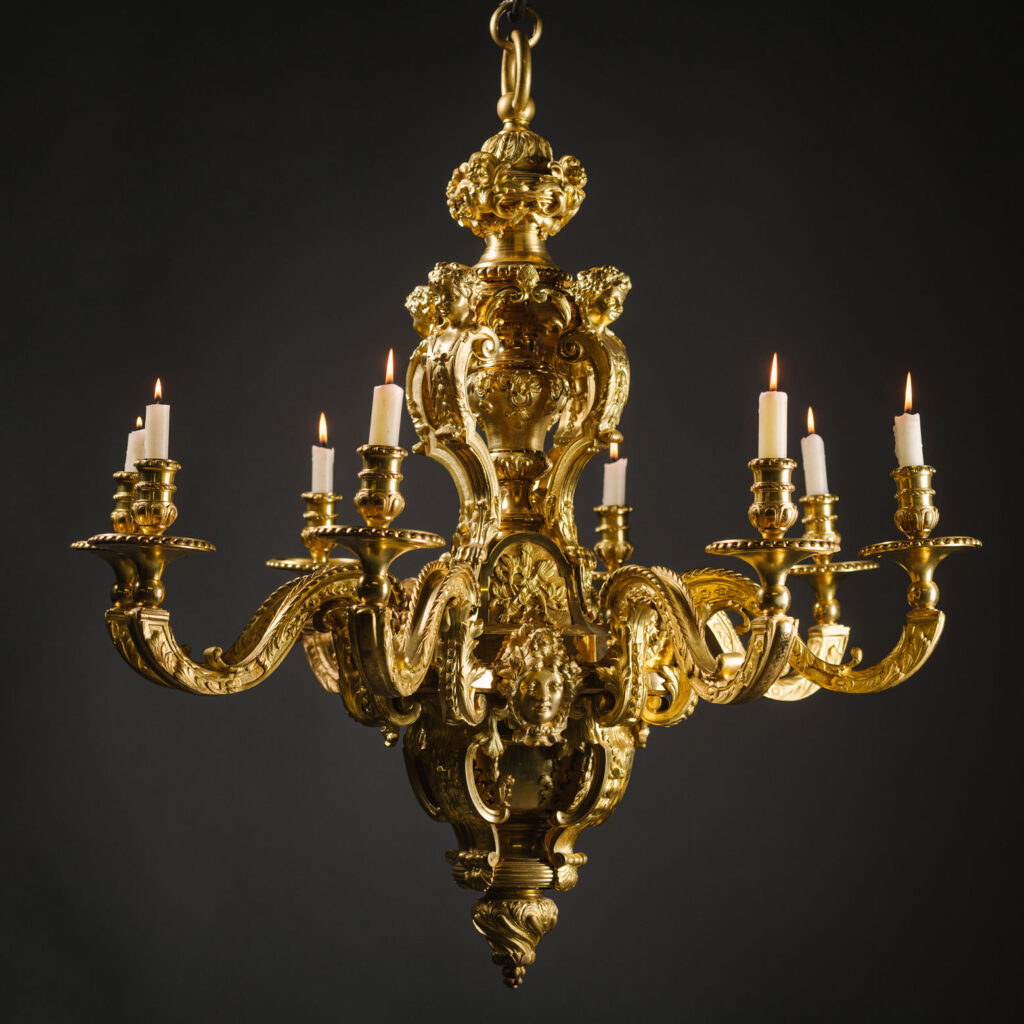
A Fine Napoleon III Gilt-Bronze Eight-Light Chandelier, After the Model by André-Charles Boulle. [Ref: B75914]
An Adrian Alan Napoléon III gilt-bronze eight-light chandelier, dating from circa 1870, follows an important model attributed to Boulle now in the Musée du Louvre. The chandelier is based on Louvre model OA 5101, and Boulle’s original designs had been published in a series of plates by Pierre-Jean Mariette during the early eighteenth century.
The nineteenth-century interpretation is particularly revealing.
It is not trying to pretend that it is seventeenth century.
It is a nineteenth-century object celebrating a seventeenth-century idea.
That distinction runs through much of Napoléon III design.
The past provided the vocabulary.
The nineteenth century decided what to say with it.
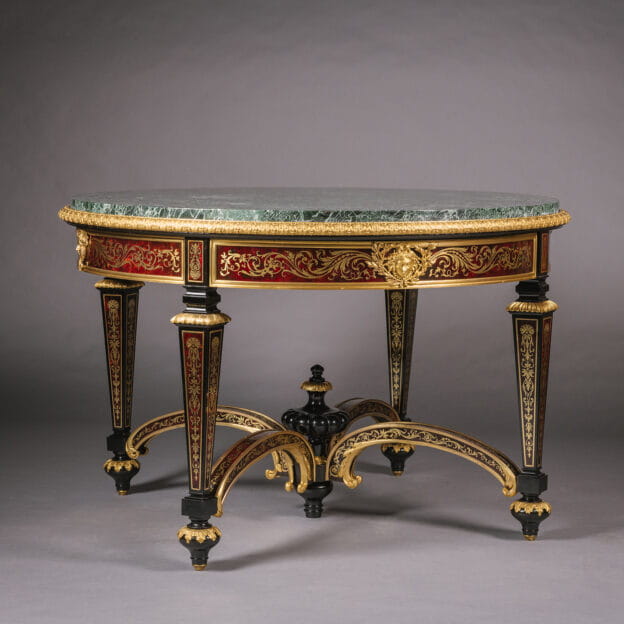
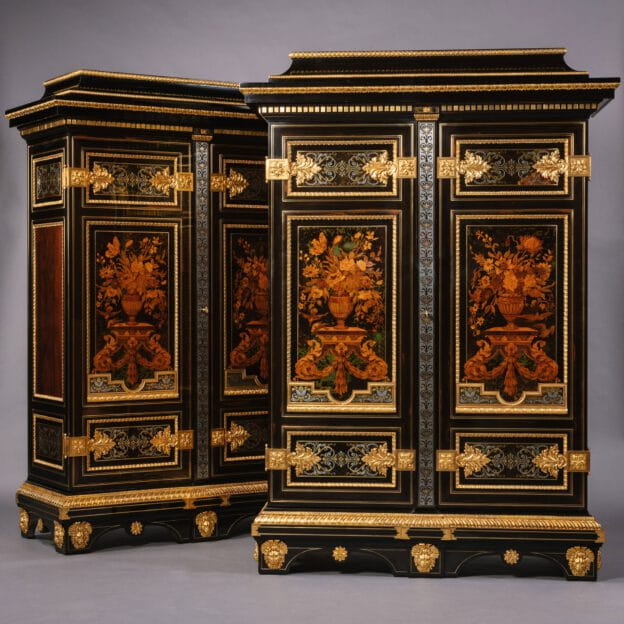
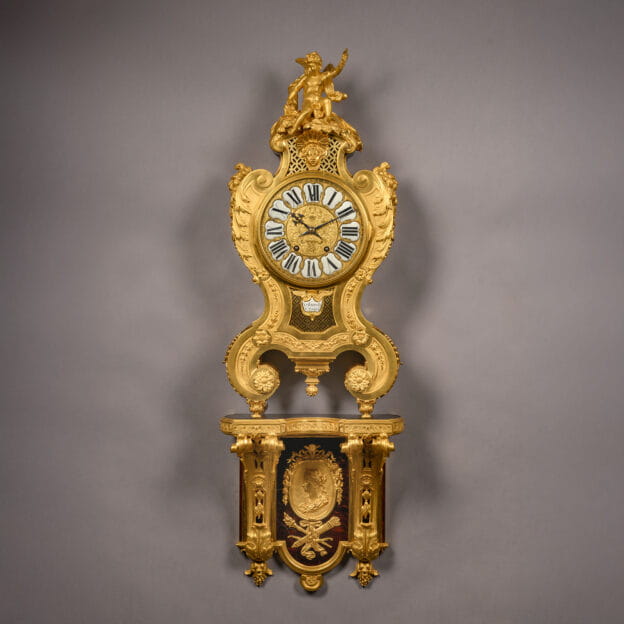
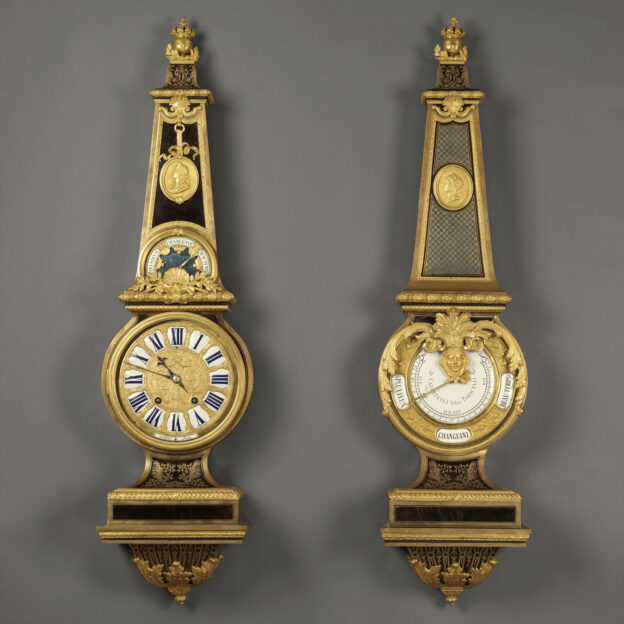
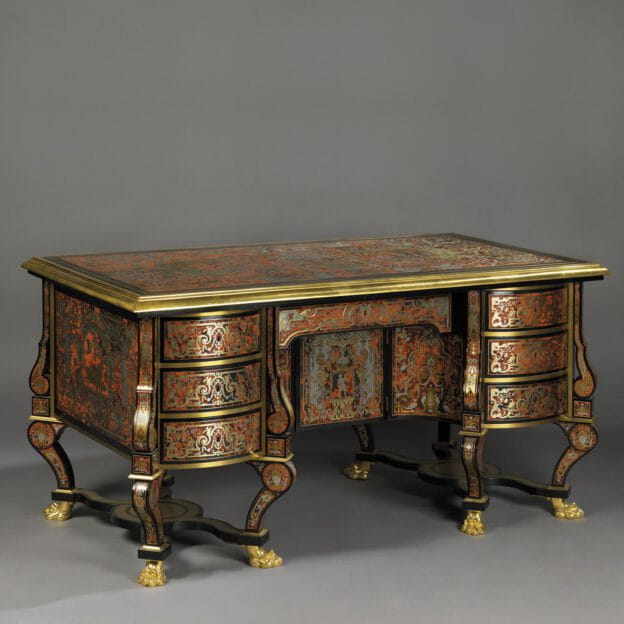
The bronziers who made the look
Much of the visual richness of Second Empire furniture came from the extraordinary Parisian workshops producing gilt bronze.
The bronziers were not simply supplying decoration. Their work could determine the entire character of a piece.
Masks, foliage, griffins, putti, caryatids, animals and classical figures were cast, chased and gilded with remarkable precision.
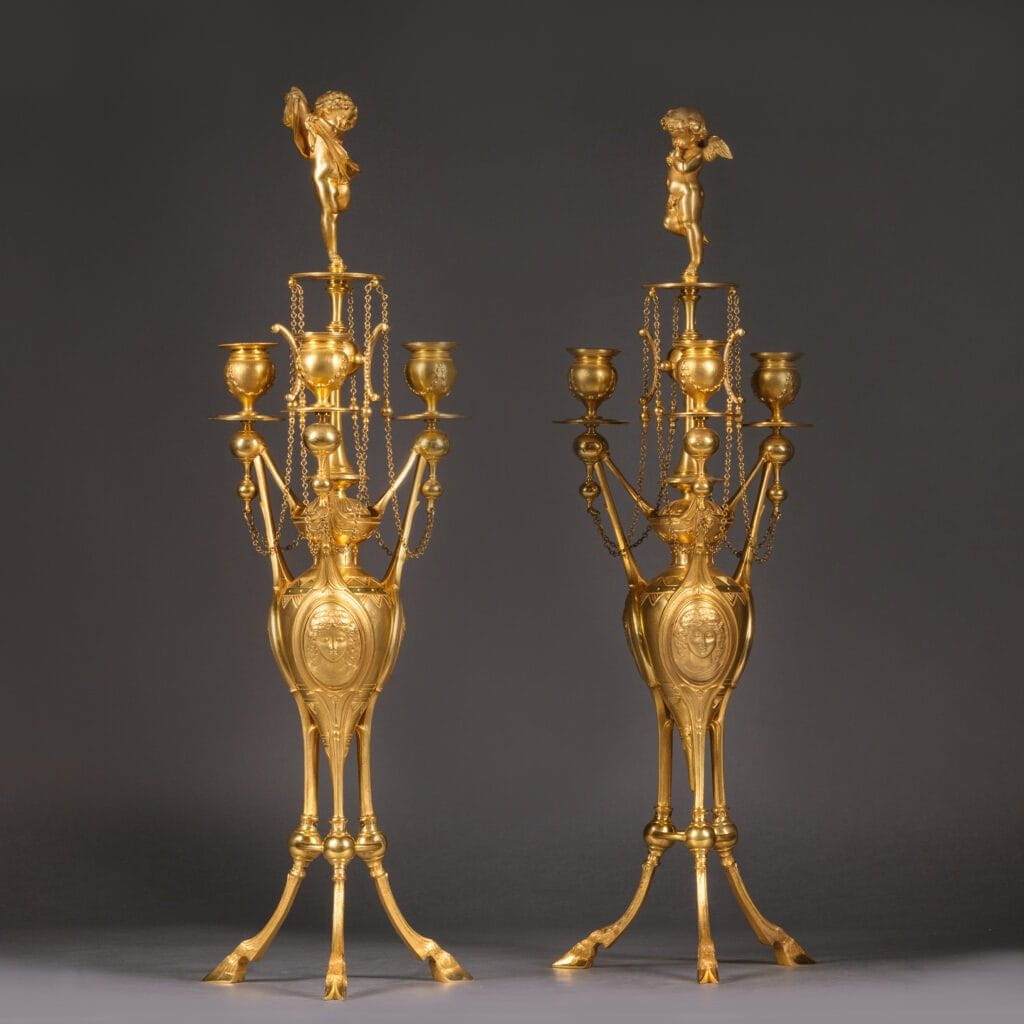
Henri Picard was among the important names of the period. His work was associated with Napoléon III, and he supplied decorative objects for the Emperor’s apartments at the Louvre. A pair of twelve-light candelabra by Picard remains in the museum.
A pair of Neo-Etruscan style candelabra by Picard in the Adrian Alan collection shows just how freely nineteenth-century designers could move between historical sources.
Henri Picard
A Pair of Napoléon III Neo-Etruscan Style
Gilt-Bronze Three-Light Candelabra
France, circa 1870.
The amphora-shaped bodies, portrait masks,
amorini, chains and hoof feet combine antiquity
with the exuberance of nineteenth-century Paris.
The ancient world is being reinvented through nineteenth-century eyes.
And that is the great fascination of the period.
A Roman or Etruscan form could sit comfortably beside a Louis XVI cabinet and a Renaissance-inspired clock.
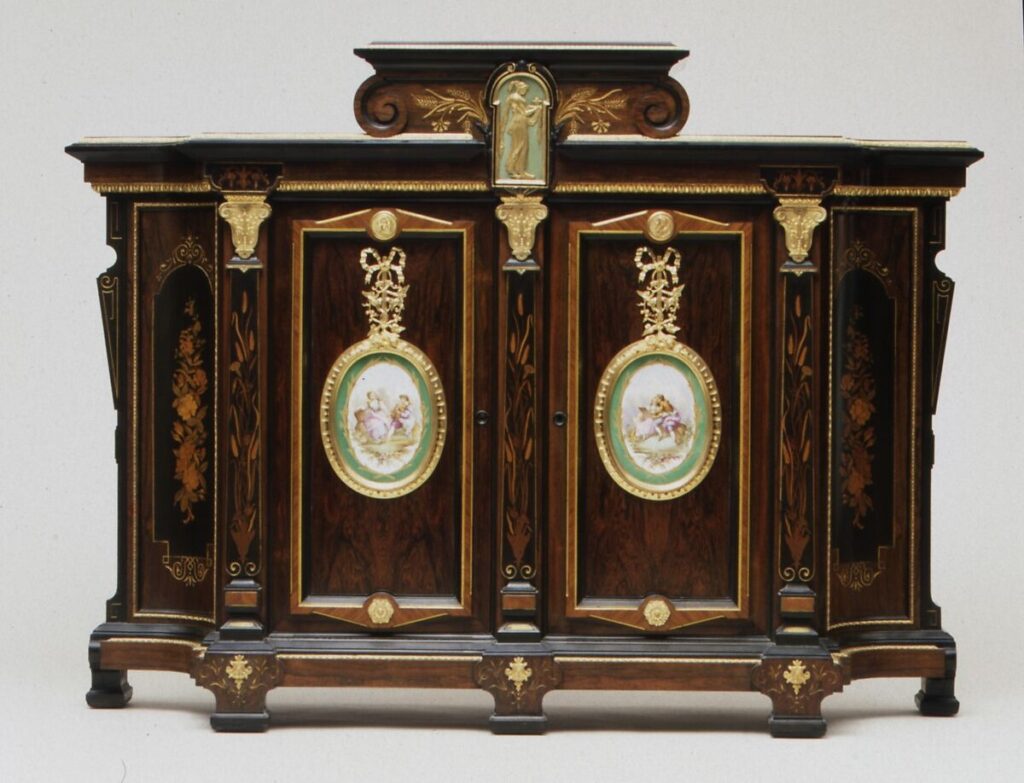
A cabinet by Alexander Roux (1813–1886), New York, circa 1866, The Metropolitan Museum of Art,(Object No. 68.100.1). The museum describes the cabinet as an example of the Neo-Grec style and notes that the style combined motifs from antiquity, the Renaissance and the Louis XVI period and was introduced in France and popularised by Empress Eugénie during the Second Empire.
The Second Empire did not see contradiction in this.
It saw possibility.
The clock as sculpture
The same imagination can be seen in the clocks of the period.
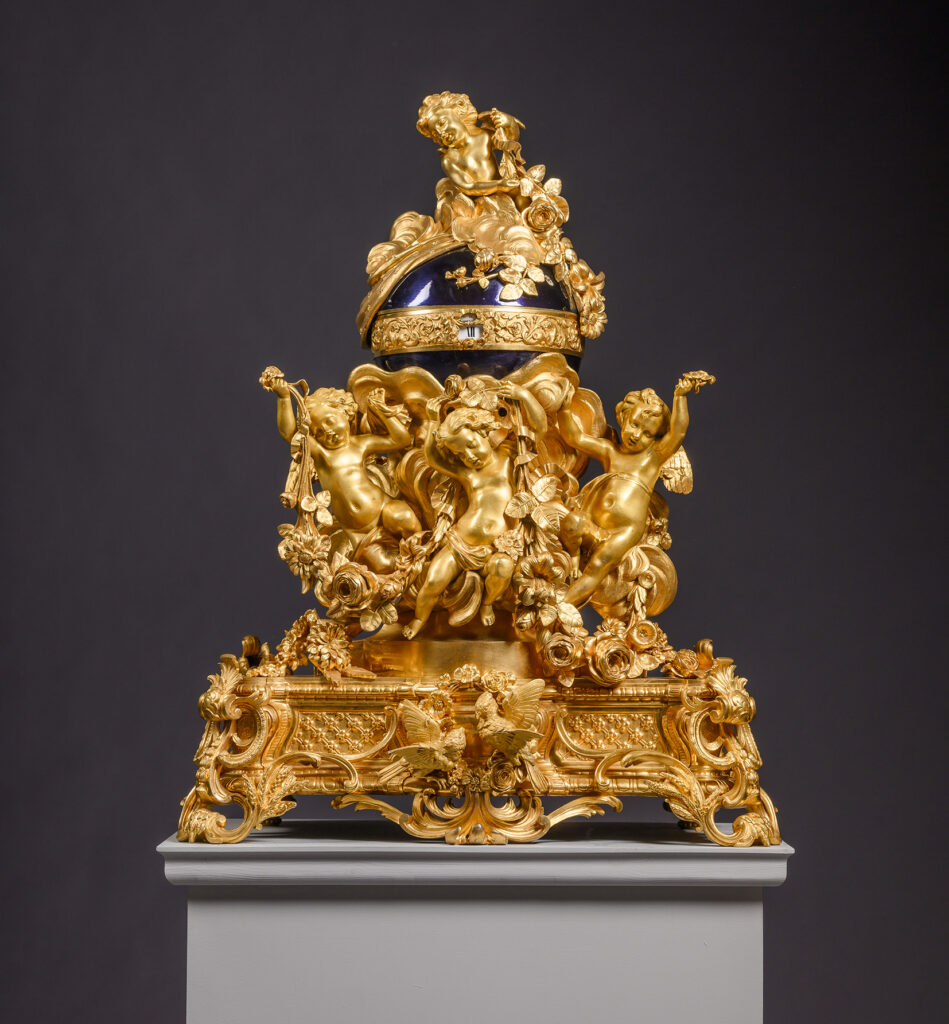
A particularly spectacular example is the Napoléon III Pendule à Cercles Tournants by Jean-François Denière, dating from circa 1860.
Jean-François Denière
An Important Napoléon III
Pendule à Cercles Tournants Mantel Clock.
France, circa 1860.
Of imposing scale, the clock is surrounded by four winged putti and garlands of flowers enveloping a star-studded celestial sphere. The movement is housed within the sculptural composition, while the sphere forms part of an ingenious rotating mechanism.
Denière supplied clocks to Napoléon III at Fontainebleau in 1857 and 1861, and the present example belongs among his most ambitious creations. Its combination of sculpture, horology and movement captures something essential about the nineteenth-century fascination with technology: a mechanism did not have to be hidden away. It could become part of the spectacle.
A clock could tell the time, certainly.
But it could also tell your guests something about your taste.
Grand Salon, Apartment Napoleon III, Louvre
The luxury of light
The more one looks at Napoleon III interiors, the more important light becomes.
The great rooms of the period were designed to sparkle.
Mirrors multiplied the glow of candles. Gilt bronze picked up the light. Polished marble reflected it. Chandeliers suspended above the room turned illumination itself into decoration.
The Louvre’s Grand Salon is perhaps the clearest surviving example. Its monumental decoration combines gilding, painted decoration, sculpture, furniture and reflective surfaces to extraordinary effect. The salon could also be transformed into a theatre, making the room itself part of the entertainment.
The same principle can be applied surprisingly easily today.
A monumental nineteenth-century mirror does not need an equally elaborate room around it.
A chandelier does not need matching furniture.
In fact, the contrast can make both the antique and the contemporary elements feel stronger.
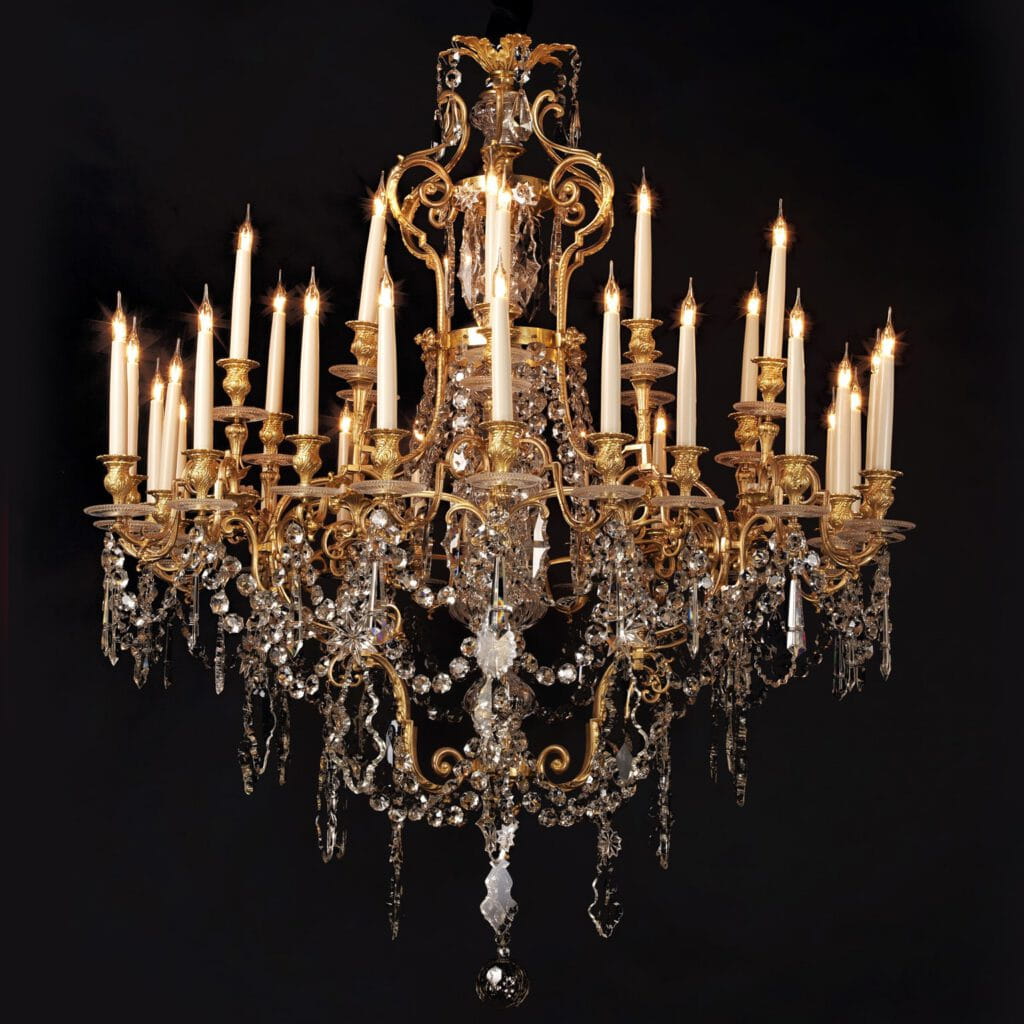
A Large Napoléon III Gilt-Bronze and Cut-Glass
Thirty-Six Light Chandelier.
French, Circa 1870.
The new luxury of Algerian onyx
The Second Empire was not simply fascinated by the past. It was equally fascinated by materials that felt new and luxurious.
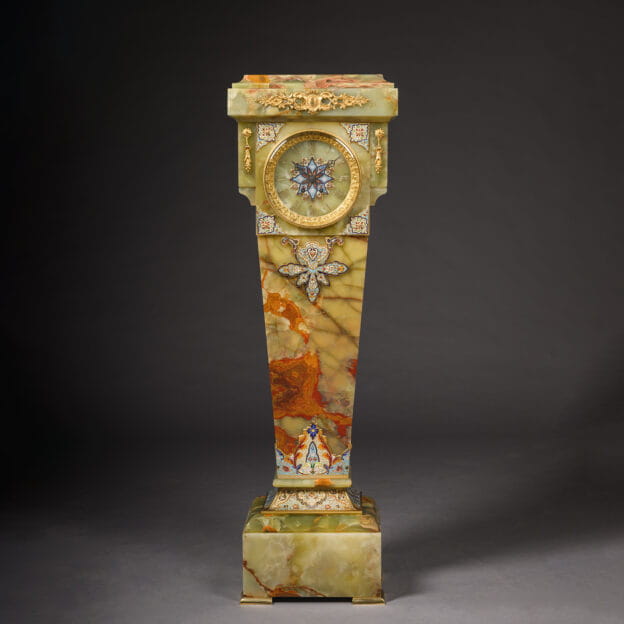
Algerian onyx became one of the fashionable materials of the period, valued for its translucent quality and dramatic veining. The Société des Marbres Onyx d’Algérie developed an especially sophisticated language in which onyx was combined with gilt bronze, silvered bronze and champlevé enamel.
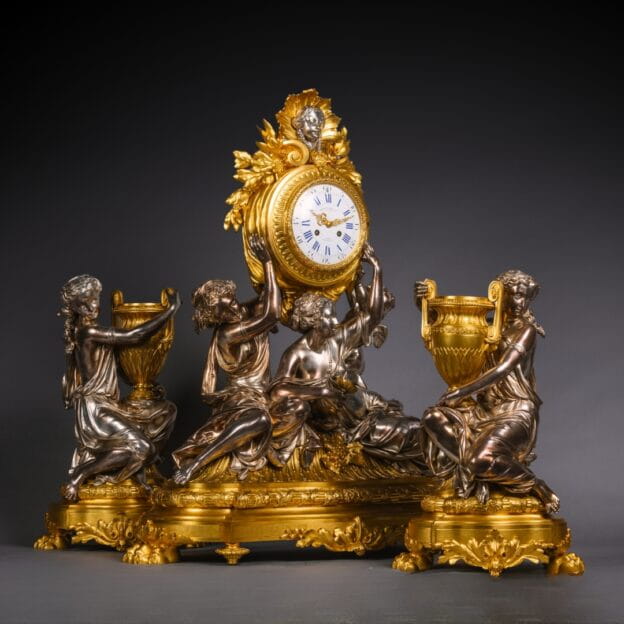
An exceptional Adrian Alan three-piece clock garniture made by Eugène Cornu for the Société des Marbres Onyx d’Algérie brings these elements together.
Eugène Cornu
Société des Marbres Onyx d’Algérie
A Napoléon III Gilt and Silvered Bronze, Onyx and
Champlevé Enamel Figural Three-Piece Clock Garniture.
The figure cast from a model by Albert-Ernest Carrier-Belleuse (1824-1887),
the movement by Eugène Farcot.
France, Circa 1860.
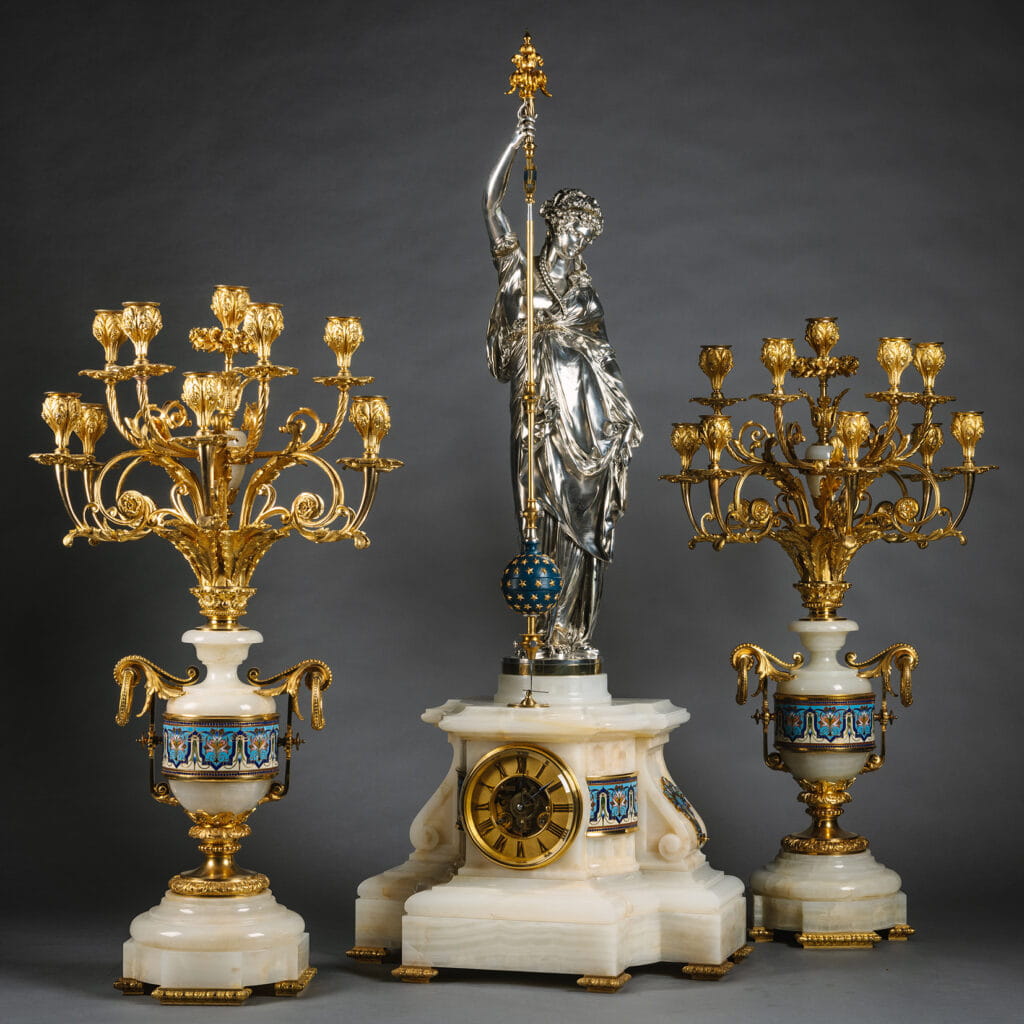
The clock combines Algerian onyx with champlevé enamel and gilt and silvered bronze. Above it rises a figure modelled by Albert-Ernest Carrier-Belleuse, holding a rotating conical pendulum terminating in a celestial orb. The movement was made by Eugène Farcot.
It is an extraordinary object, but it also tells us something about the period’s attitude towards luxury.
The Second Empire was fascinated by new materials, new technologies and new ways of combining them.
The Universal Exhibitions of 1855 and 1867 provided an international stage for precisely this combination of craftsmanship and industrial progress. The 1867 exhibition attracted some eleven million visitors and became a spectacular demonstration of the abundance made possible by industrialisation, as documented by the Musée d’Orsay.
History and modernity were not enemies.
They were part of the same spectacle.
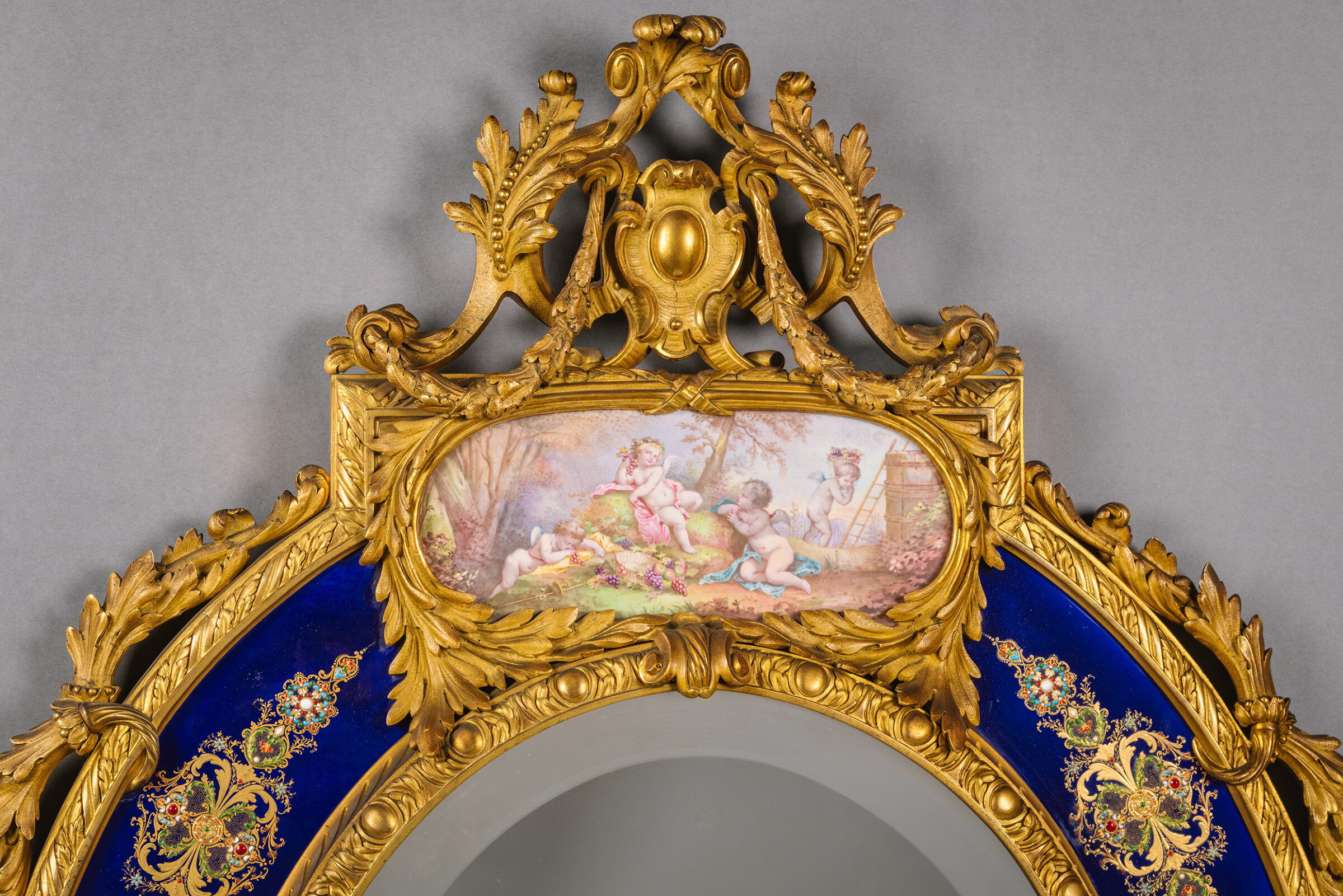
Detail of the cresting on a rare Napoléon III Gilt-Bronze And Sevres-Style Porcelain Wall Mirror
Attributed to Henri Picard, French, Circa 1850-70. Collection Adrian Alan
The mirror returns
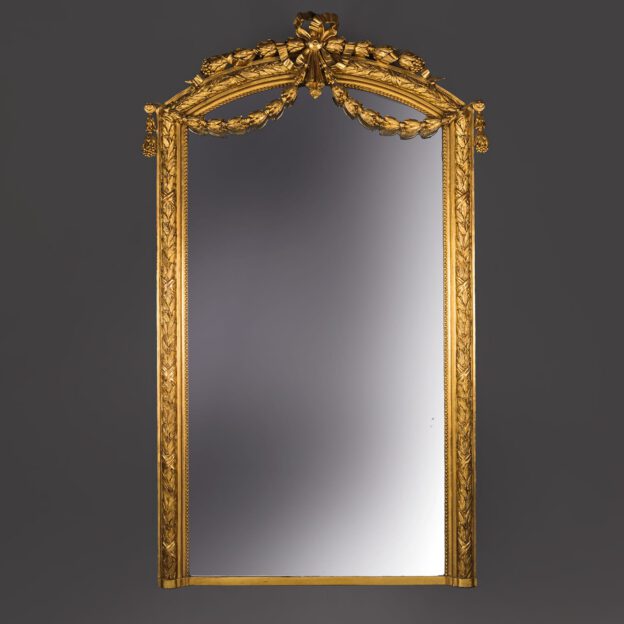
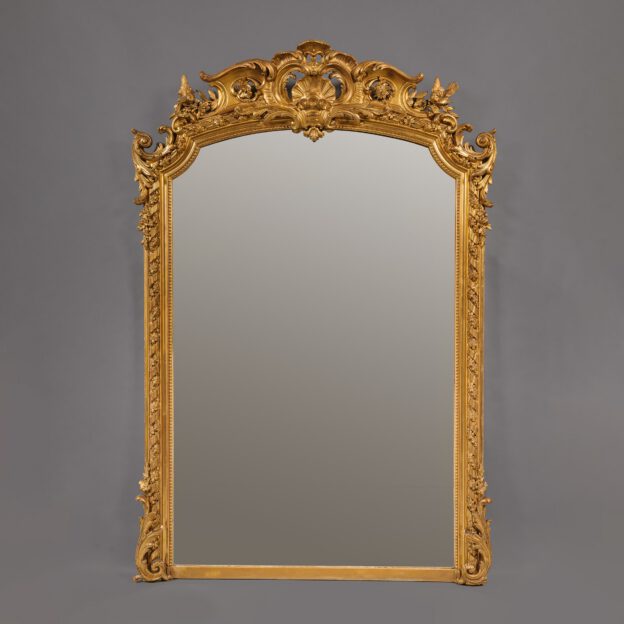
Perhaps no object translates more easily from the Second Empire into a contemporary interior than the mirror.
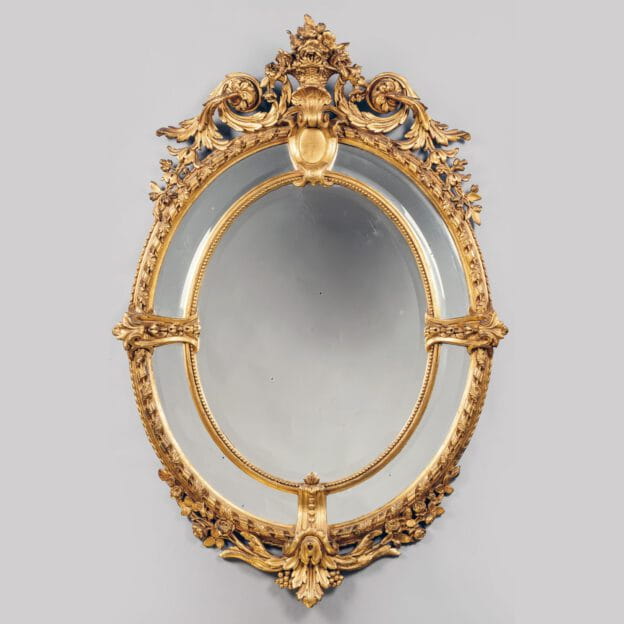
The Adrian Alan collection includes a particularly impressive Napoléon III gilt-bronze and ebonised bevelled mirror, dating from circa 1850.
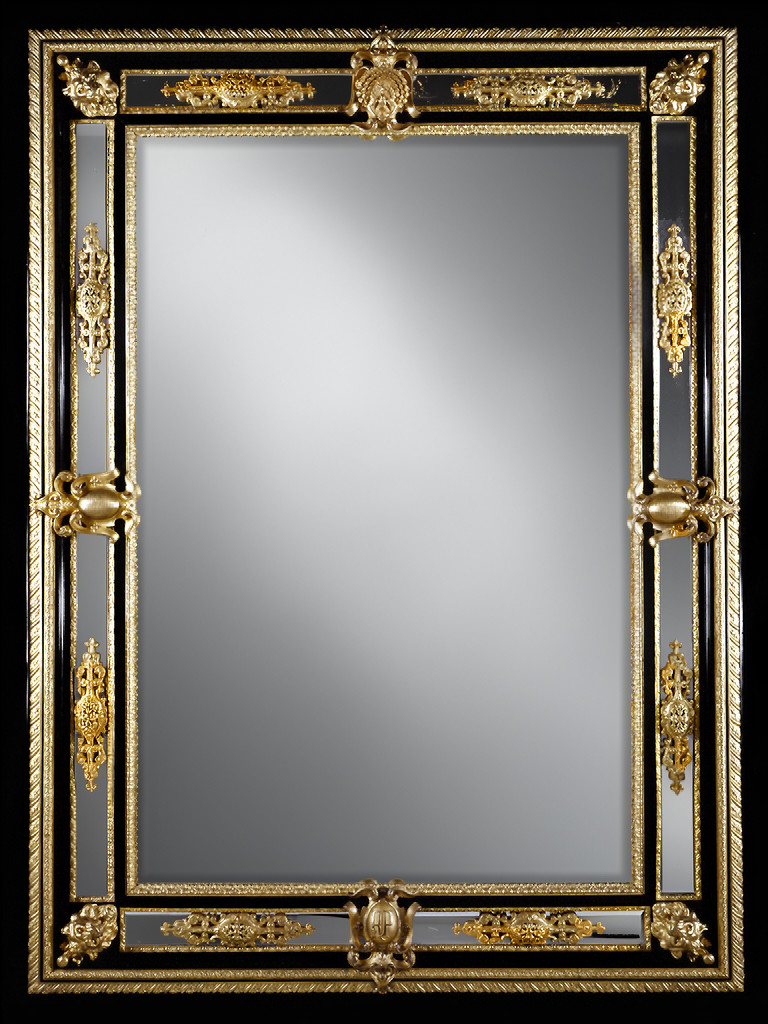
A Fine and Impressive Napoléon III
Gilt-Bronze and Ebonised Bevelled Mirror.
France, circa 1850.
At 229 cm high and 169 cm wide, it is architectural in scale. The ebonised frame is enlivened with gilt-bronze ornament, including lion masks and a peacock plaque.
Placed in a nineteenth-century interior, it would reinforce the richness of the room.
Placed in a contemporary interior, it could do something more interesting.
It could become the room.
Rethinking opulence
There is a reason the Second Empire continues to fascinate interior designers. Its rooms have something that many contemporary interiors often lack: a sense of occasion.
Today, when so much decorating is concerned with restraint, the confidence of Napoléon III can feel surprisingly refreshing. A room does not necessarily need more furniture, more colour or more decoration. What it needs is a point of view.
This is where nineteenth-century furniture can be particularly effective.
A richly mounted cabinet against a pale wall suddenly feels less like a piece of period furniture and more like a sculptural object. A monumental mirror can give an otherwise restrained room an architectural presence. A chandelier can introduce a sense of ceremony without requiring the rest of the room to follow its lead.
The contrast is what makes it work.
This is perhaps why historic French furniture has become such an effective tool in contemporary interiors. Rather than attempting to match an antique with other pieces from the same period, designers can allow it to sit amongst things that could not have existed when it was made.
A nineteenth-century cabinet beside a modern sofa. An eighteenth-century portrait above a contemporary console. A Napoléon III chandelier suspended above a dining table with clean, modern lines.
The furniture retains its history, but the room gives it a new context.
In this setting, opulence becomes less about quantity and more about emphasis.
One extraordinary object can have considerably more impact than a room full of them.
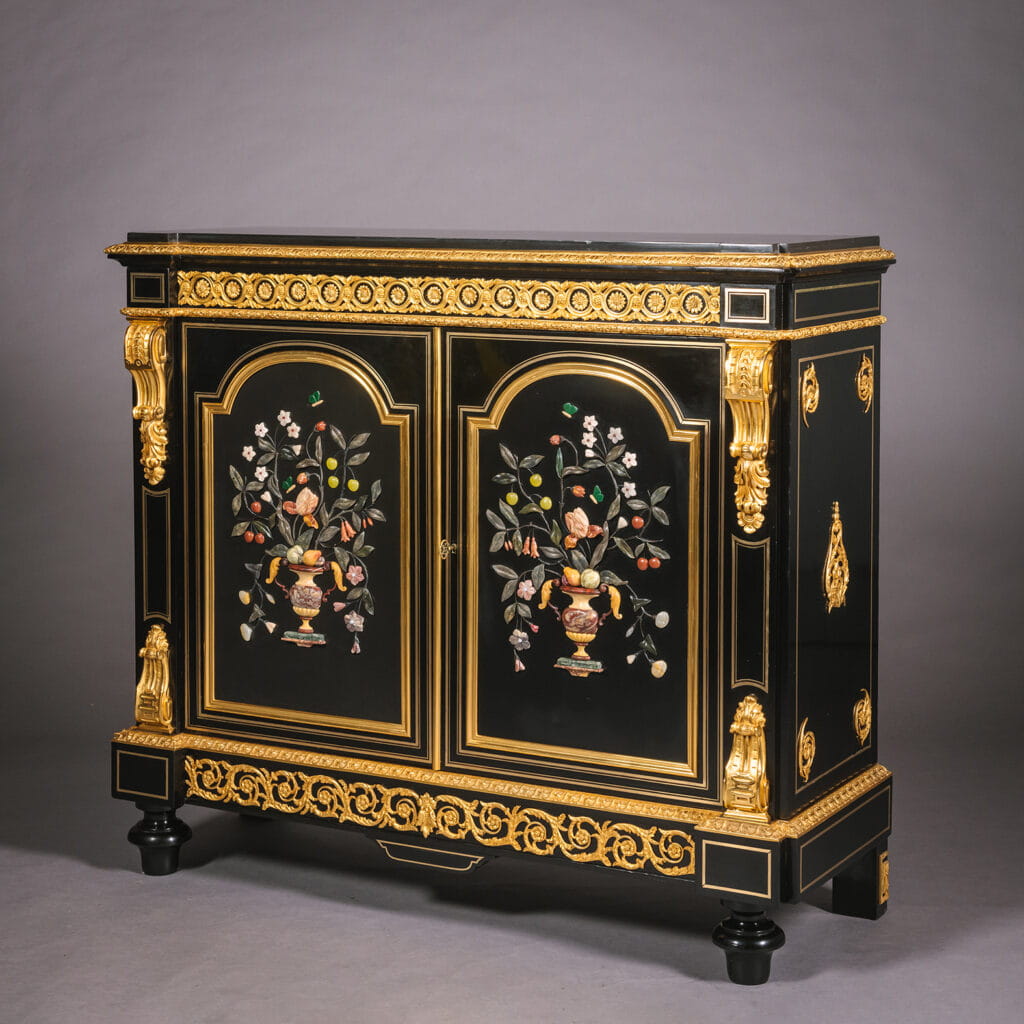
A Napoléon III Gilt-Bronze and Pietre Dure
Mounted Ebonised Side Cabinet.
French, Circa 1860.
The Art of Living with Napoleon III
Perhaps this is the most interesting legacy of the Second Empire.
Napoleon III interiors were created for a world of ceremony, but the individual objects were made to as works of art in themselves, to be admired as much as they were to be used. The finest cabinets, clocks, mirrors and chandeliers possess a presence that remains remarkably powerful outside their original surroundings.
That makes them unusually versatile.
The same gilt-bronze mirror that once formed part of an elaborate Parisian interior can now sit comfortably above a simple contemporary console. A cabinet covered in gilt bronze and coloured hardstones can become the unexpected focal point of a minimalist room. A pair of candelabra can bring warmth and intimacy to a modern dining table.
The surrounding architecture does not have to compete with the furniture.
It can give it space.
This is perhaps the most contemporary way of approaching Napoleon III: not as a period to be faithfully recreated, but as a source of ideas.
There is something to be said for the Second Empire’s willingness to mix periods, materials and influences without worrying too much about whether they belonged together. Its designers looked to Versailles, antiquity, the Renaissance and the eighteenth century, then combined those references with the materials and technology of their own time.
We can do much the same today.
The result need not look like Napoléon III.
It might simply feel a little richer, a little more atmospheric, a little less predictable.
And that is where the style becomes interesting again.
An Age of Imagination
The Second Empire lasted less than twenty years, yet its influence can still be felt in the way we think about luxury interiors.
It was an age fascinated by history but equally fascinated by modernity; by craftsmanship and by technology; by the intimacy of the private salon and the spectacle of the grand reception room.
Its furniture reflects all of those contradictions. Perhaps that is why the best pieces remain so compelling. They were never intended to disappear quietly into a room. They were made to be noticed. More than a century later, that confidence can still be useful.
A Napoléon III interior does not ask us to live in the nineteenth century. It simply reminds us that decorating can be an act of imagination, and that sometimes the most memorable room is the one that dares to have a little more character.
Opulence, after all, does not have to mean excess.
Sometimes it is simply the decision to choose one exceptional thing, and give it room to shine.
That is the enduring appeal of Napoléon III.
It was an age of opulence.
But, at its best, it was also an age of imagination.
Further Reading
For a scholarly treatment of the period, the Musée d’Orsay’s material surrounding The Spectacular Second Empire, 1852–1870 is particularly useful, as is the Metropolitan Museum’s European Decorative Arts at the World’s Fairs, 1850–1900. The latter is especially relevant to understanding how French historicist design moved beyond France through international exhibitions and the circulation of design publications.
The Musée du Louvre remains the essential primary source for the interiors themselves, particularly its surviving Napoleon III apartments and associated decorative arts.