Roux Et Brunet
A Louis XVI Style Gilt-Bronze and Vernis Martin Mounted Secretaire Cabinet
£55,000
A Fine Louis XVI Style Gilt-Bronze and Vernis Martin Mounted Mahogany Secretaire Cabinet-On-Stand, By Frédéric Roux, The Gilt-Bronze Mounts by Henri...
Dimensions
Height: 150.5 cm (60 in)Width: 85 cm (34 in)
Depth: 37 cm (15 in)
Weight: 70 kg

 Print
PrintDescription
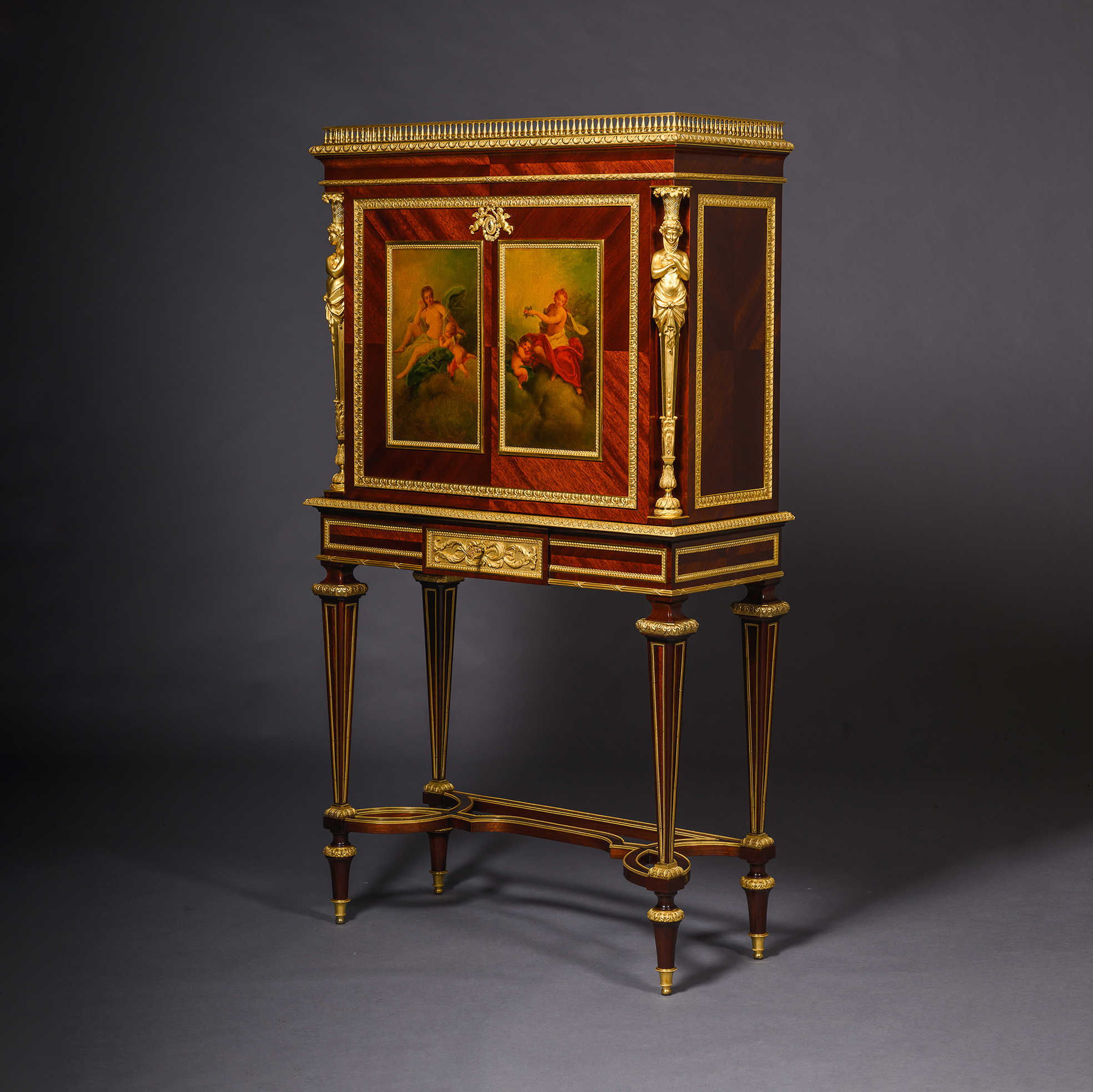
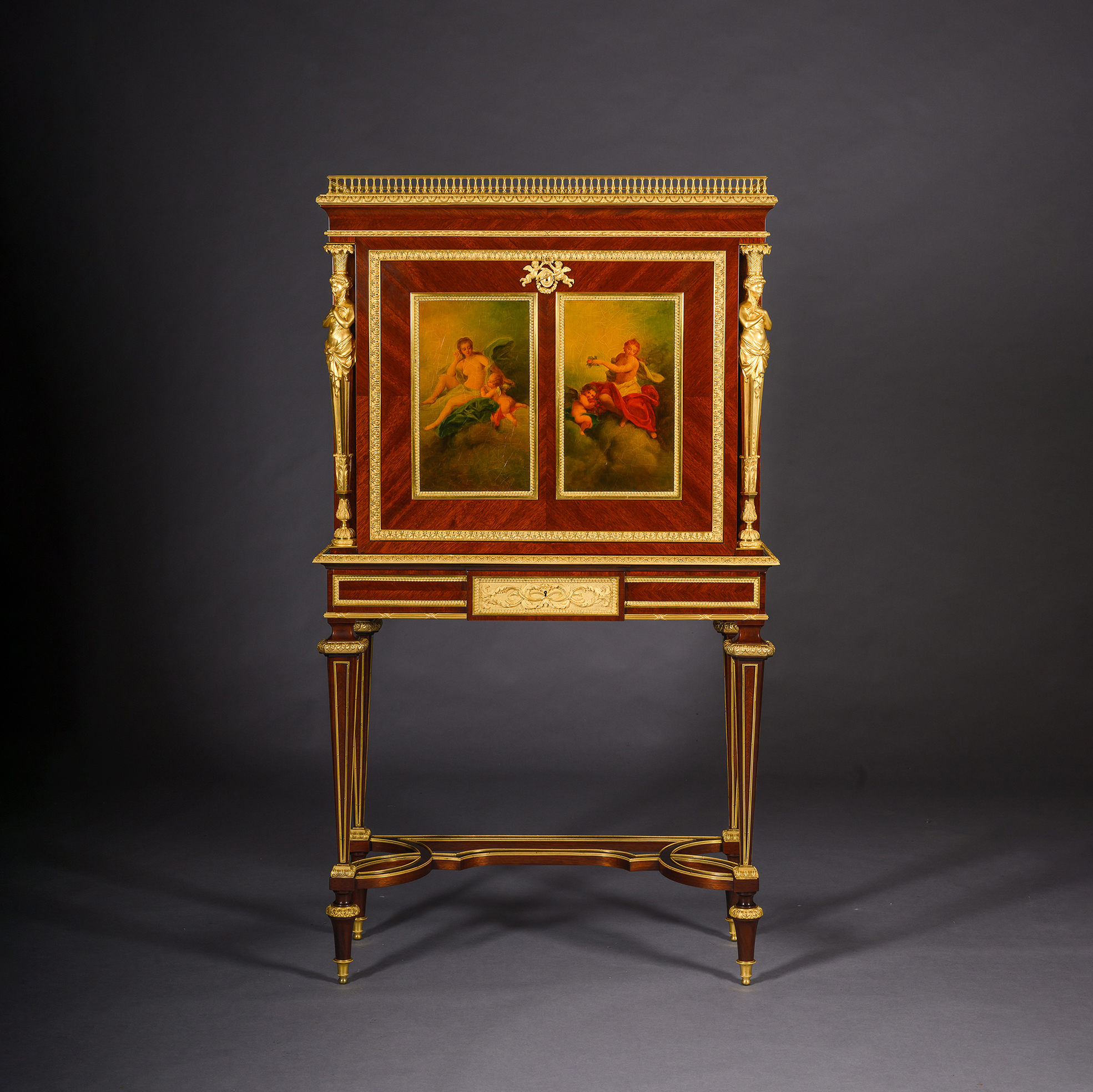
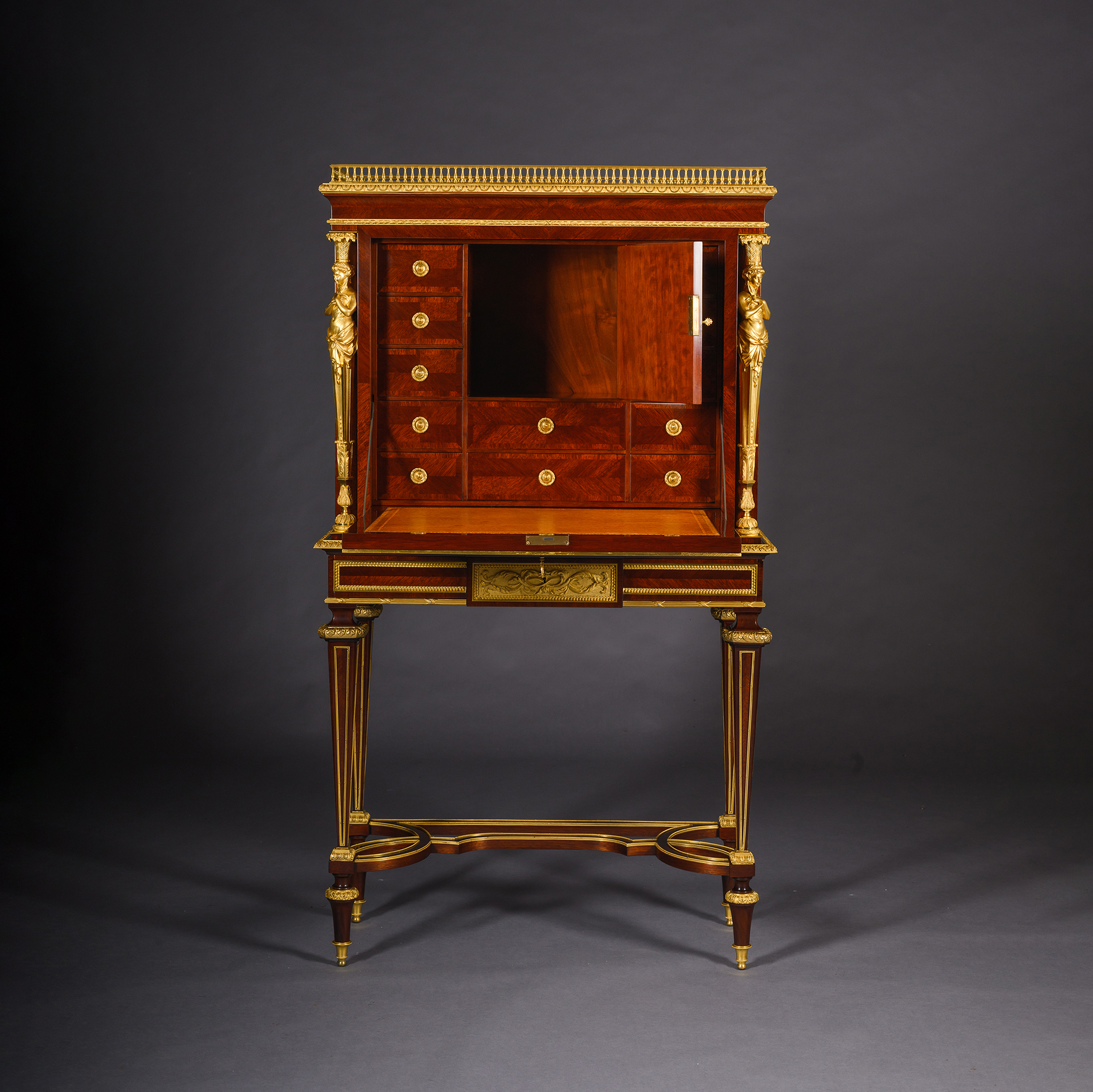
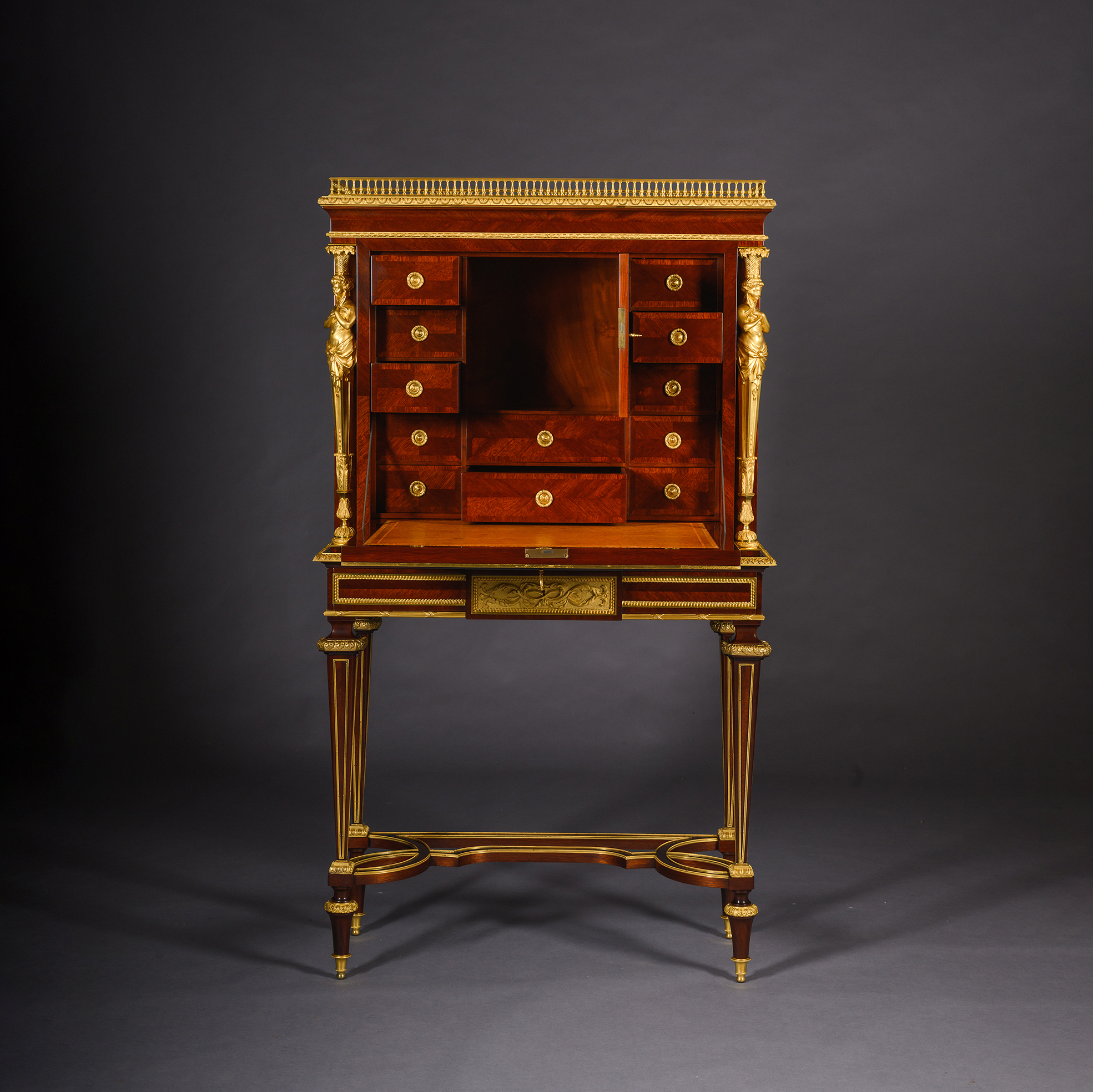
A Fine Louis XVI Style Gilt-Bronze and Vernis Martin Mounted Mahogany Secretaire Cabinet-On-Stand, By Frédéric Roux, The Gilt-Bronze Mounts by Henri Picard.
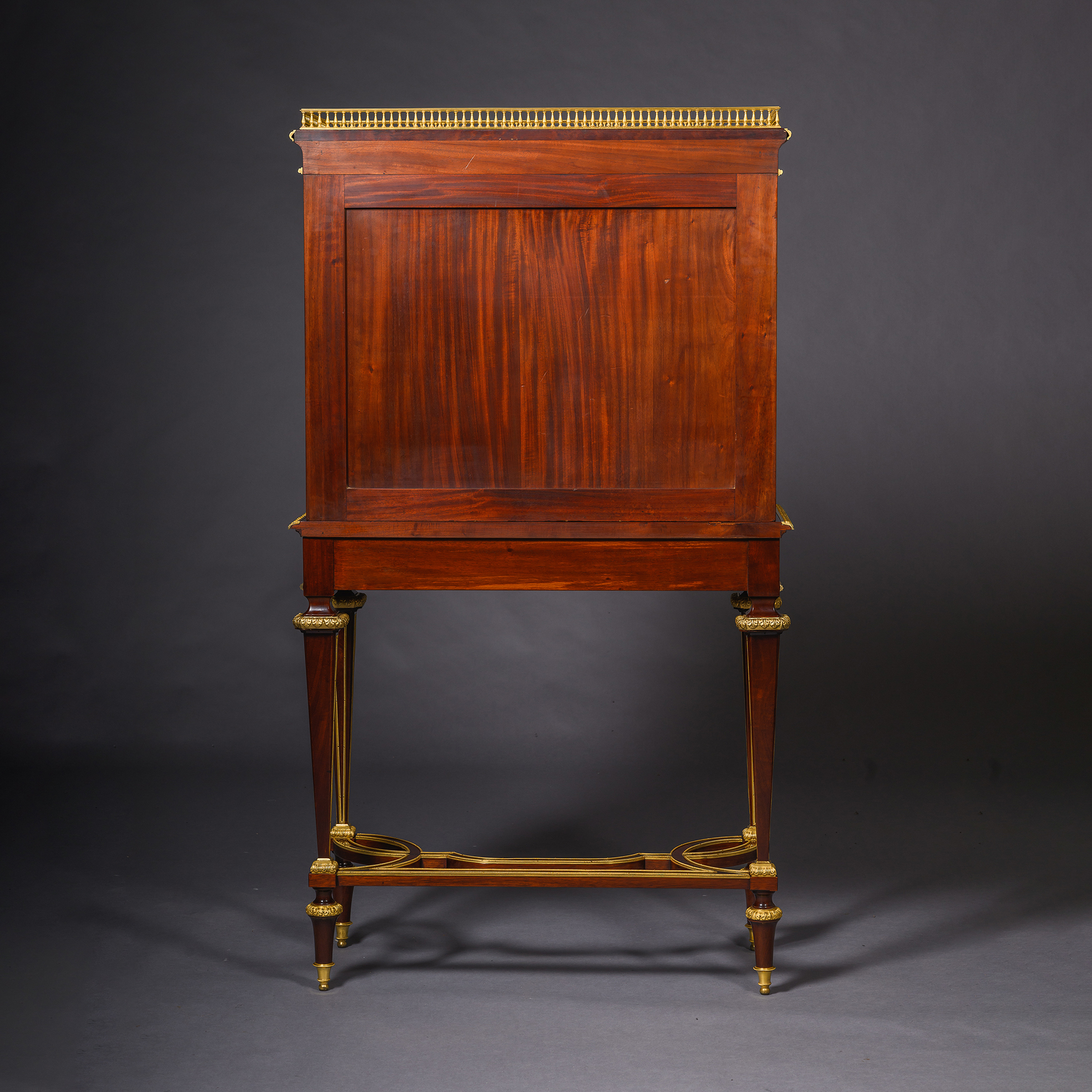
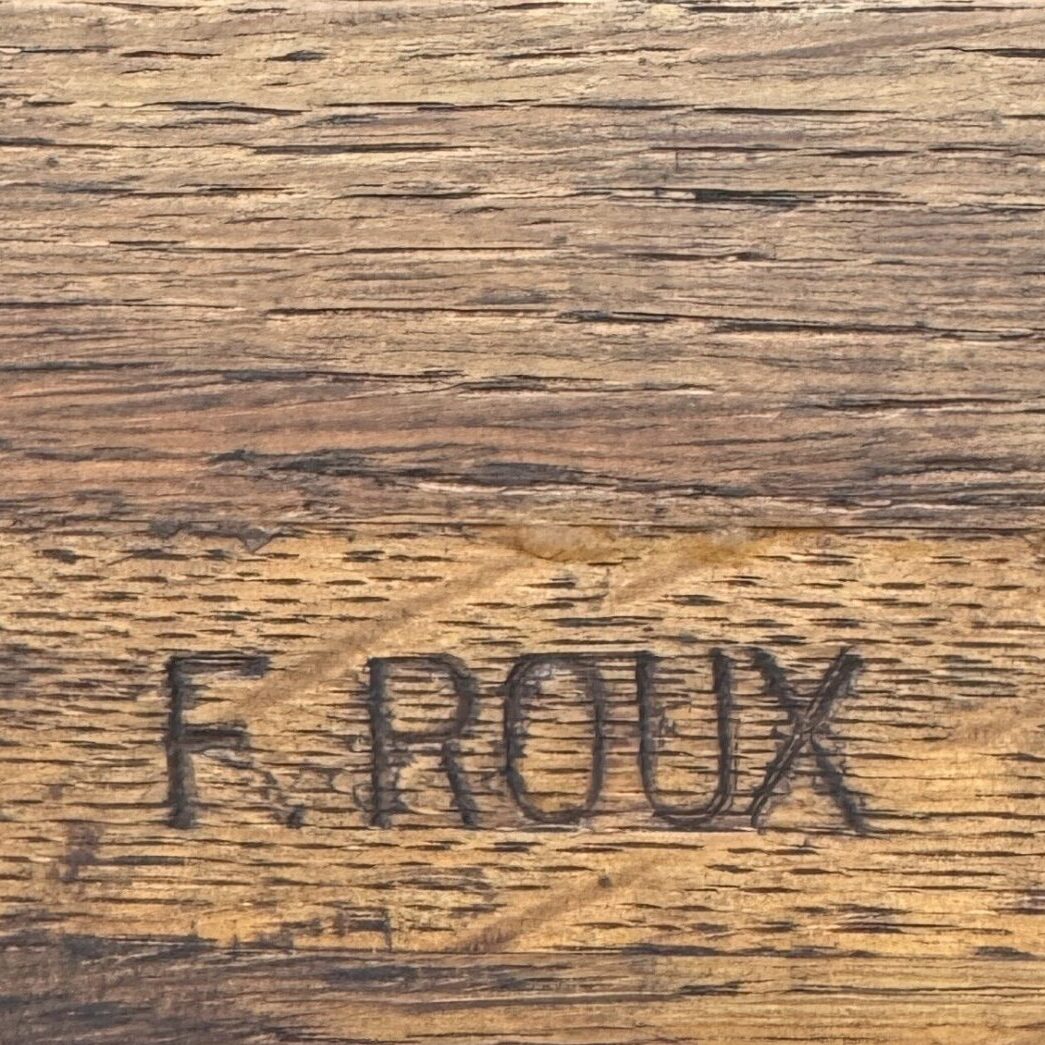
Stamped ‘F. ROUX’ to the underside.
Incised marks to the reverse of the bronze mounts ‘HPR’ for the ‘bronzier’ Henri Picard.
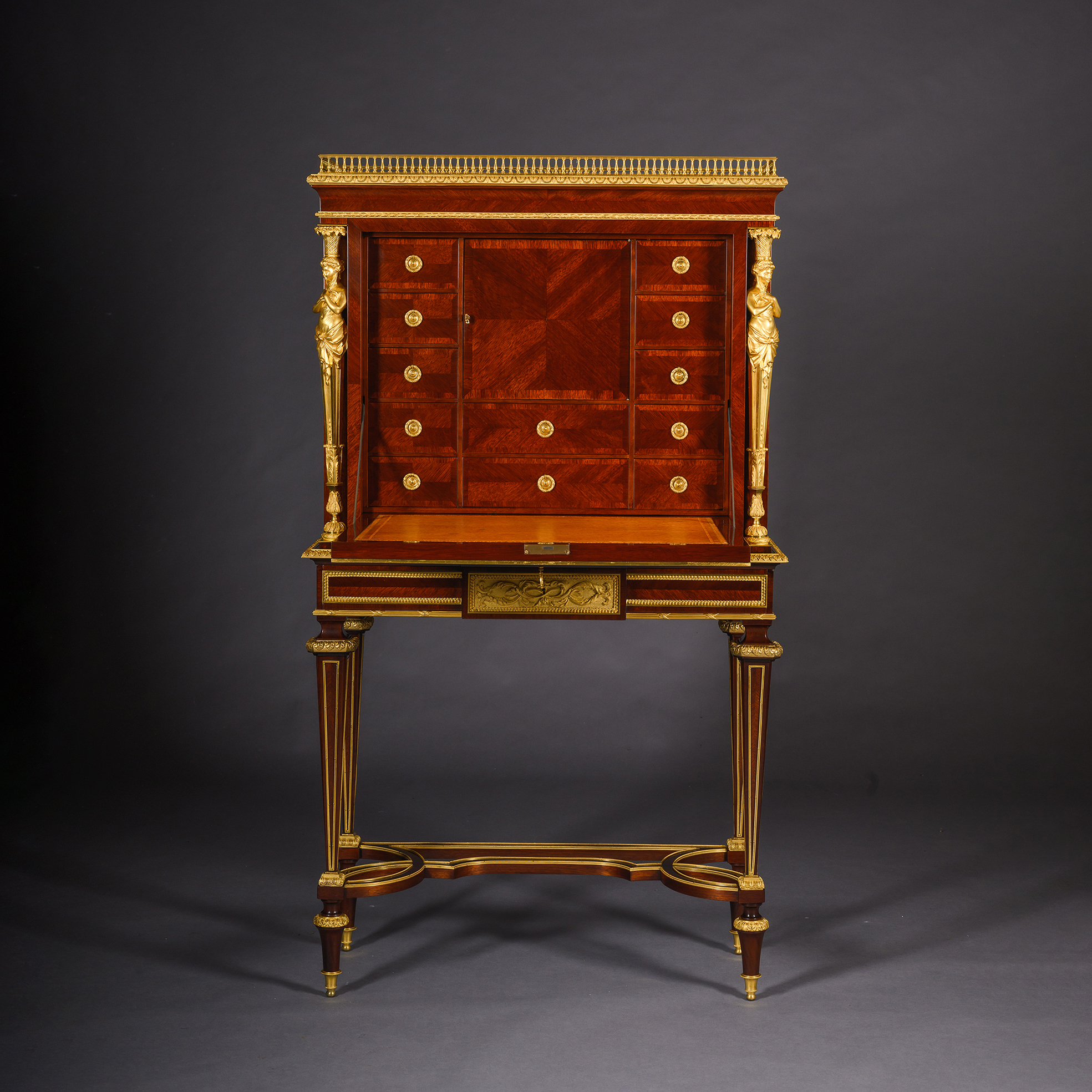
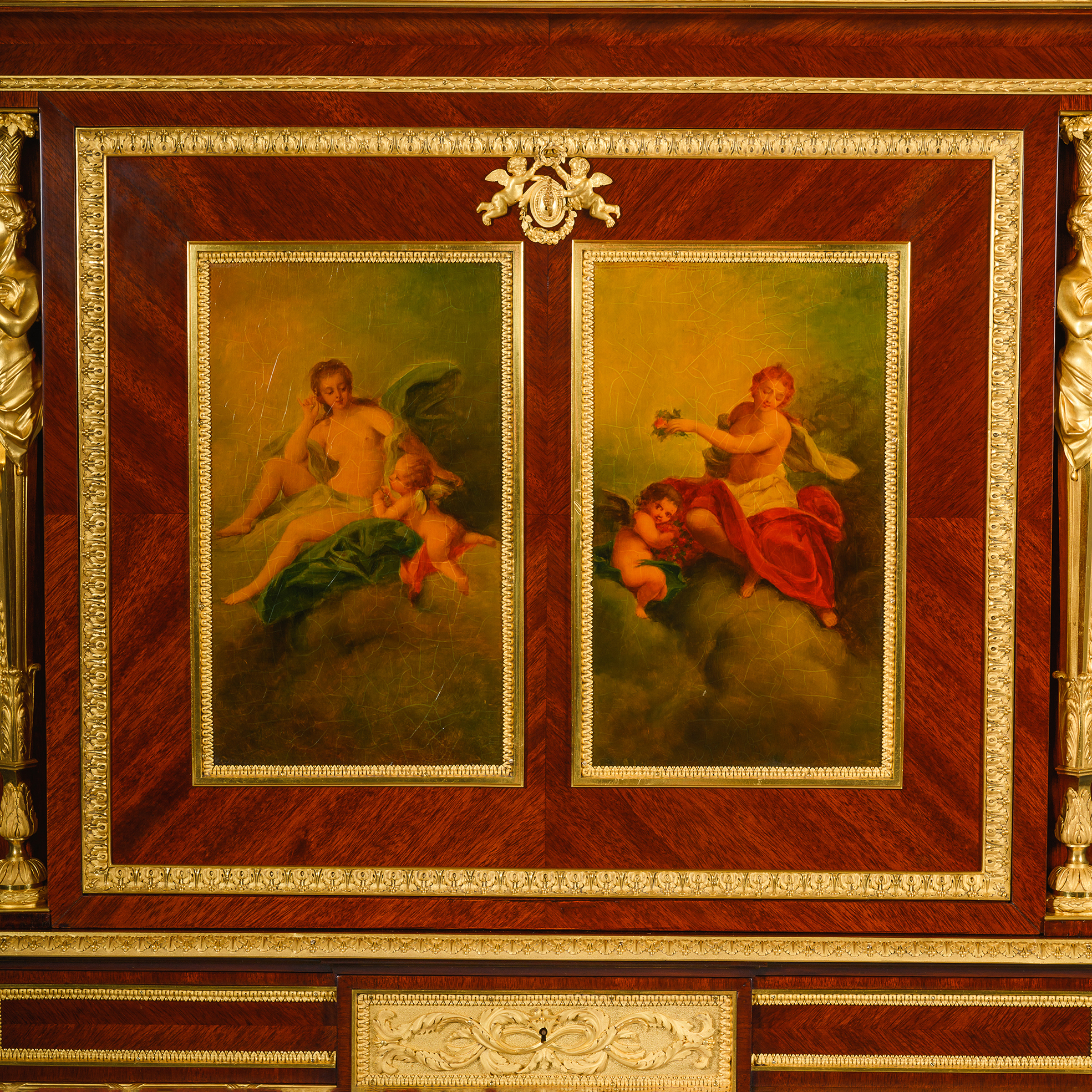
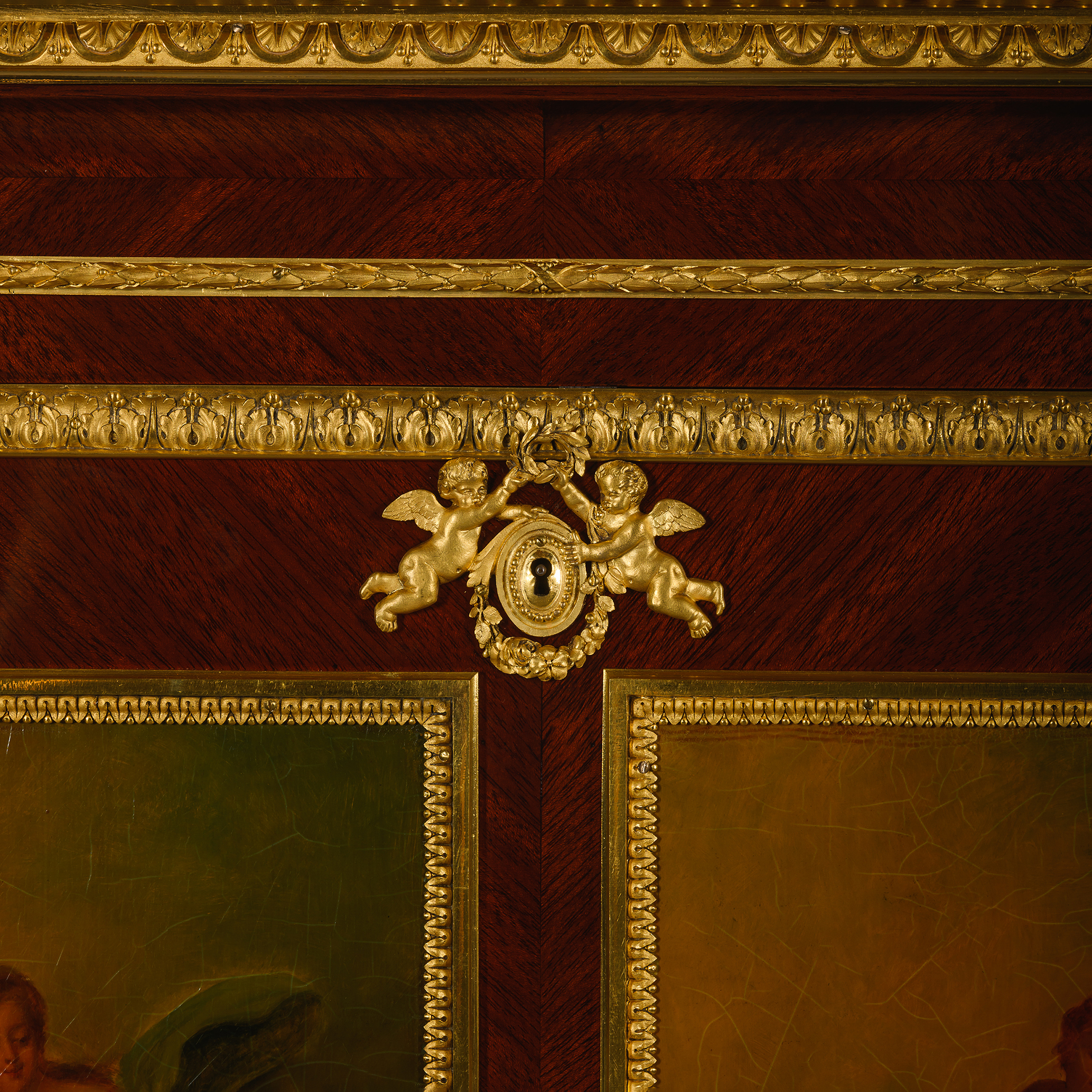
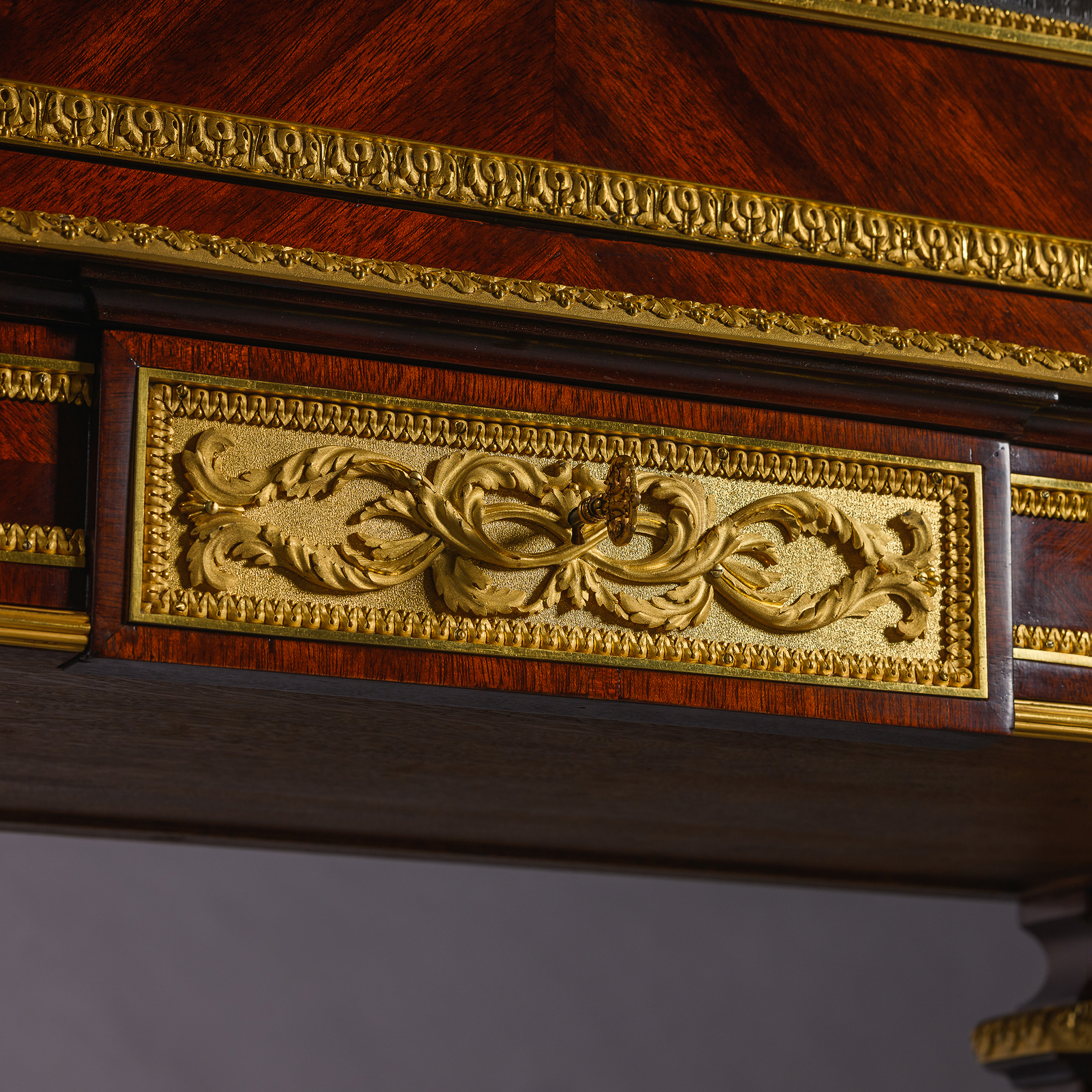
The top with a balustrade gallery. The fall front cupboard door with Vernis Martin panels painted with Venus and Cupid in the style of François Boucher (1703-1770). The inside of the door is lined in leather so that when it is open it serves as a desk. The interior is fitted with a small cupboard surrounded by drawers, completing its purposes as a secretaire or writing-cabinet. The stand is fronted by a long drawer and supported on square-tapering legs joined by a loop stretcher.
France, Circa 1870.
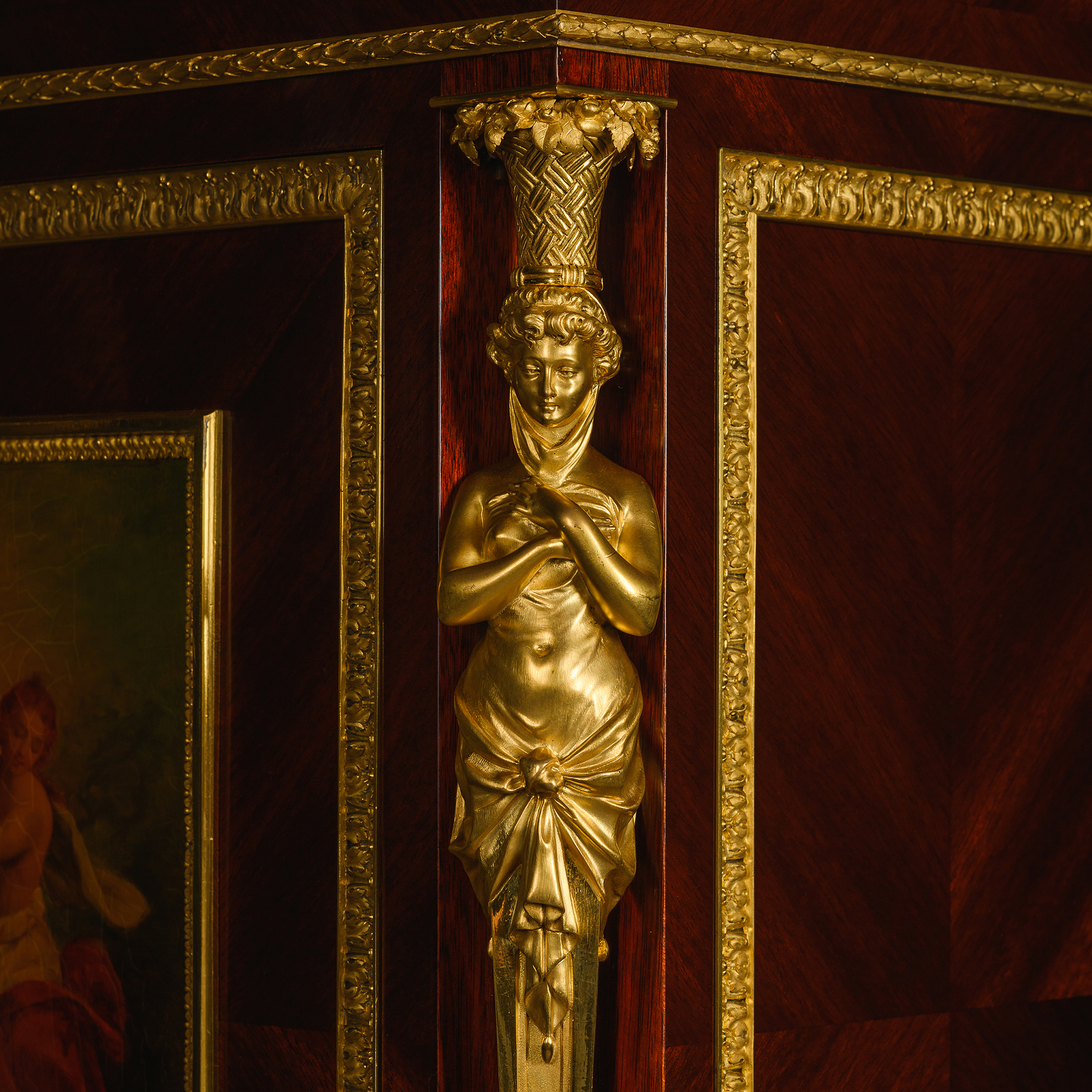
Designed in the Louis XVI style this superb cabinet-on-stand is richly adorned with gilt-bronze mounts of exceptional quality, being finely cast and chiselled and retaining their original mercury fire gilding. They are stamped to the reverse ‘HPR’ for the important Parisian bronze maker Heni Picard.
The veneers are of patterned mahogany of the finest quality. Especially striking are the corner herm figures, or caryatids, which are drawn directly from the oeuvre of the celebrated eighteenth-century maker, Adam Weisweiler. The Vernis Martin painted lacquer panels complete the impression of utmost luxury and refinement.
Dating to the1870s, this cabinet is exemplary of the fine quality achieved by the Paris ébénistes working at that time in the fashionable revival styles. It was made to equal the exacting standards achieved a century prior, when cabinetmakers such as Adam Weisweiler and J. H. Riesener supplied luxury furniture to King Louis XVI and Marie Antoinette.
The design for the secretaire is inspired by the important eighteenth-century secretaire by Adam Weisweiler from 1787 in the Wallace Collection, London (F308).
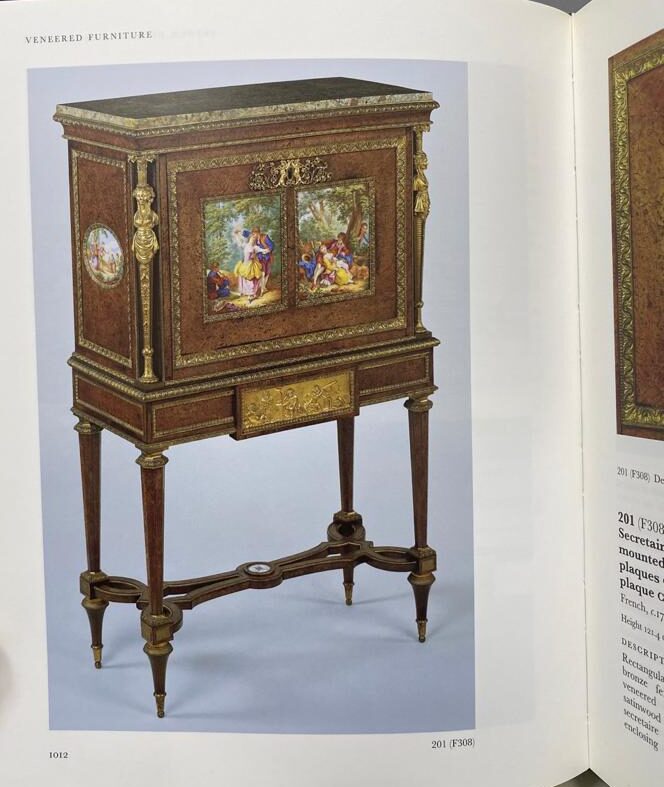
The secretaire cabinet-on-stand made by Adam Weisweiler c. 1787 which served as the model for the present cabinet by Frédéric Roux (image courtesy Wallace Collection, London).
Of similar form with identical caryatid mounts and mounted with two porcelain plaques of pastoral scenes, the Wallace collection secretaire was exhibited at the ‘Musee Retrospectif’ of 1865 and Bethnal Green exhibition between 1872 -75. Its exhibition would have given opportunity for the ébéniste of the present cabinet, Frédéric Roux, to made design drawings and even take measurements, to ensure his cabinet achieved the same elegance of design as its predecessor. To that end, compared to the cabinet by Weisweiler which stands at 121 cm. high, this cabinet by Roux is of slightly larger proportions, standing at 151 cm. high. This reflects the aspiration of the time at which it was made, during the reign of Napoleon III, for larger and more impressive furniture. It also makes it more practical for modern interiors and use as a writing-cabinet.
Date
circa 1870
Origin
France
Medium
Mahogany and Gilt-Bronze, Vernis Martin
Signature
Stamped ‘F. ROUX’ to the underside.
Roux and Brunet were a prominent Parisian firm of fine furniture during the late 19th and early 20th centuries, who began to operate undRouxer this name from 1889.
Frederic and Alexandre Roux were brothers who established successful furniture firms in Paris and New York. The American firm was established in 1837 by Alexandre, while his brother opened the Parisian firm in 1839. Each business became highly successful, and by the 1850s the New York firm employed 120 craftsmen and worked using steam power. For some years Frederic worked with his brother in New York under the name of A et F Roux, before returning to Paris in 1855-1856 and purchasing the established firm of Hippolyte-Edme Pretot. The Parisian firm won several medals, including a gold medal at the Exposition Universelle in 1867. They also sold pieces to aristocratic clients such as a Boulle table purchased by Emperor Napoleon III at the 1867 Exposition Universelle for the Palais de l‚’Elysee.
From 1889 the French firm was joined by Eugene Brunet, who was already a successful ébéniste of high-quality Parisian furniture. They established themselves at 20 rue de la Perle under the name of Roux Et Brunet. The 1889 Exposition Universelle saw a shift for the firm from Louis XIV, Louis XVI and Empire styles towards Louis XV Style with Boulle and Riesener influences; in partnership with Brunet, the Louis XV Style was more commonly used by the firm and echoed the works of Joseph-Emmanuel Zwiener and Francois Linke. Roux Et Brunet commissioned Linke to make furniture for them when he first arrived in Paris and, employed the sculptor Leon Message for many designs.
Brunet went on to manage the business alone and was particularly well known for the superb quality of his gilt-bronze mounts, which were often designed by Messagé, who Linke and Zwiener also employed for their bronze mounts. Brunet purchased from the celebrated cabinetmakers of the period such as Linke and Zwiener. Some 40 folders exist containing drawings and watercolours of furniture designs by Brunet from the Second Empire to the 1920s – many of which recall the work of Linke and display a clear Zwiener and Messagé influence.
The connection between Brunet and Linke goes even further: in November 1896 Linke purchased 13 lots from a sale of the effects of Roux Et Brunet for 2,374 francs, almost certainly to have the right to use patterns for bronze casting. The crab-like acanthus that is now seen almost as a guarantee of Linke’s work was most likely purchased with lot 155, a ‚Äúbureau Louis XV, rocaille a poignée coquille‚Äù. They both purchased from each other, and employed Messagé for their gilt-bronze mounts. This has resulted in some pieces being wrongly attributed to Linke when they are in fact by Brunet, most likely due to the inclusion of this crab-like acanthus.
Bibliography:
Ledoux-Lebard, Denise. Les Ebénistes du XIX siècle, Les Editions de l’Amateur, (Paris), 1984.
Mestdagh, Camille & Lécoules, Pierre. L’Ameublement d’Art Français, 1850-1900, Les Editions de L’Amateur, (Paris), 2010.
Payne, Christopher. Paris Furniture: The Luxury Market of the 19th Century, Editions Monelle Hayot (Saint-Remy-en-l’Eau), 2018.
Hughes, The Wallace Collection, Catalogue of Furniture, Vol. II, London, 1996, p. 1012-1018, no. 201 (F308).
YOU MAY ALSO LIKE
- £28,000 Add to cart
 Karl Heinrich Möller
A Large Bronzed Zinc Statue of a Newfoundland Dog
- £65,000 Add to cart
 Maison Beurdeley
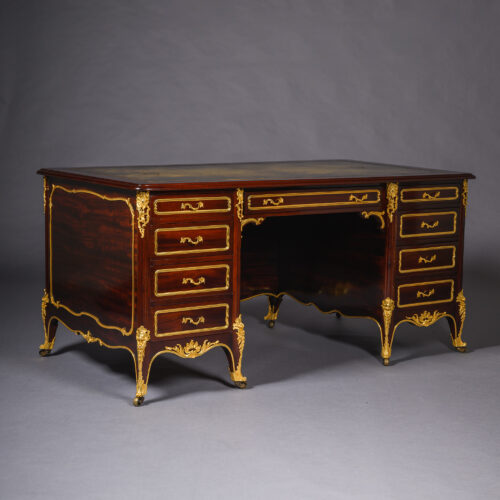
A Louis XV Style Gilt-Bronze Mounted Mahogany Bureau à Caissons
- £9,000 Add to cart
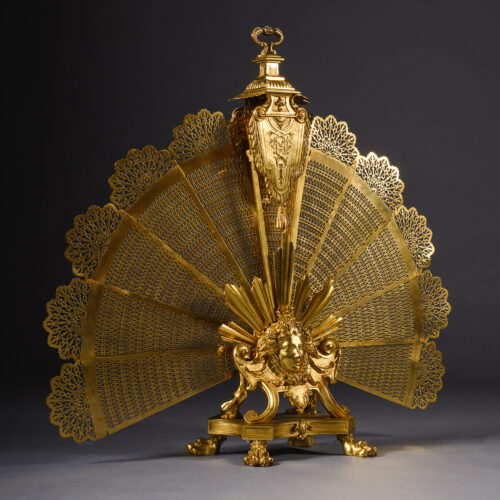
A Large Louis XVI Style Gilt-Bronze Fan Shaped Fire Screen With A Finely Cast Mask of Apollo