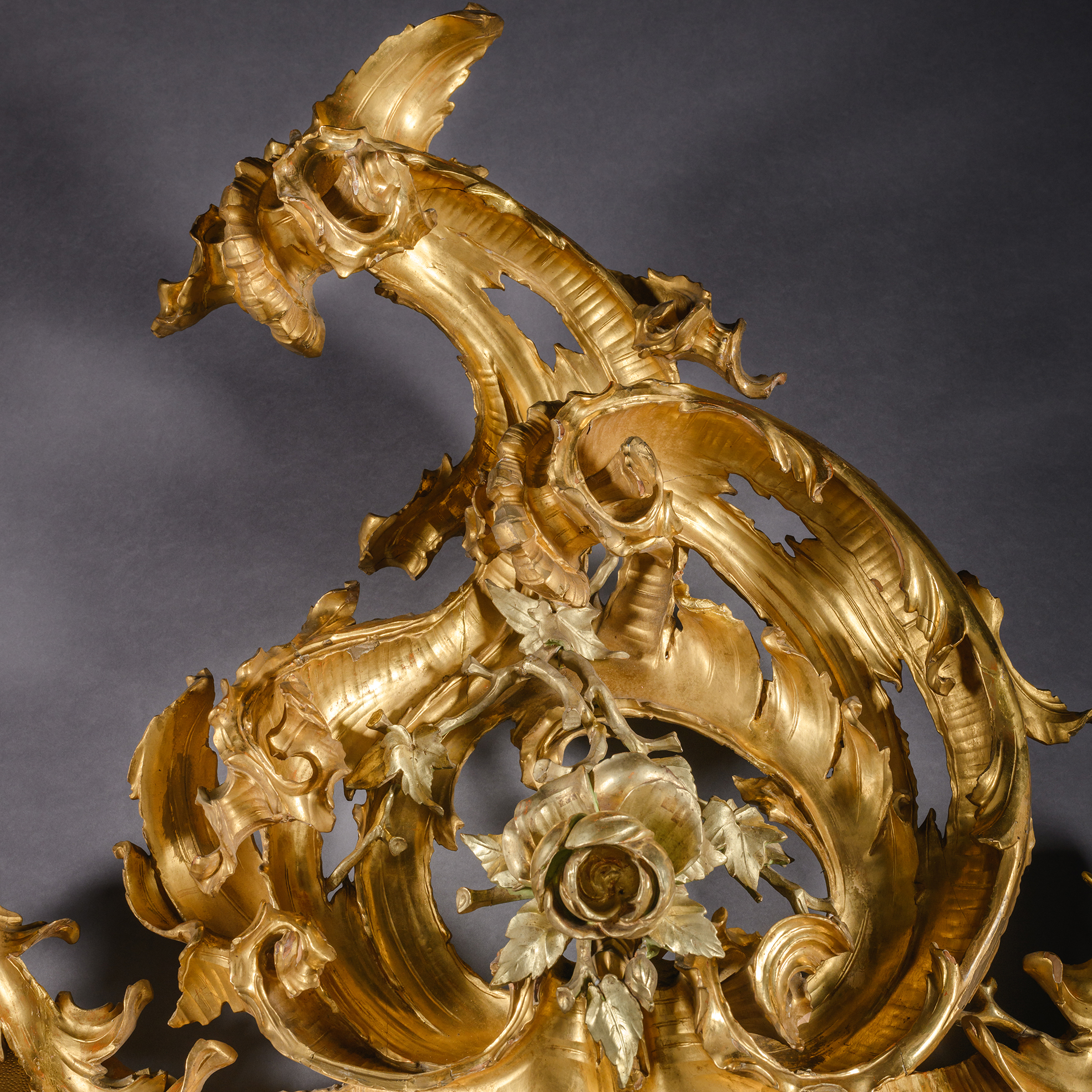
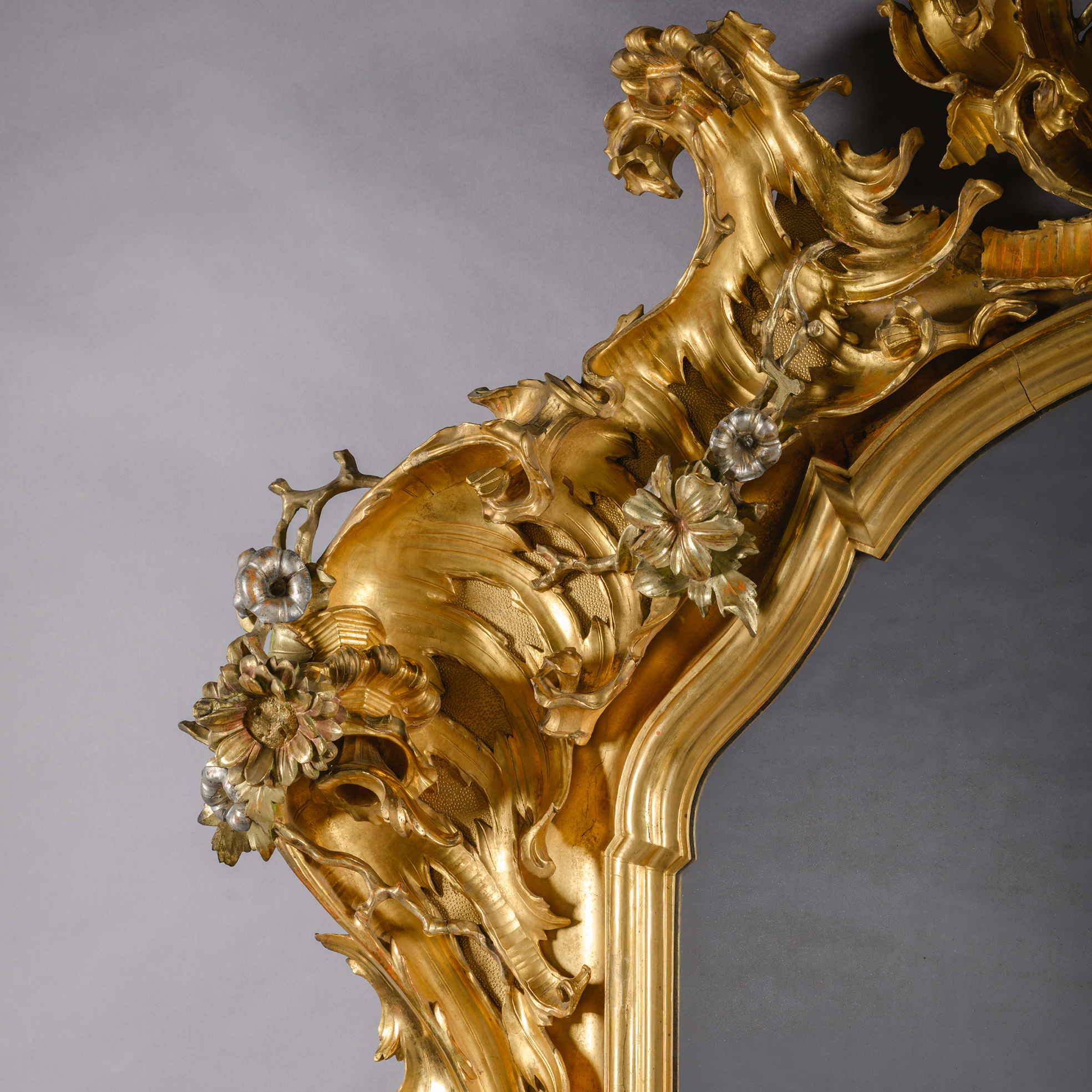
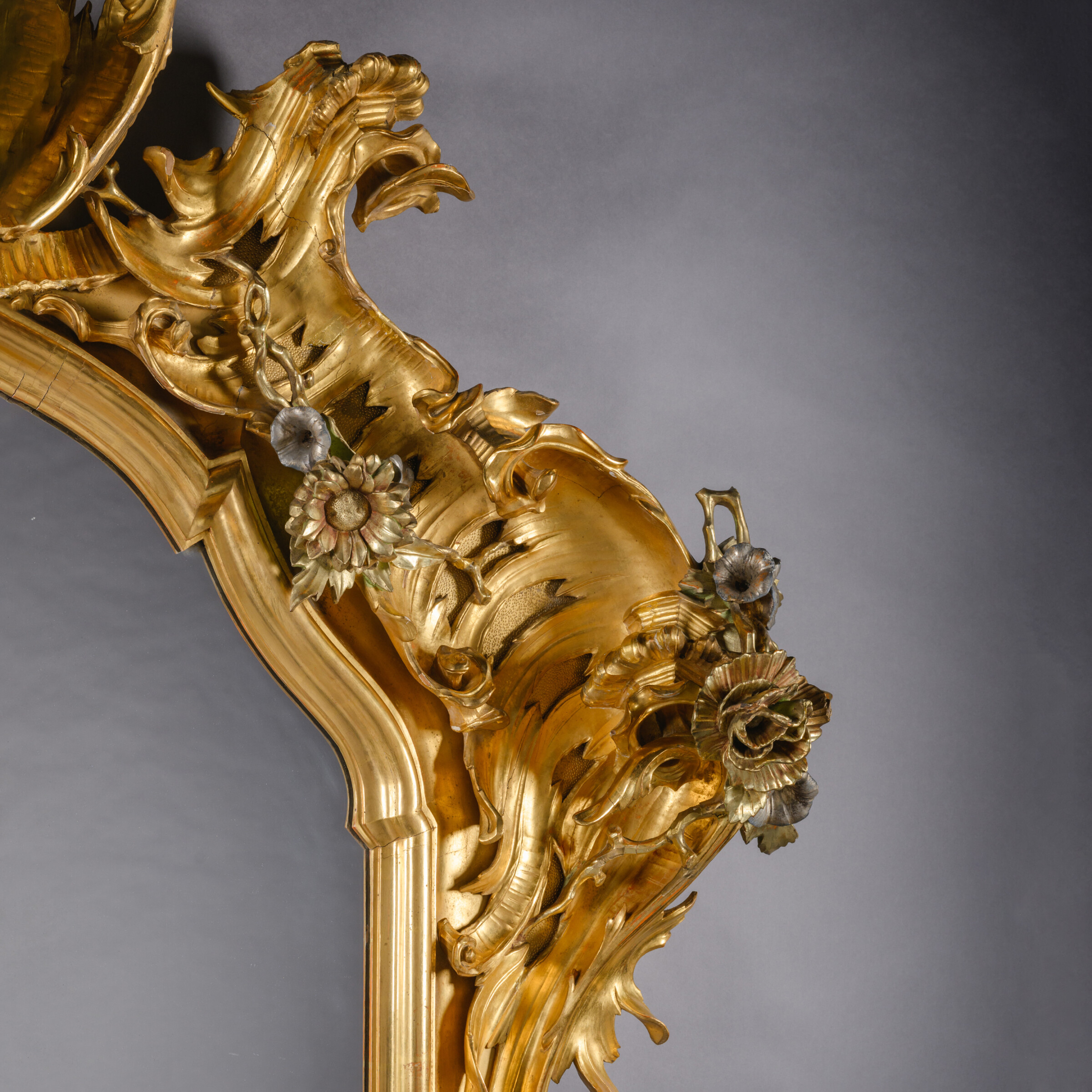
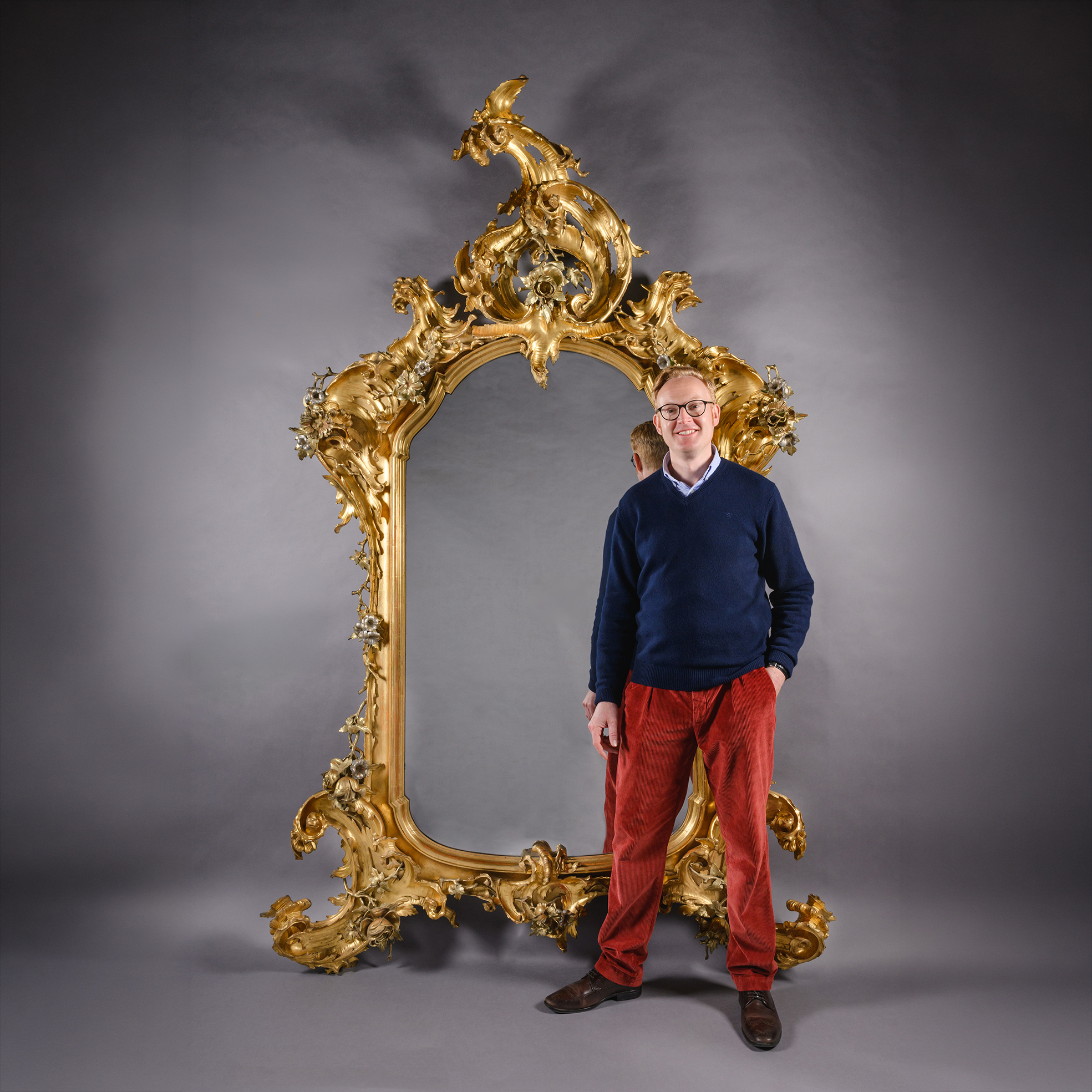
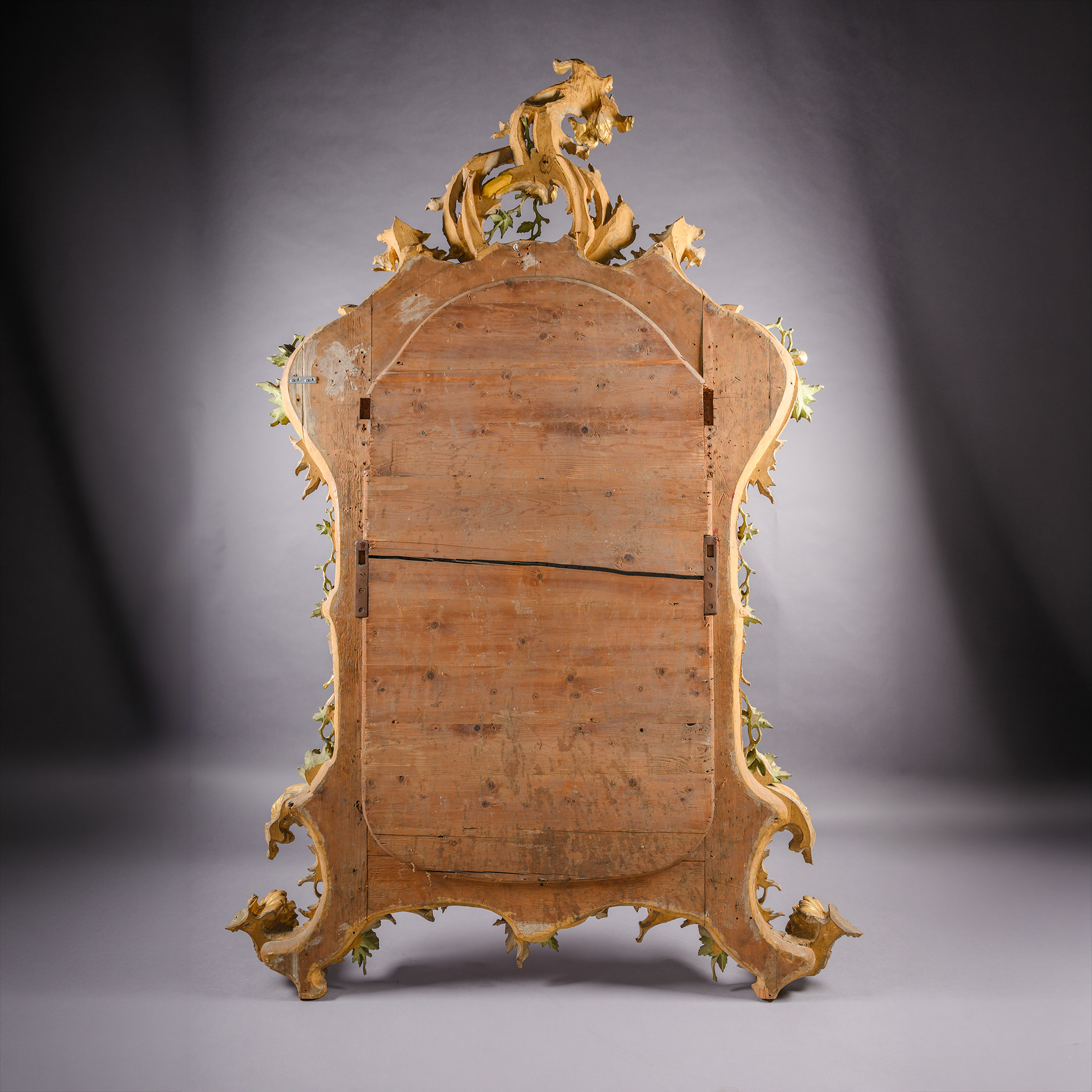
A Large Rococo Style Carved Giltwood And Silver-Gilt Varnished (‘Mecca’) Mirror
£85,000
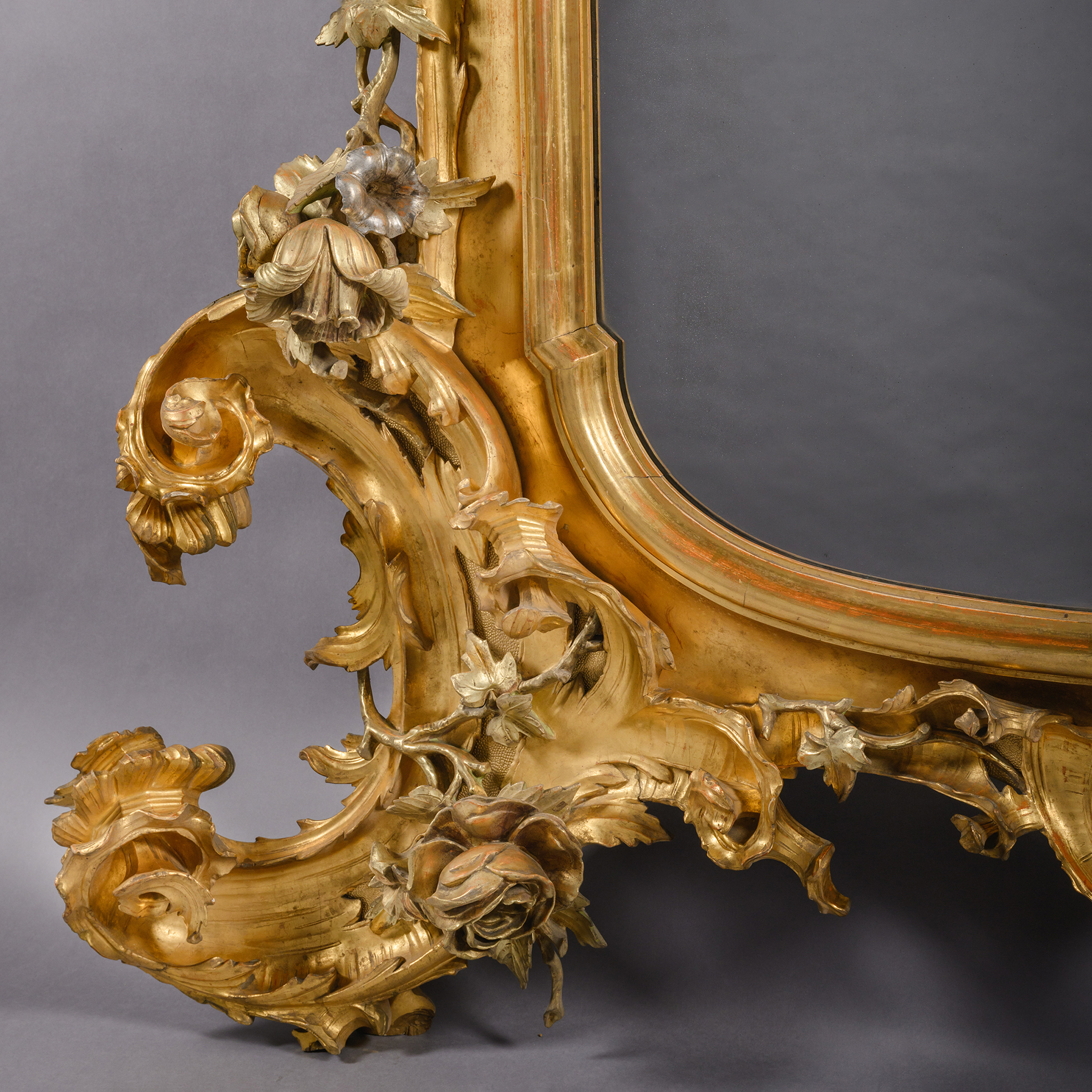
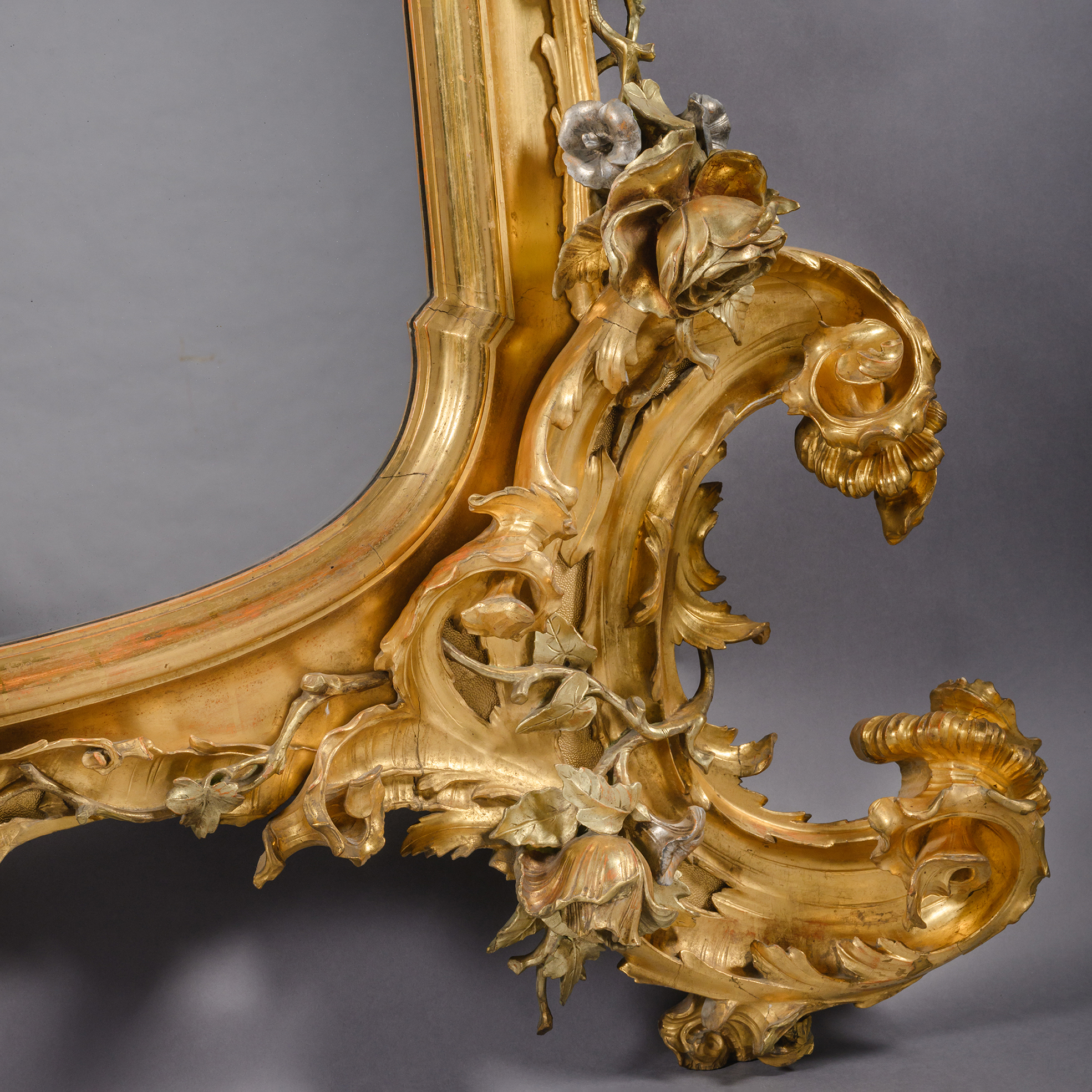
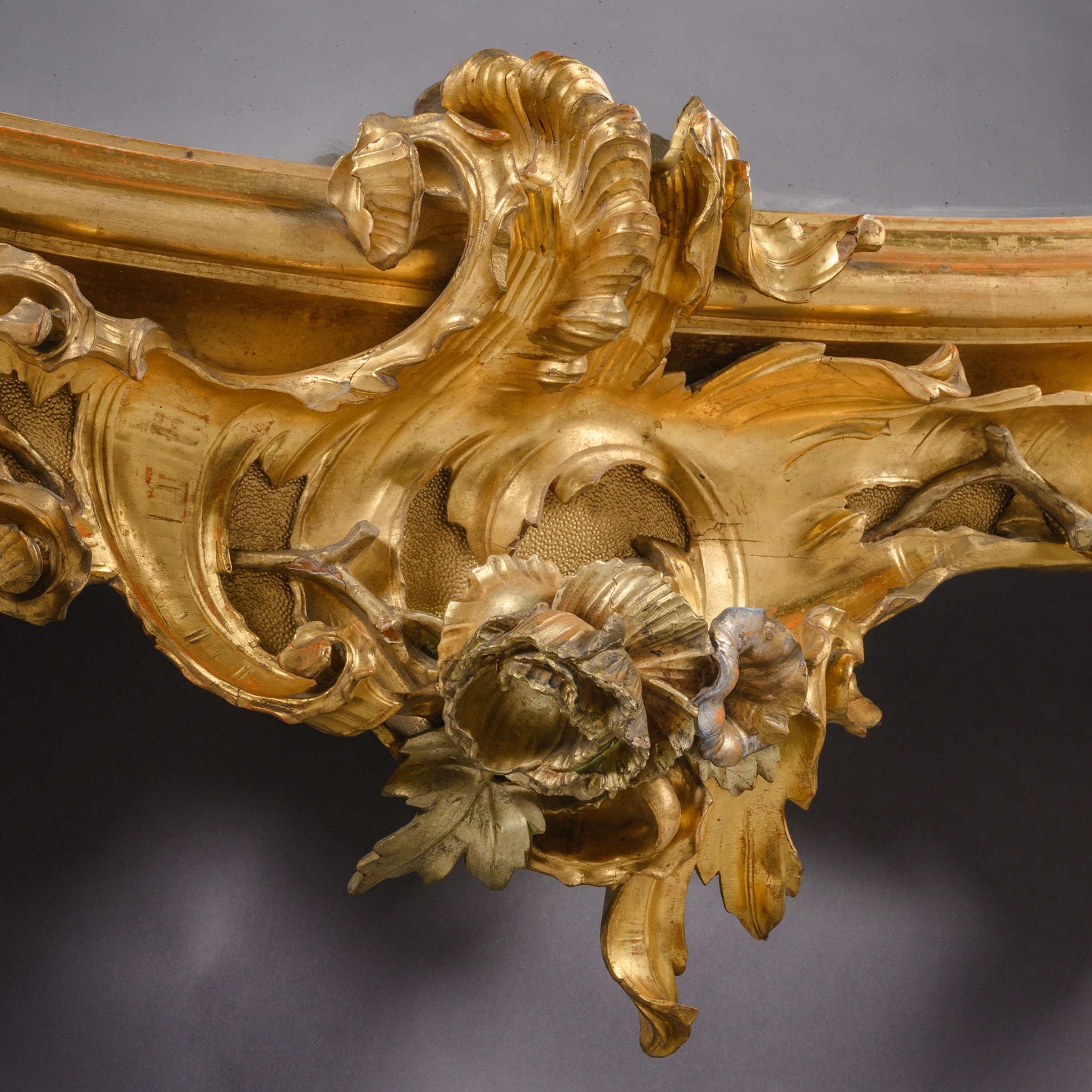
A Large Rococo Style Carved Giltwood And Silver-Gilt Varnished (‘Mecca’) Mirror.The arched mirror plate within a moulded re-entrant inner frame,...
Dimensions
Height: 274 cm (108 in)Width: 177 cm (70 in)
Depth: 5 cm (2 in)

 Print
PrintDescription
A Large Rococo Style Carved Giltwood And Silver-Gilt Varnished (‘Mecca’) Mirror.
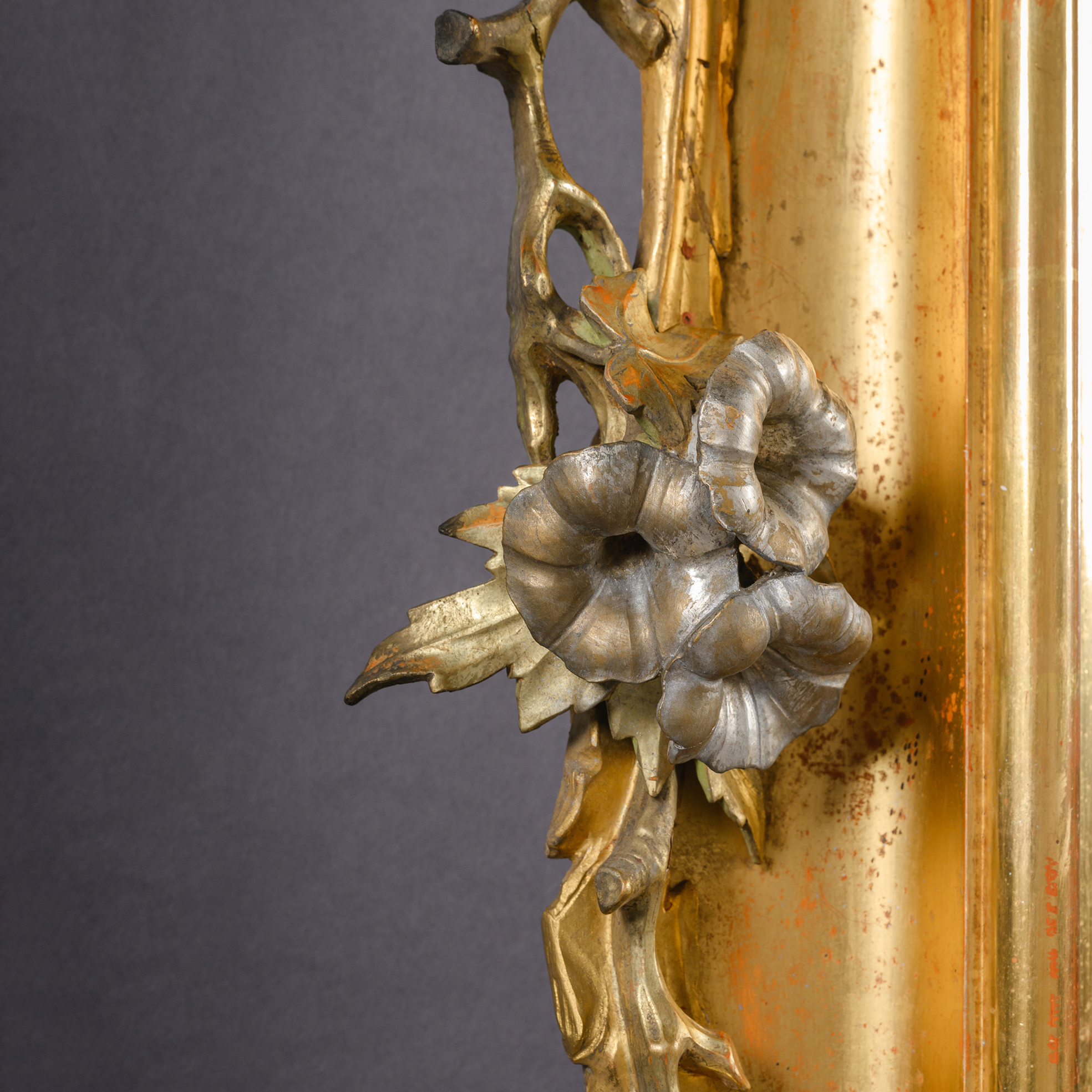
The arched mirror plate within a moulded re-entrant inner frame, flanked by an outer frame with exuberant ‘C’ – scrolls and fronded acanthus to the corners and a shellwork crest. The mirror is embellished with finely carved silver gilt trailing flowers.
German, Circa 1870.
Mecca gilding (or Meccatura) refers to gilt-varnished silver decoration. The varnish is coloured with various pigments and applied over burnished silver or tin leaf, giving a silver hue. Used since the medieval period in Europe, for altarpieces, frames, polychrome sculptures, and especially in Italy, for example in Venice as cuoridoro for gilded leather.
This mirror is designed in the exuberant German ‘Rokoko’ style. The boldness of its ornament and its palatial scale place it as part of the mid-19th century rococo-revival, as most magnificently manifested in the palaces of King Ludwig II of Bavaria.
Compare the neo-rococo panelling for the Hall of Mirror’s at King Ludwig’s Linderhof Palace built in 1874, which in turn was modelled after the ‘Rich Rooms’ at the Munich Residence.
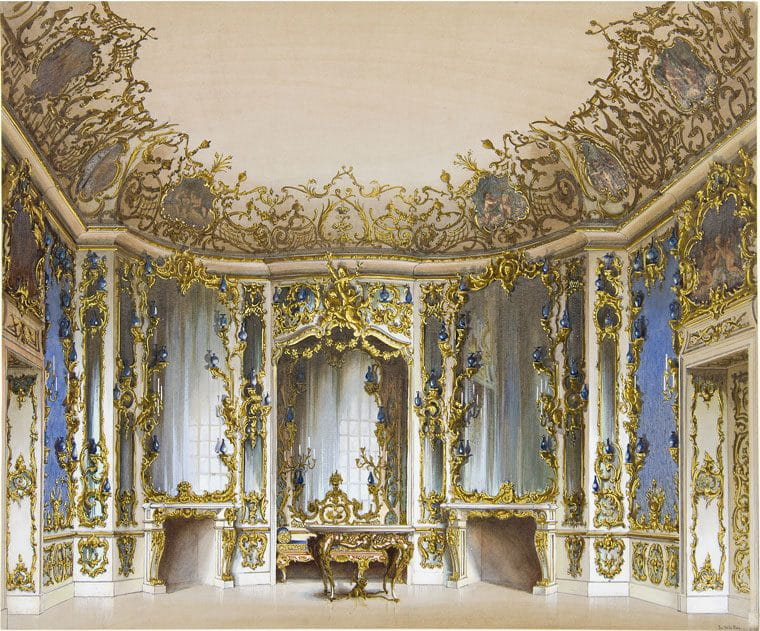
Design for the Hall of Mirrors at Linderhof Palace by Joseph de la Paix (1852–c. 1906), 1874. (Public Domain © Bayerische Schlösserverwaltung, Nadler, Munich).
The 18th century stylistic antecedent for the present mirror more specifically recalls the designs of the sculptor Johann Peter Wagner from the 1760s.
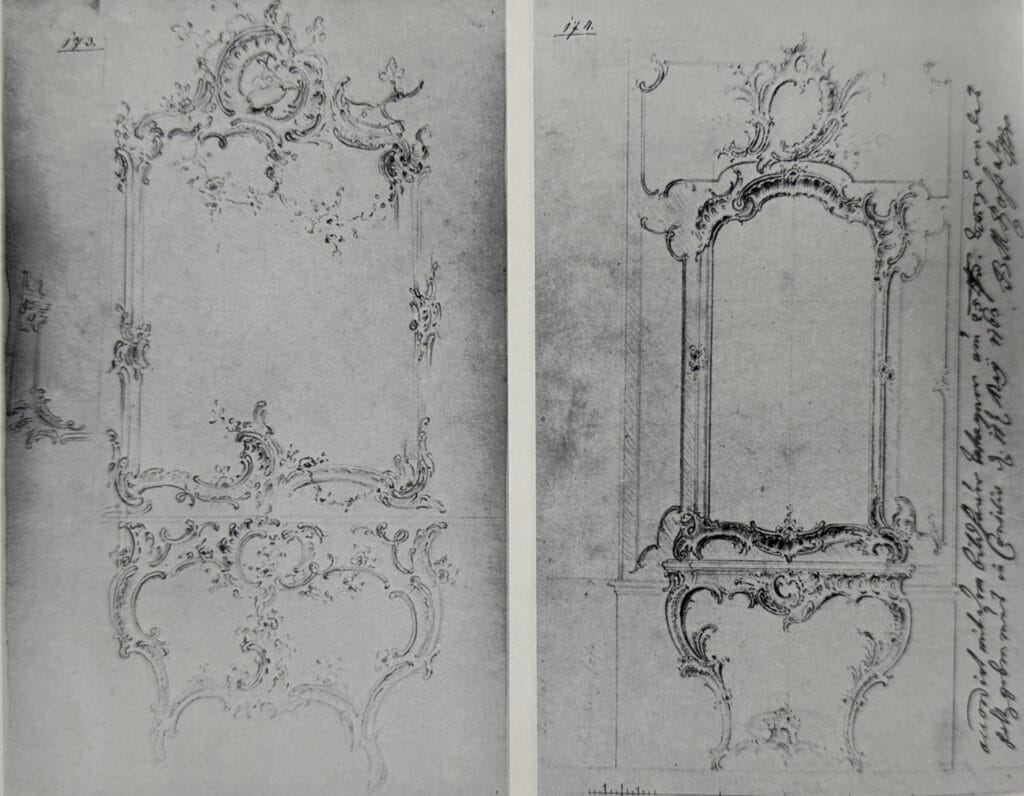
Designs for consoles and mirrors by Johann Peter Wagner (1730-1809). Würzburg University.
Date
Circa 1870
Origin
Germany
Medium
Giltwood