Mathurin Moreau
A White Statuary Marble Figure of ‘Libellule’
£35,000
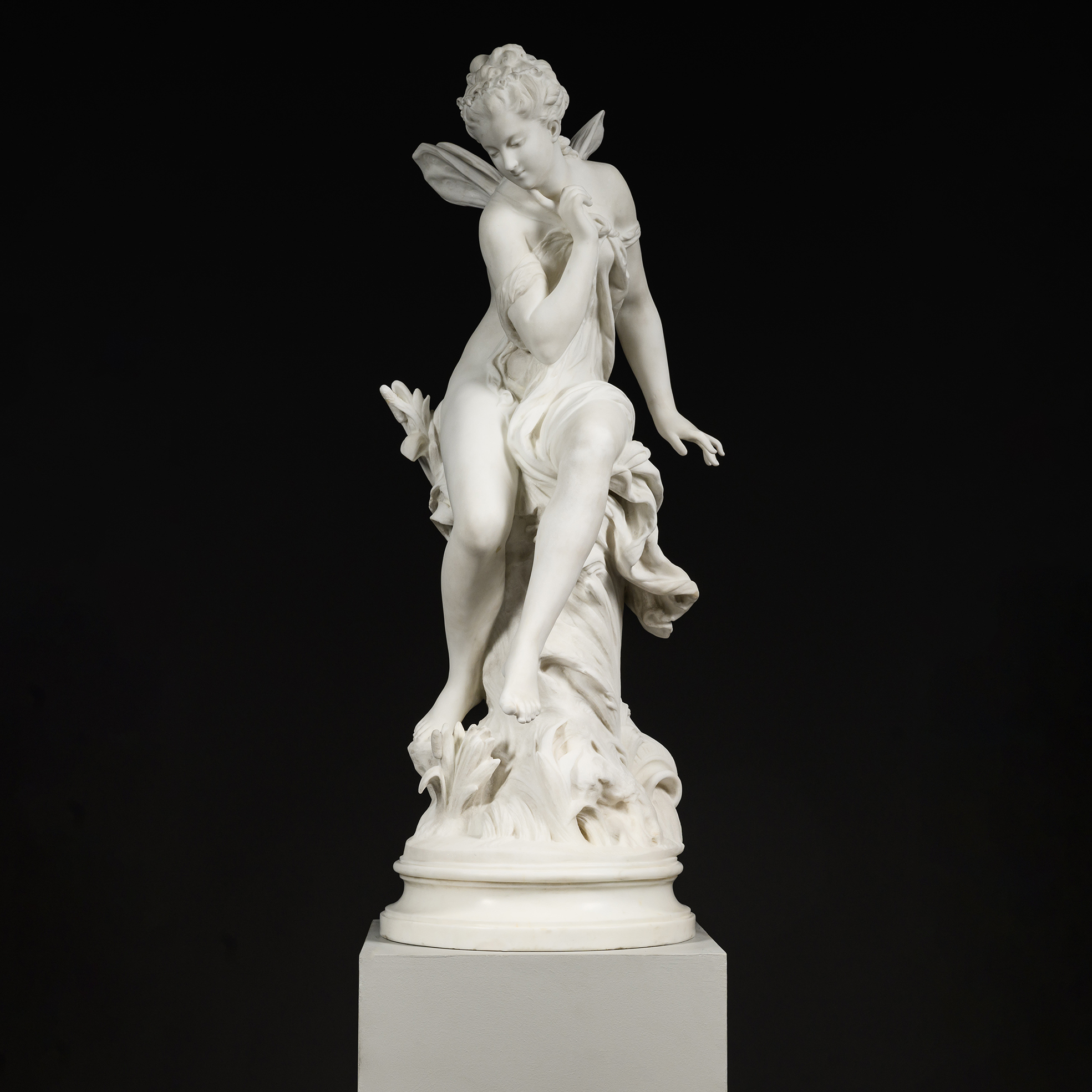
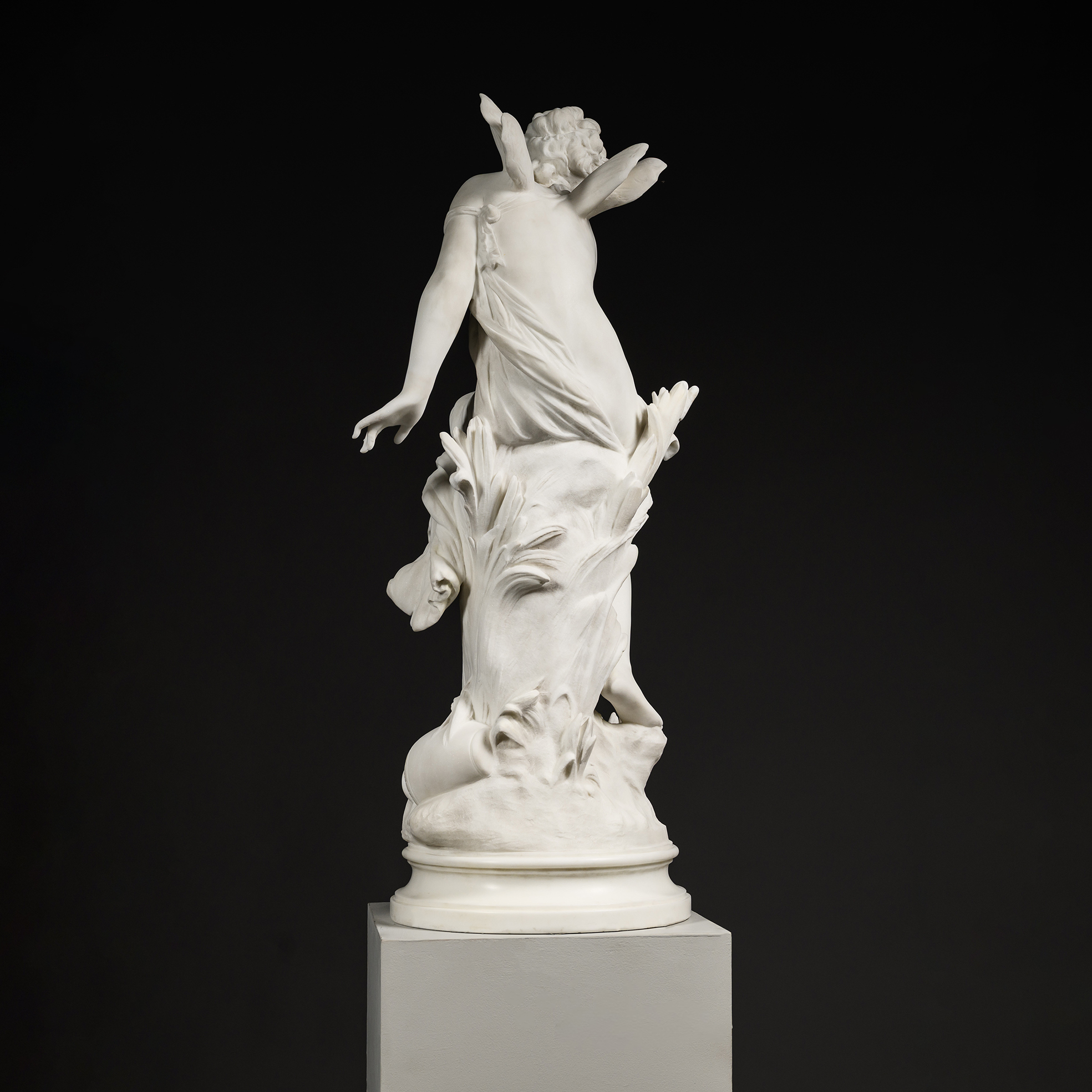
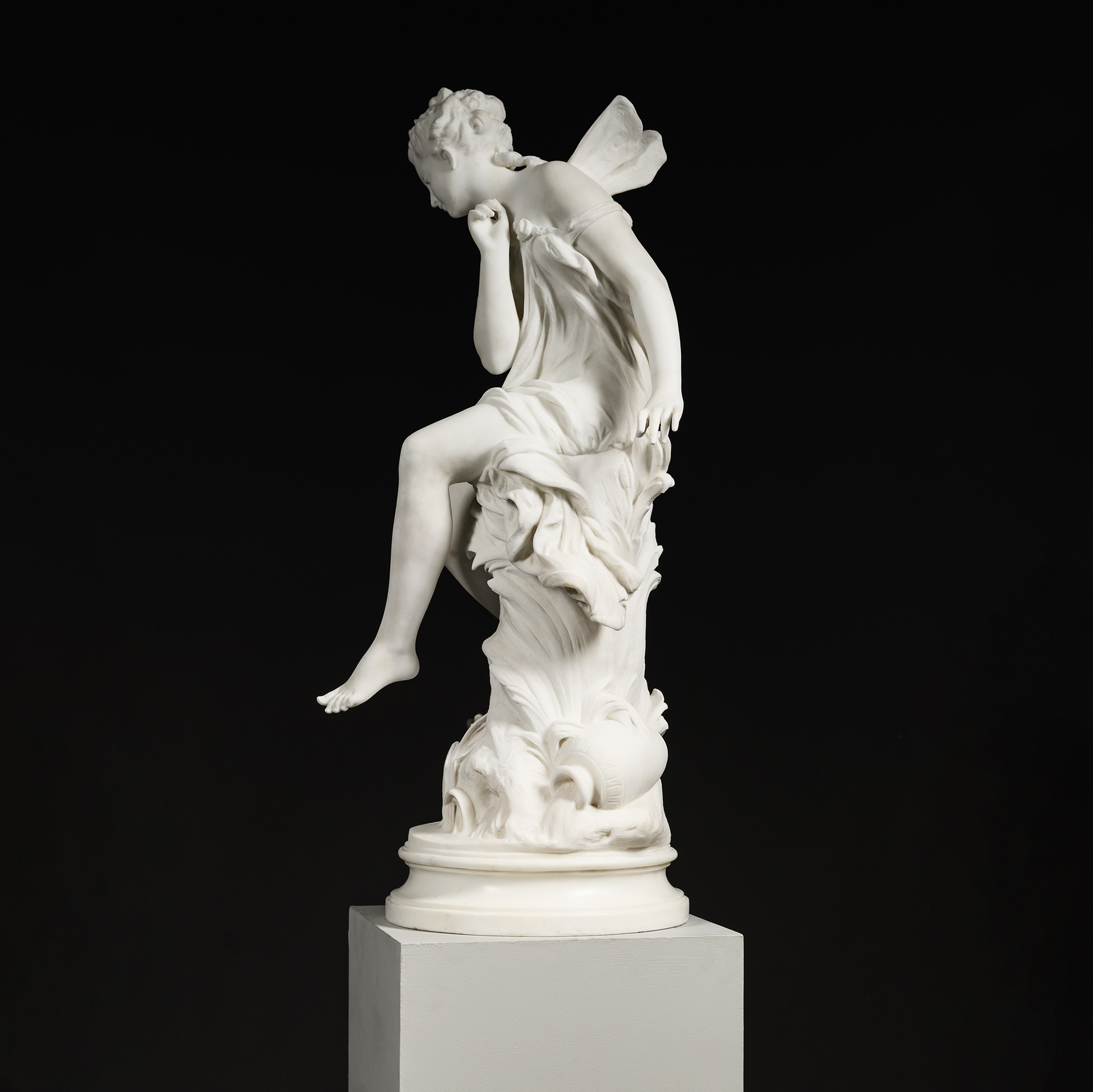
A White Statuary Marble Figure of 'Libellule' By Mathurin Moreau (French, 1822–1912).The figure modelled as a winged nymph, seated upon a rock carved...
Dimensions
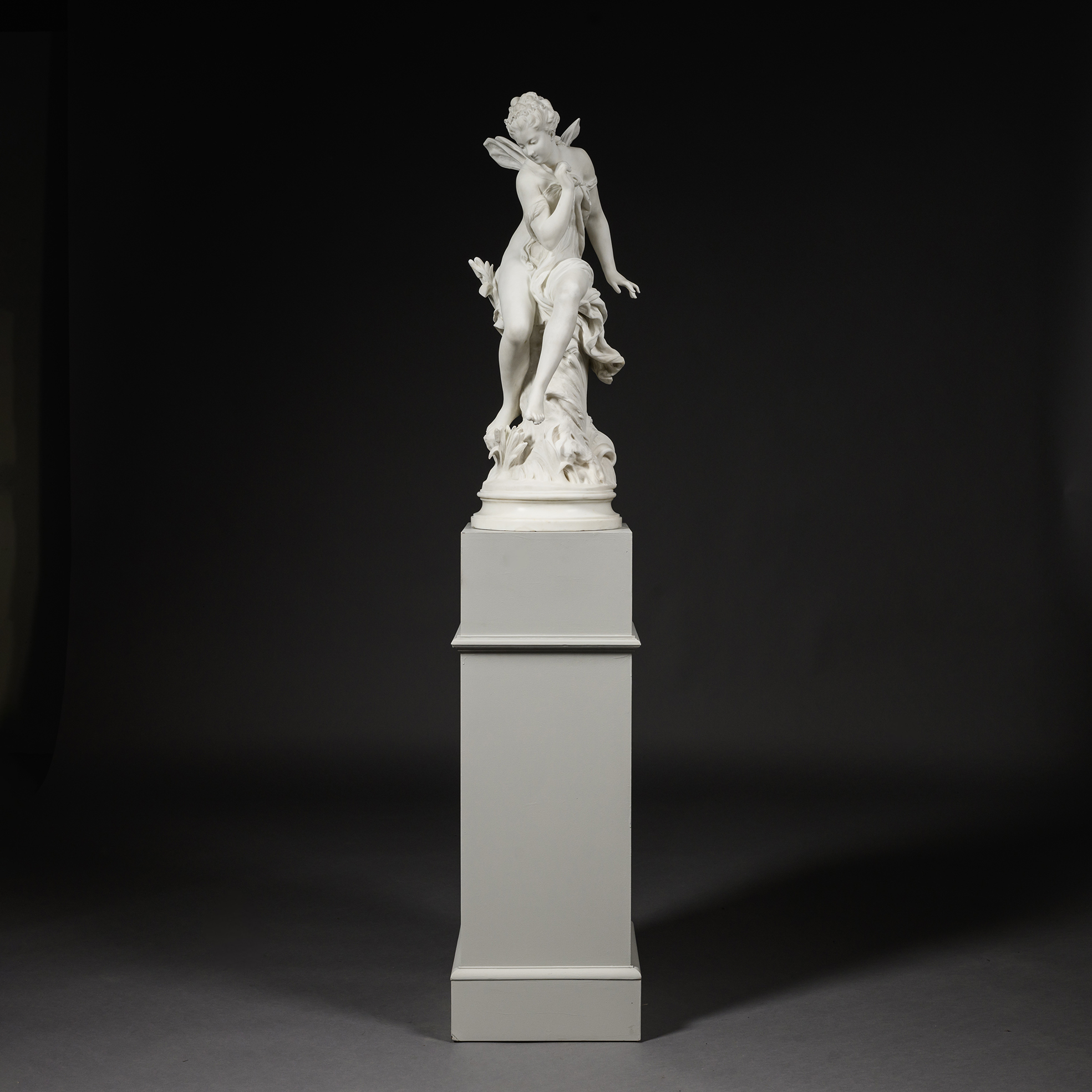
Height: 85 cm (34 in)Width: 36 cm (15 in)
Depth: 34 cm (14 in)
Weight: 61 kg

 Print
Description
A White Statuary Marble Figure of ‘Libellule’
By Mathurin Moreau (French, 1822–1912).
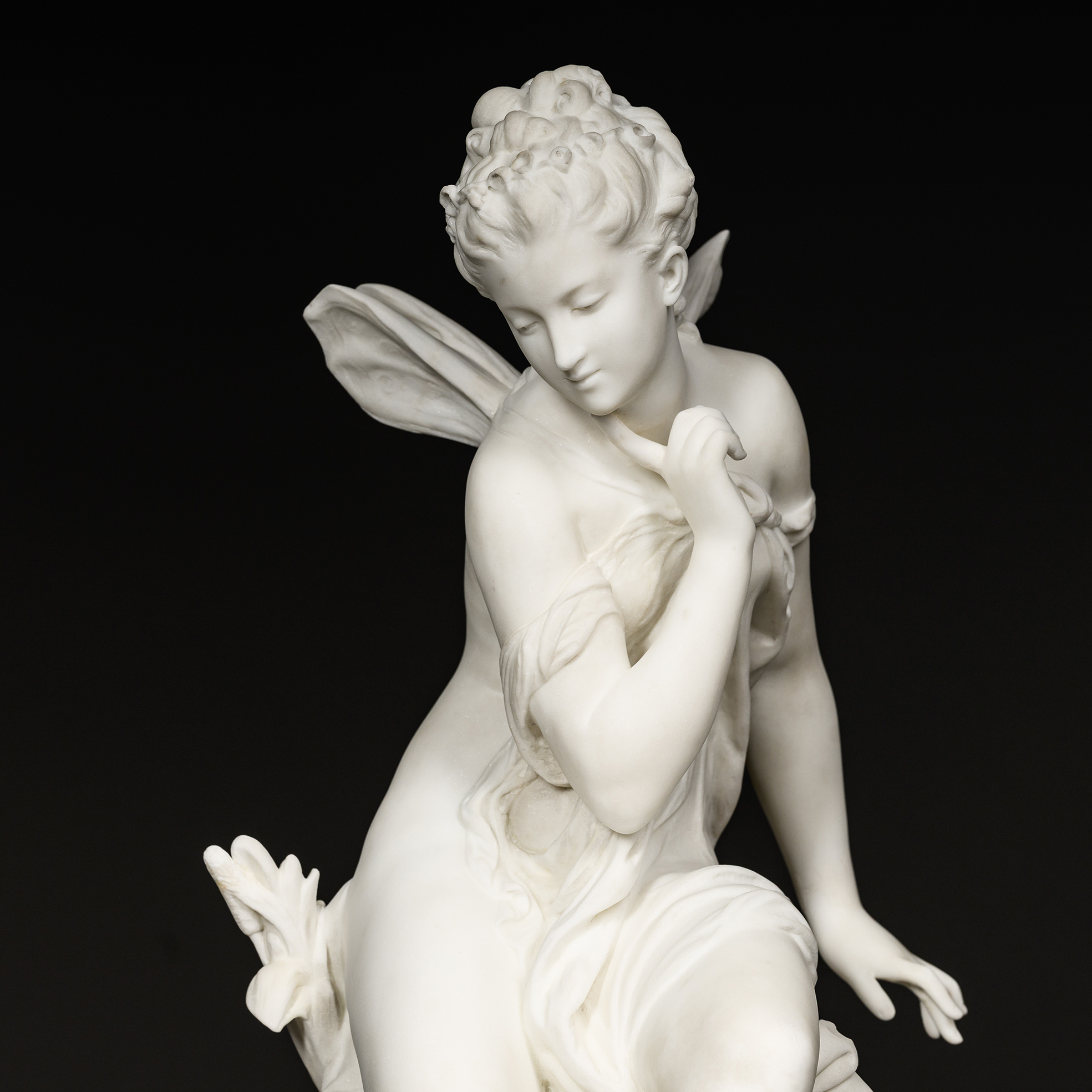
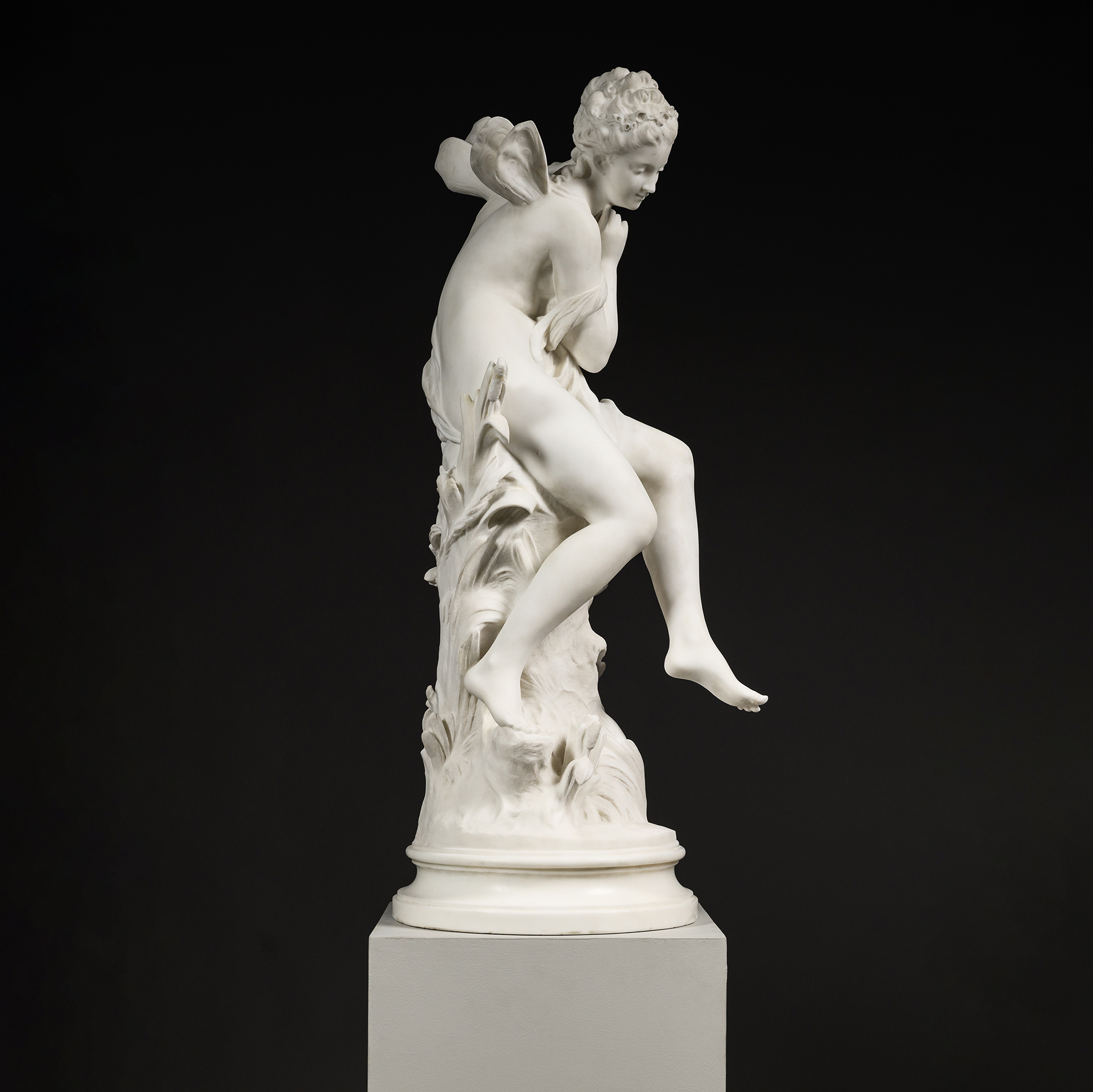
The figure modelled as a winged nymph, seated upon a rock carved with bulrushes and reeds, with an overturned urn at its foot, raised on a shaped naturalistic base.
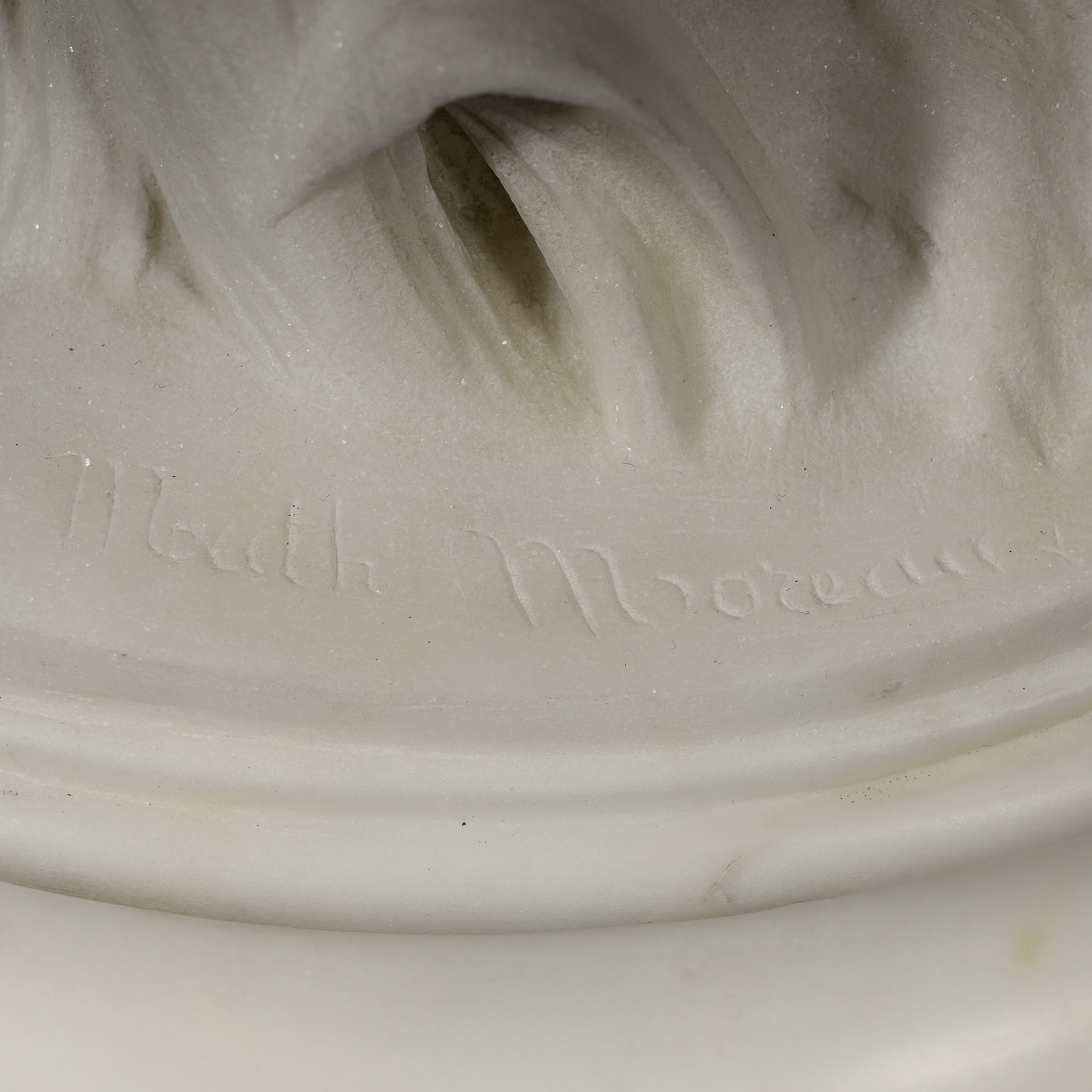
Signed ‘Math. Moreau’.
France, Circa 1900.
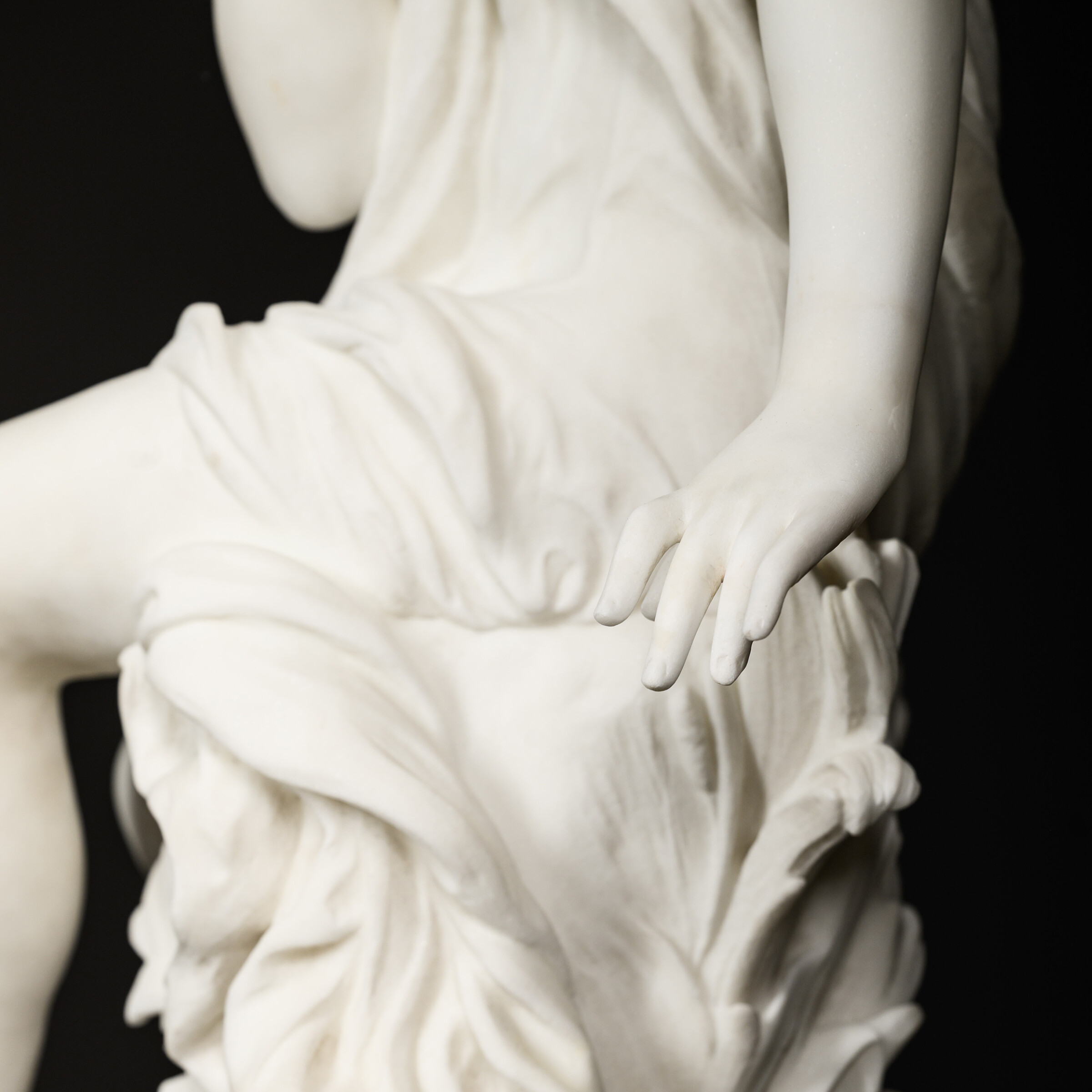
A delicate study of the female figure, Mathurin Moreau’s ‘Libellule’, exhibited at the Salon in 1876, exemplifies the sculptor’s ability to combine the idealised beauty of the academic tradition with the poetic sensibility of late nineteenth-century French sculpture. The composition depicts a winged nymph seated upon a naturalistic rocky base, her body poised in a moment of quiet contemplation. The subtle turn of her head and the graceful arrangement of her limbs lend the figure an engaging sense of movement, while the finely modelled drapery and carefully articulated anatomy demonstrate Moreau’s accomplished command of the sculptural medium. The delicate wings, recalling those of a dragonfly, establish the work’s imaginative character and mythology.
The subject belongs to a tradition of water spirits and nymphs that enjoyed considerable popularity in late nineteenth-century French sculpture. ‘Libellule’, also known as ‘La Source’ or ‘Ondine’, is closely associated with Moreau’s celebrated Nymphe fluviale, conceived for the Fontaine du Théâtre-Français in Paris. The monumental composition was exhibited at the Salon in 1873 and installed in 1874, establishing a motif that Moreau subsequently developed in smaller-scale sculptural versions.
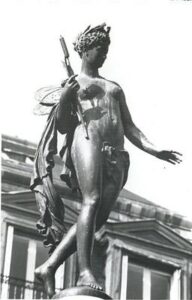
Fluvial Nymph from the Fountain of the Theatre-Français, 1874, rue Richelieu, Paris. https://anosgrandshommes.musee-orsay.fr/index.php/Detail/objects/33211
Among the most successful French sculptors of his generation, Moreau trained at the École des Beaux-Arts in Paris, where he studied under Étienne-Jules Ramey and Augustin-Alexandre Dumont, regularly exhibiting at the Paris Salon from 1848. His work encompassed public monuments, architectural sculpture and decorative bronzes, alongside more intimate marble figures. His association with the Val d’Osne foundry further extended the reach of his sculptural designs, which were widely disseminated in bronze and cast iron. ¹
The present marble, with its refined modelling and lyrical treatment of the female form, offers a particularly appealing expression of Moreau’s sculptural language.
Footnote:
1. Anne Pingeot, Antoinette Le Normand-Romain and Laure de Margerie, Musée d’Orsay: Catalogue sommaire illustré des sculptures (Paris: Réunion des musées nationaux, 1986), p. 278. See also the Musée d’Orsay’s collection entry for Moreau’s marble Fileuse (1894), which records its acquisition by the French State in 1890.
Date
Circa 1900
Origin
France
Medium
statuary marble
Signature
Signed 'Math Moreau'.
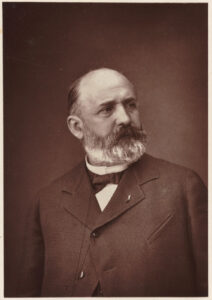
Photograph of Mathurin Moreau, circa 1892. © RMN-Grand Palais (Musée d’Orsay) / Hervé Lewandowski
Mathurin Moreau was born in Dijon in 1822 and died in Paris in 1912, a famous sculptor, entrepreneur and public figure. His father, Jean-Baptiste Moreau (1797-1855), also an acclaimed sculptor in Dijon, was best known for his restoration of the medieval tombs of the Dukes of Burgundy, which had been damaged during the French Revolution. Mathurin trained under his father and in 1841 entered the Ecole des Beaux-Arts, Paris, where he trained as a sculptor under Etienne-Jules Ramey and Augustin-Alexandre Dumont.
Moreau made his Salon debut in 1848 with a sculpture in plaster, ‘Elegy’, and in 1852, his Salon exhibit ‘Flower Fairy’, also a plaster sculpture, was commissioned in bronze by the State. At the 1861 Salon, his marble sculpture ‘Spinner’ was also purchased by the State, for the Musee du Luxembourg, Paris. Works of this kind continued to earn Moreau medals and prizes at subsequent Salons and international exhibitions.
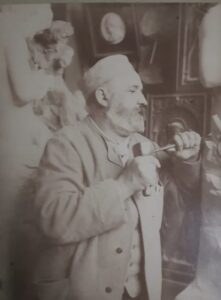
Mathurin Moreau in his studio at 115 passage du Monténégro. Image: L’association Mathurin, Public Domain.
He had many public commissions and his statues and monuments are to be found in many parts of Paris. Among his public works, he contributed decorative sculpture to the new Opera and to the rebuilt Hotel de Ville in Paris. He also produced commemorative statues, such as the marble and bronze work in Dijon’s Place de la Republique from 1899 of Sadi Carnot, President of the French Republic, which he executed in collaboration with Paul Gasq (fl 1881 – 1909); the statuette of Marguerite of Anjou (1901) and the memorial to Gramme in Pere Lachaise cemetery.
Entrepreneurial activities won Moreau an influential position in public life, and from 1878, Moreau was mayor of the Nineteenth Arrondissement in Paris, which is celebrated in ‘The Civil Marriage’, a painting by Henri Gervex that hangs in the Salle des Mariages of the Mairie of that arrondissement, showing Moreau officiating at his son’s civil marriage ceremony before a distinguished audience.
Literature
Kjellberg, Pierre ‚‘Les bronzes du XIXe siècle, Dictionnaire des sculptures‚’, Paris, Les Editions de l’Amateur, 1987, p.511.
Kjellberg, Pierre ‘Les bronzes du XIXe siècle, Dictionnaire des sculptures’, Paris, Les Editions de l’Amateur, 1987, p.511.