Ferdinand Barbedienne
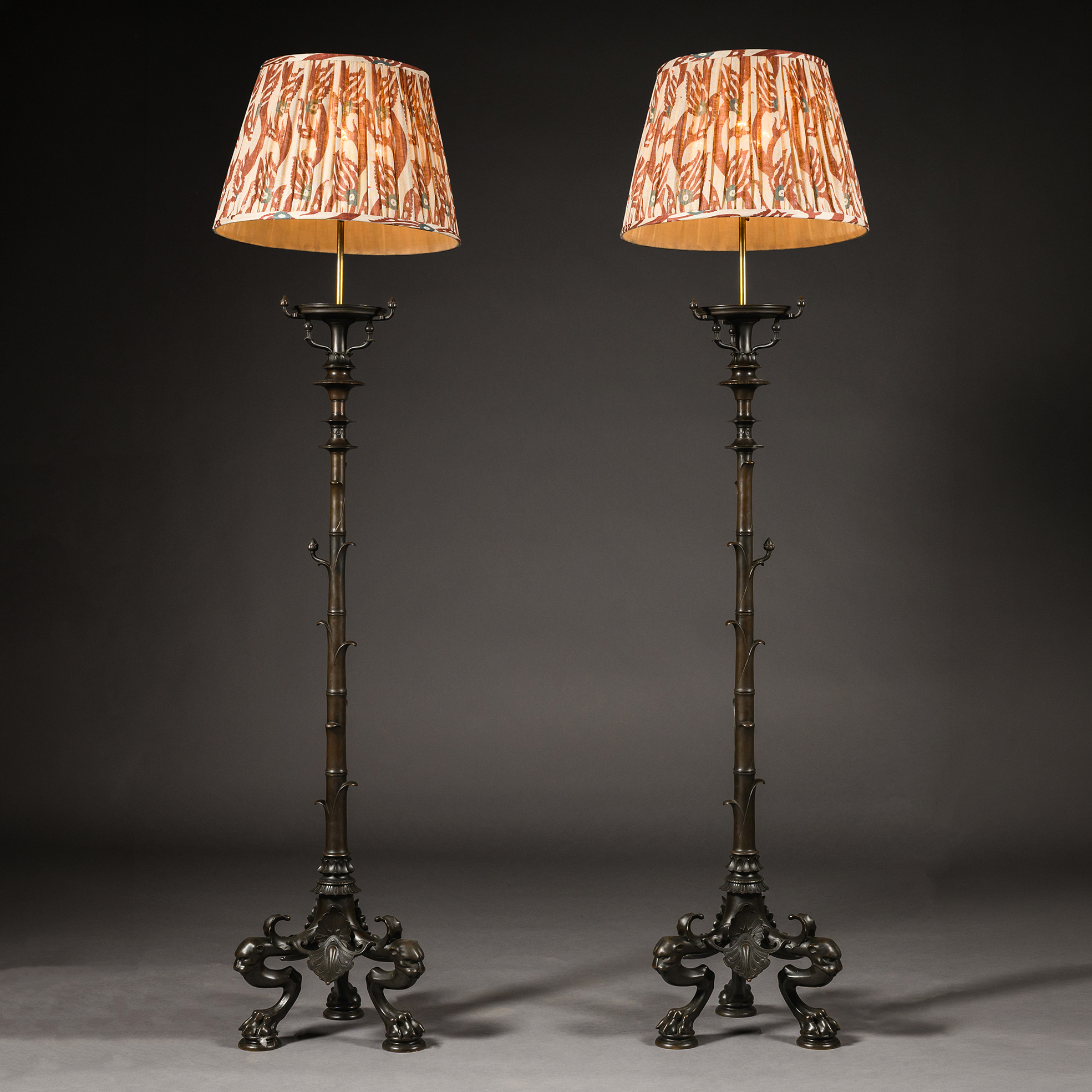
A Pair of Neo-Pompeiian Patinated Bronze Torchères, Fitted as Lamps
£24,000
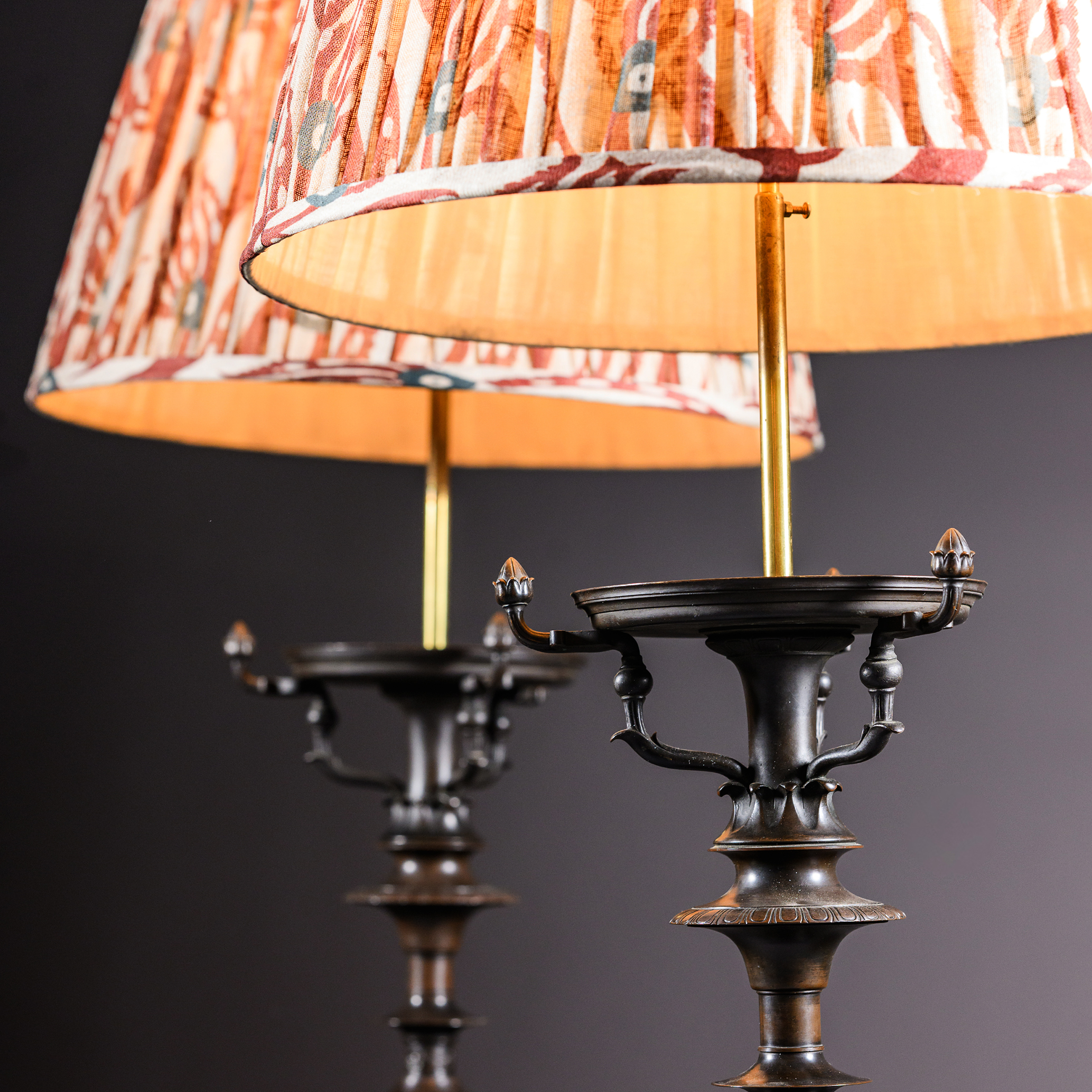
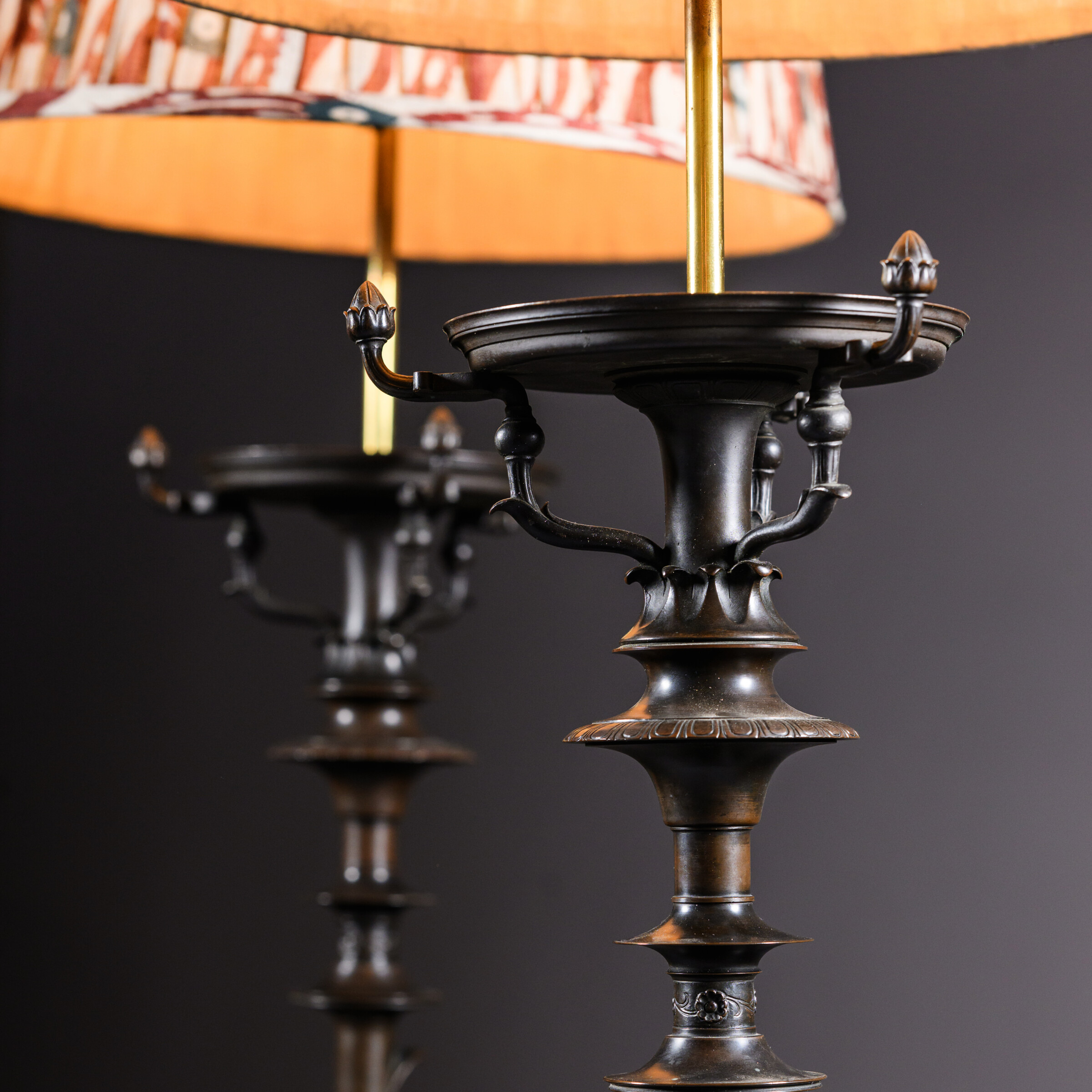
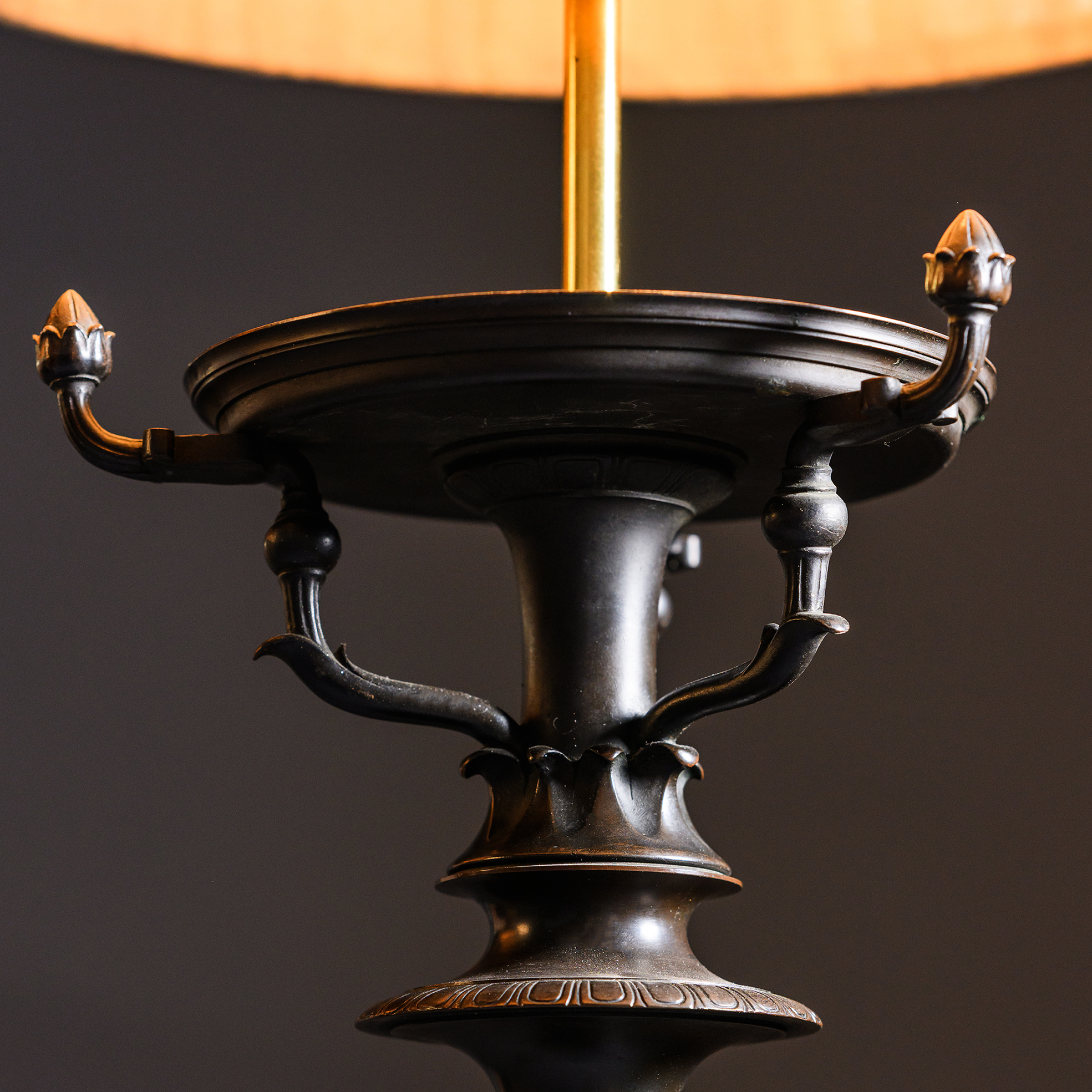
A Pair of Neo-Pompeiian Patinated Bronze Torchères, Fitted as Standard Lamps, Attributed to Maison Barbedienne, Paris.Each with ring-turned shaft...
Dimensions
Height: 174 cm (69 in)Width: 35 cm (14 in)
Depth: 35 cm (14 in)

 Print
Description
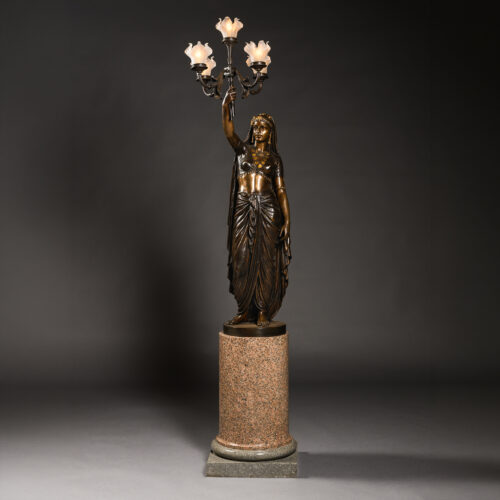
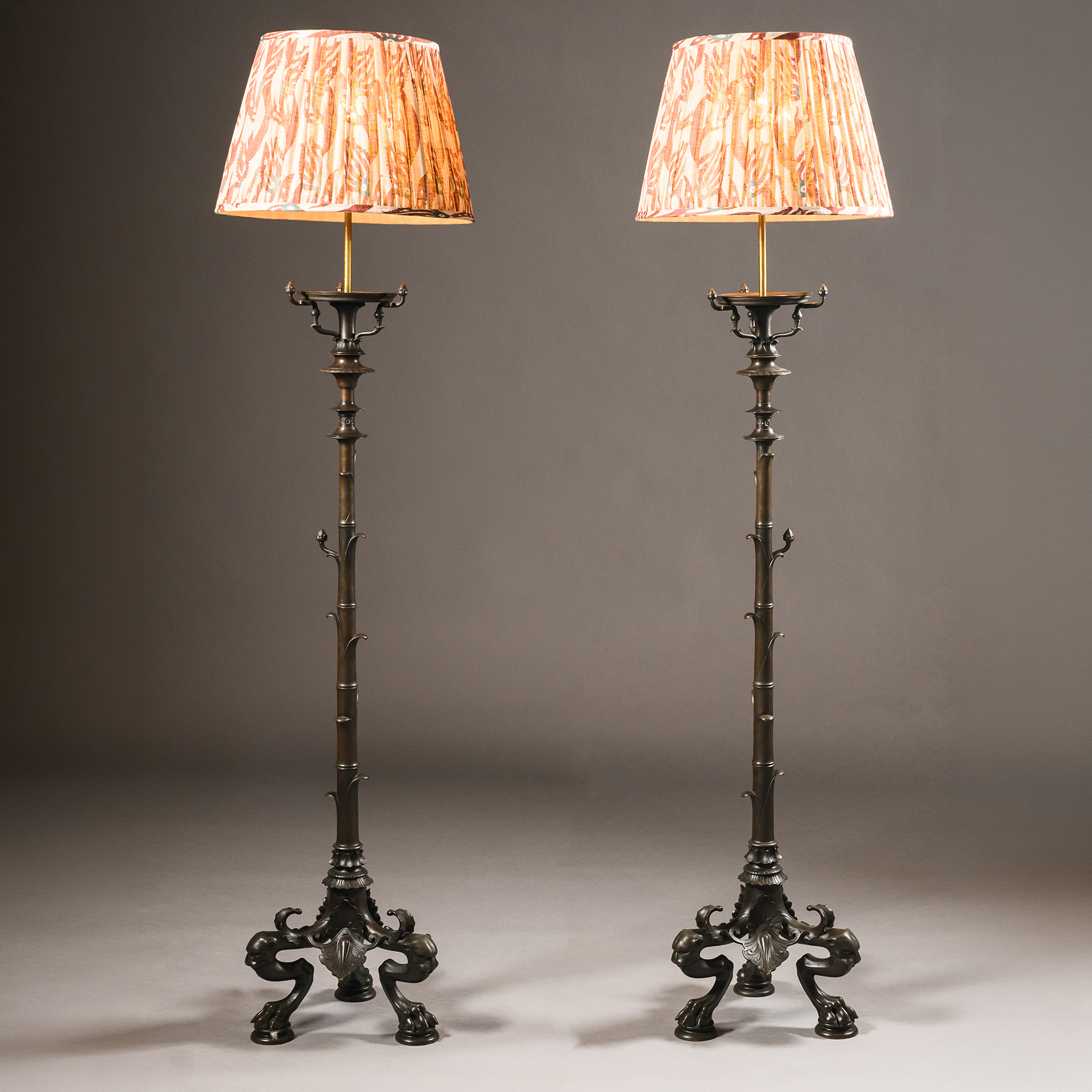
A Pair of Neo-Pompeiian Patinated Bronze Torchères, Fitted as Standard Lamps, Attributed to Maison Barbedienne, Paris.
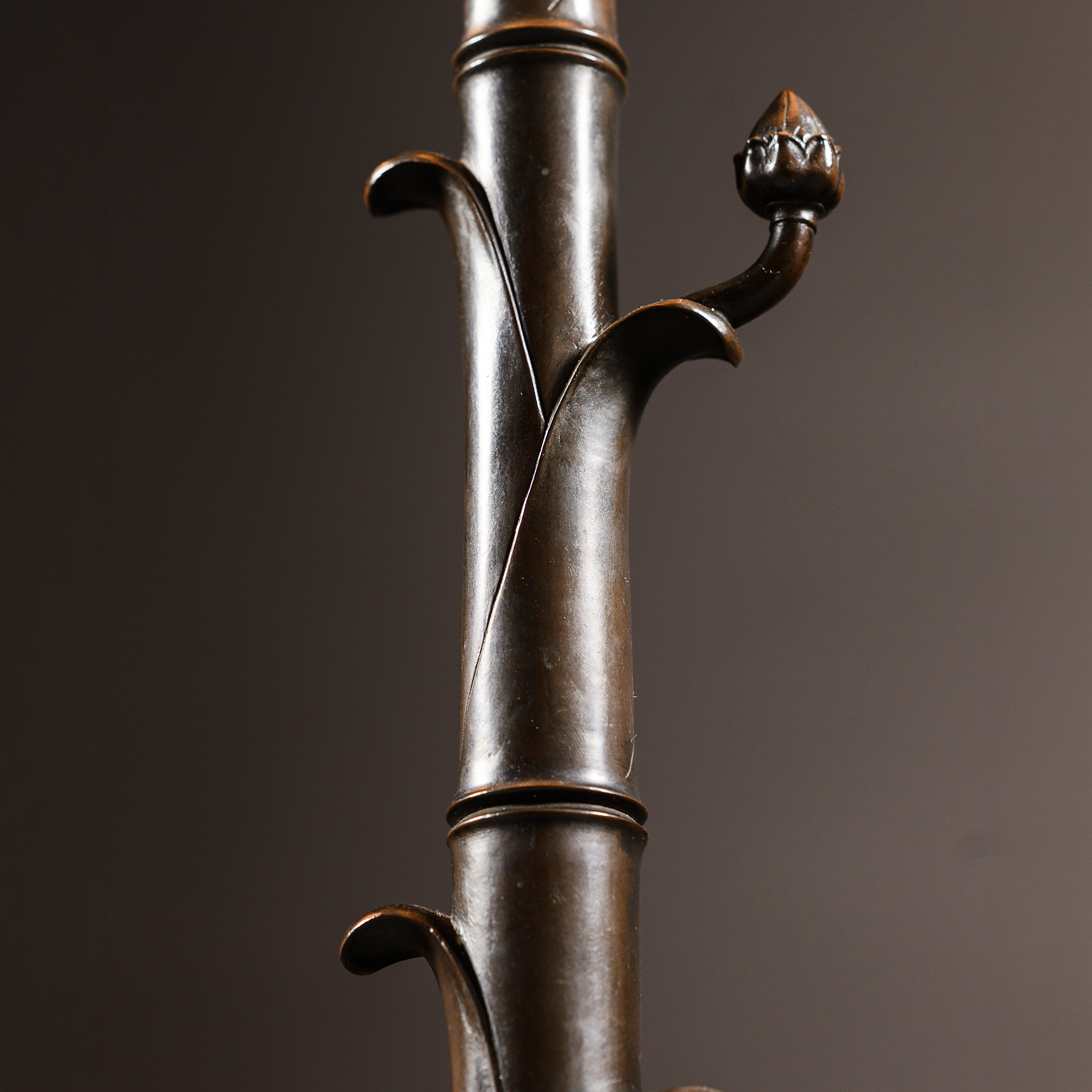
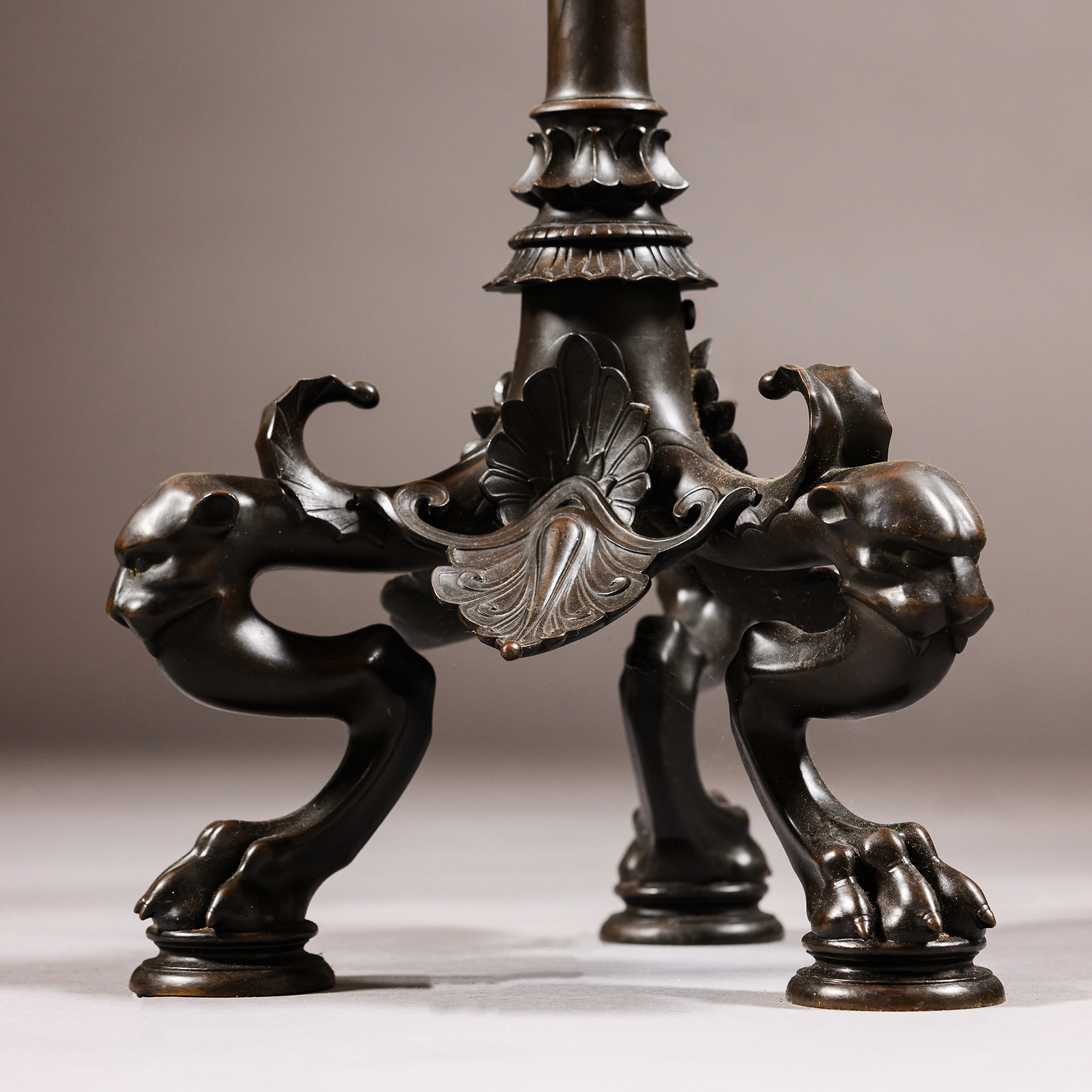
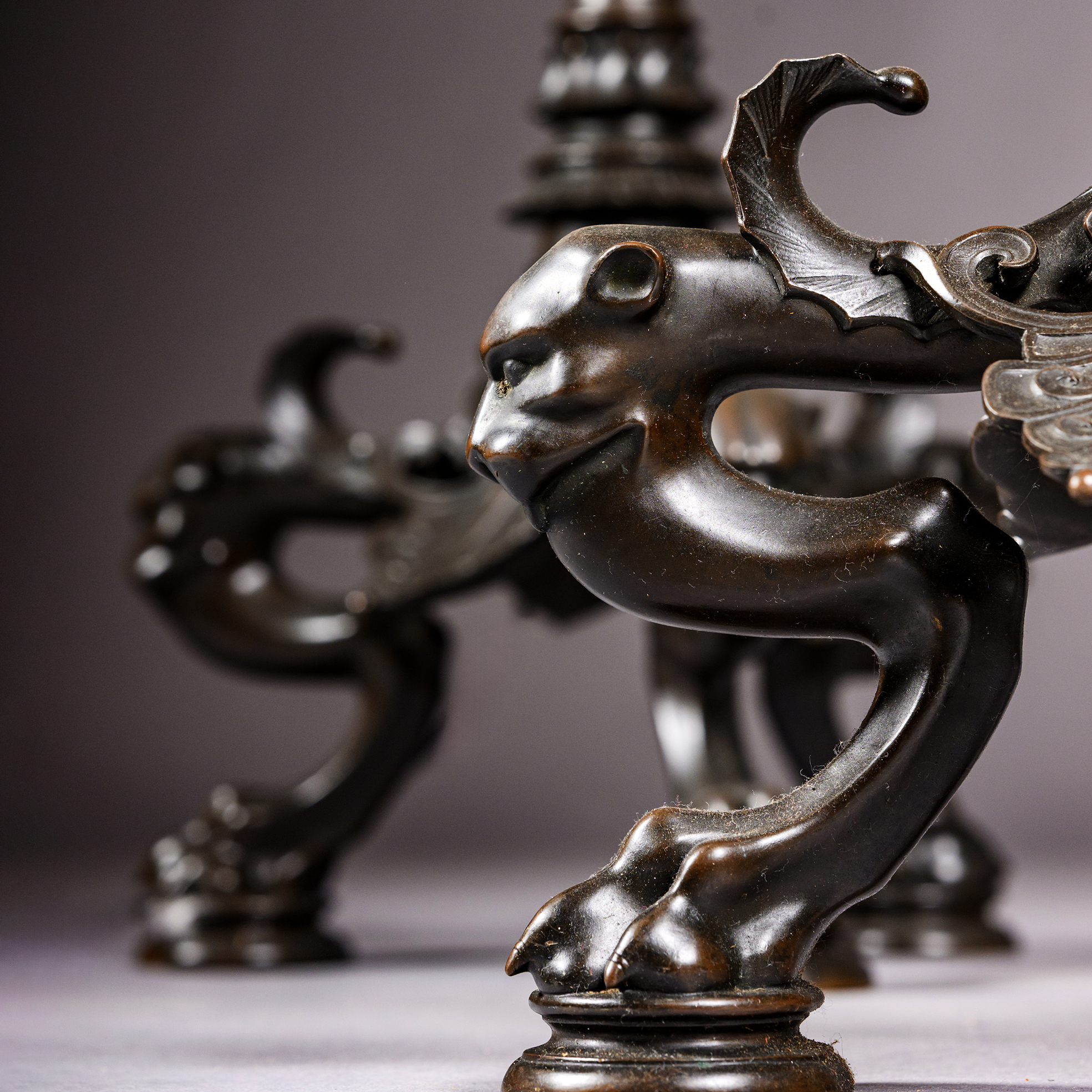
Each with ring-turned shaft issuing tendrils, on three panther mask paw monopodia. Fitted for electricity.
France, Circa 1860.
These distinctive bronze torchères are part of the fashion for neoclassical art, specifically the Neo-Pompeiian, which was a response to the discovery of ancient Roman furniture, lighting and works of art at excavations around Naples in the 18th century. The discoveries were engraved and published making them a source book from which contemporary designers drew to furnish the homes of clients eager for rooms in the style of Pompeii.
At Herculaneum in the Kingdom of Naples (now Campania, Italy), excavations begun in 1711 unearthed ancient Roman bronze tripods for holding candles or thymiaterion (incense burners).
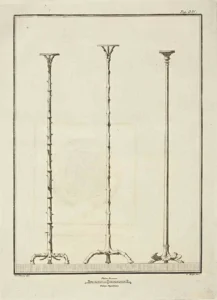
The ancient prototype discovered at Herculaneum (Giuseppe Aloja, ‘Le Antichità di Ercolano Esposte’, 1757-1792).
Of the different models, the specific prototype for these torchères was engraved in ‘Le Antichità di Ercolano Esposte’ published between 1757-1792. It informed neoclassical designs in the early Regency period by Thomas Hope (1807) and George Smith (1808).
At the 1855 Exposition Universelle in Paris, Ferdinand Barbedienne presented a pair of this model in gilt and silvered bronze which were bought by Empress Eugénie for her rooms at the château of Saint-Cloud.
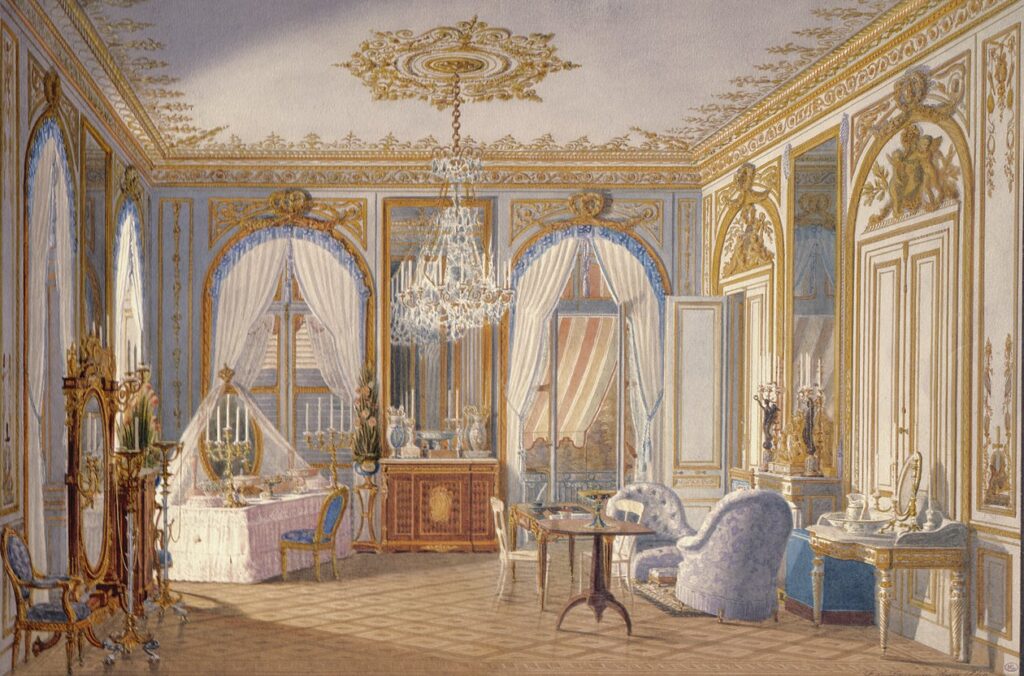
The pair of torchères by Barbedienne in the Dressing Room of the Empress Eugenie at the château of Saint-Cloud, 1860, watercolour by French artist Jean-Baptiste Fortuné de Fournier (1797–1864), Musée national du Château de Compiègne – Inv, RF 27959, © GrandPalaisRmn / Daniel Arnaudet (Public Domain).
The same model was supplied, presumably also by Barbedienne, to the Maison Pompéienne (1856-1860) which was modelled on the villa of Diomedes in Pompeii and built by the architect Alfred Normand (1822-1909) for Prince Jérôme Napoléon (1822–1891), son of Jerome Bonaparte, and first cousin of Napoleon III.
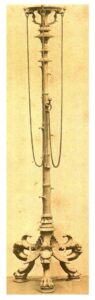
The model exhibited by Ferdinand Barbedienne at the 1855 Paris Universal Exhibition.
Date
Circa 1860
Origin
France
Medium
Patinated Bronze
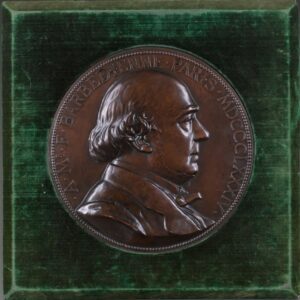
Ferdinand Barbedienne (6 August 1810 – 21 March 1892) was a French metalworker and manufacturer, who was well known as a bronze founder.
The son of a small farmer from Calvados, he started his career as a dealer in wallpaper in Paris. In 1838 he went into partnership with Achille Collas (1795-1859), who had just invented a machine to create miniature bronze replicas of statues. Together they started a business selling miniatures of antique statues from museums all over Europe, thus democratising art and making it more accessible to households. From 1843 they extended their scope by reproducing the work of living artists and also diversified by making enamelled household objects. With the outbreak of the Franco-Prussian war in 1870 the firm briefly had to switch to cannon founding owing to the shortage of metals but resumed business afterwards. Following Barbedienne’s death in 1892, he was buried in the Père-Lachaise cemetery and the firm was carried on by his nephew Gustave Leblanc until 1952.
Among the principal artists reproduced by the firm were Antoine Louis Barye and Auguste Rodin.
Le Antichità di Ercolano Esposte (Antiquities of Herculaneum Exposed), Italy, 1757-1792.
T. Hope, Household Furniture and Interior Decoration, 1807 (pl. 6).
G. Smith, Collection of Designs for Household Furniture and Interior Decoration, London, 1808, (pl. 111).
H. Moses, A Collection of Antique Vases, Altars, Paterae, Tripods, Candelabra, Sarcophagi, &c,. London, 1814 (pl. 83-5).