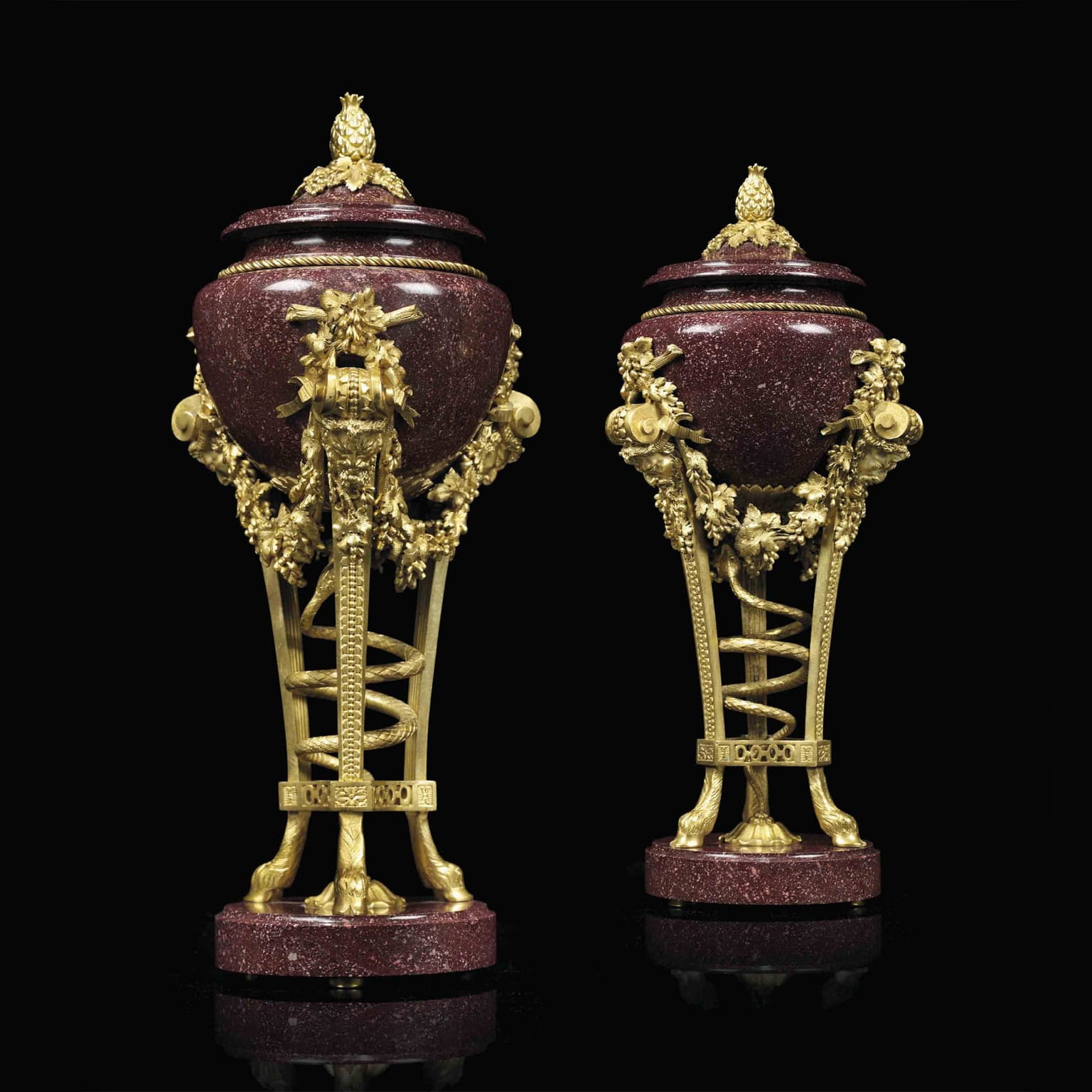
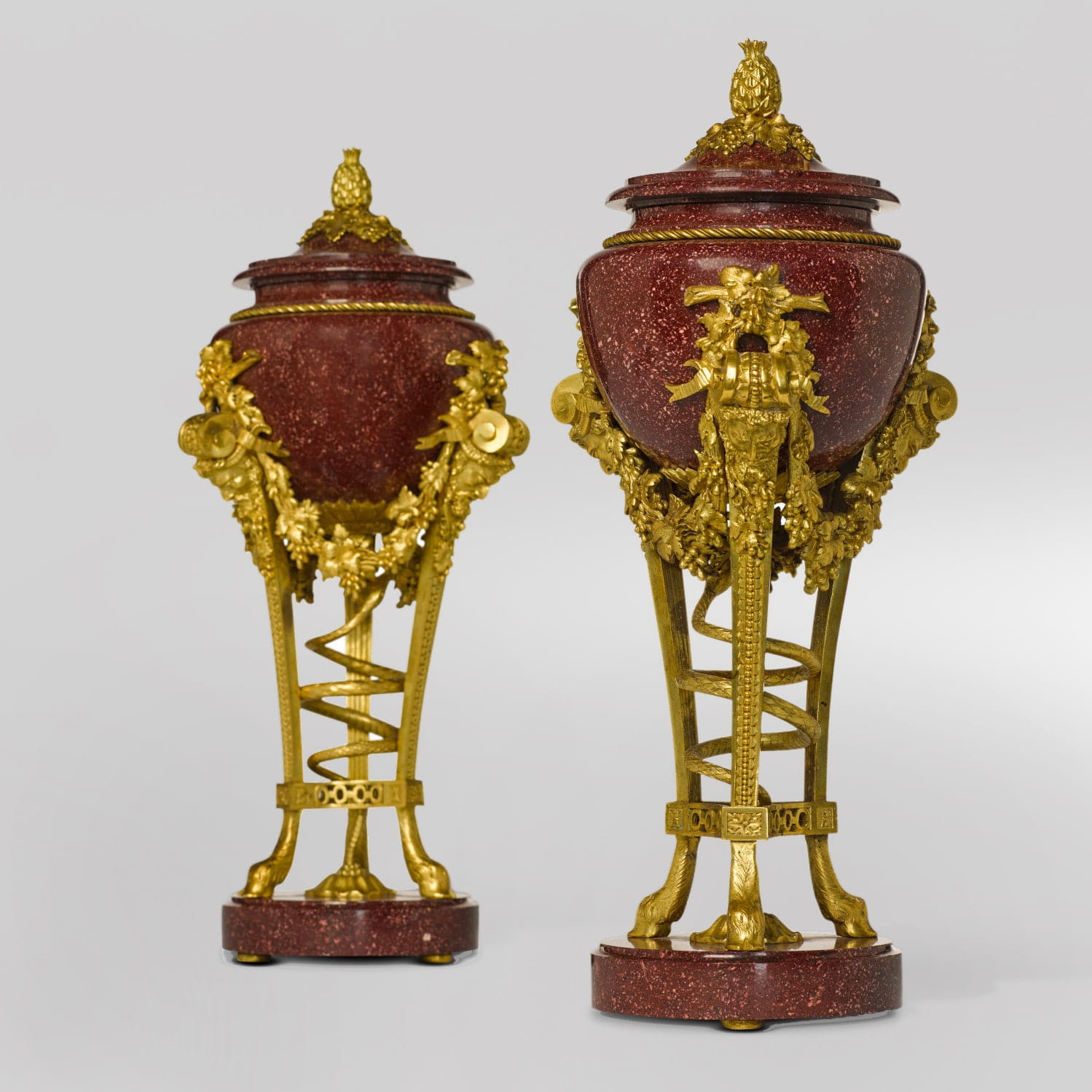
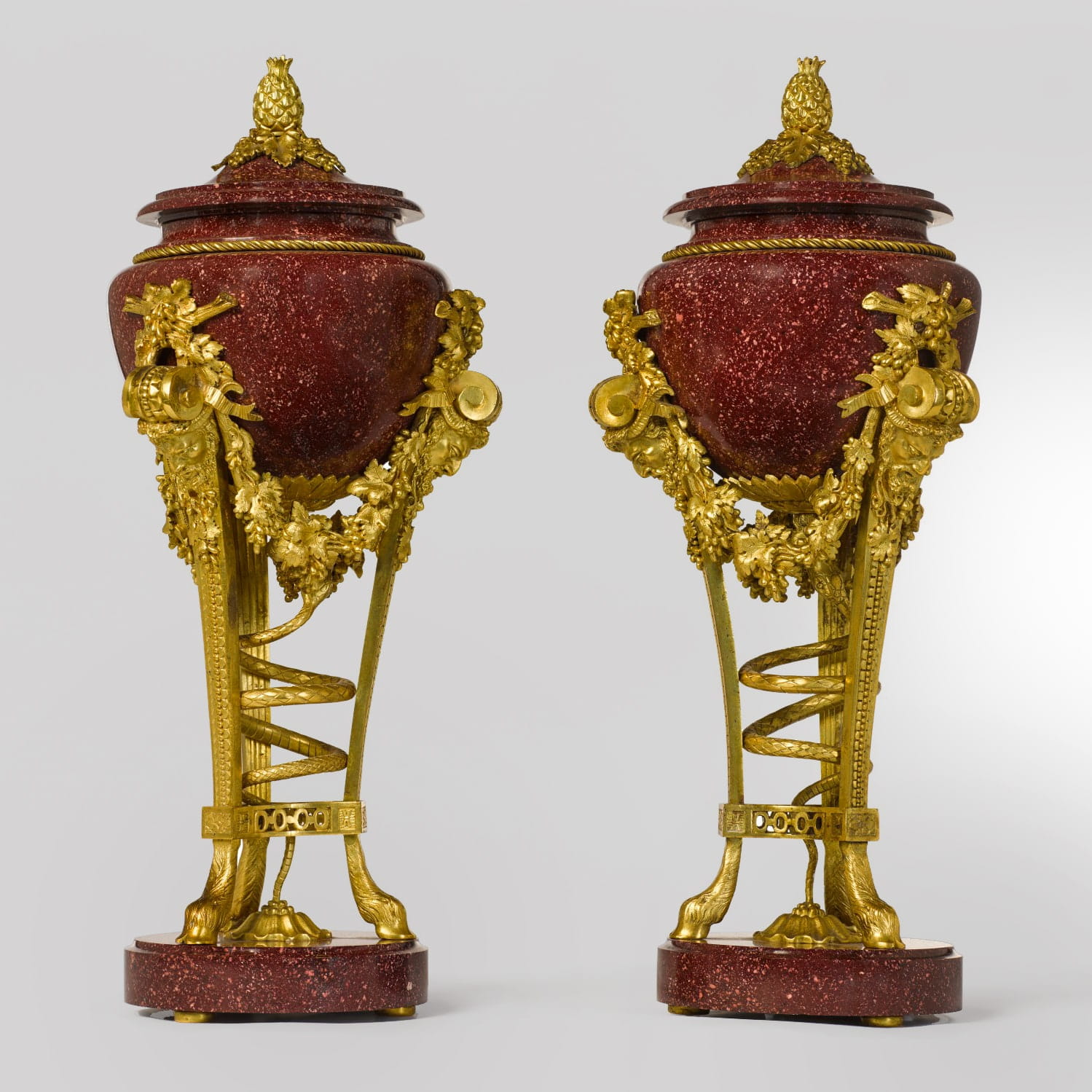
A Pair of Louis XVI Style Porphyry Urns, After the Model by Pierre Gouthière
£29,000
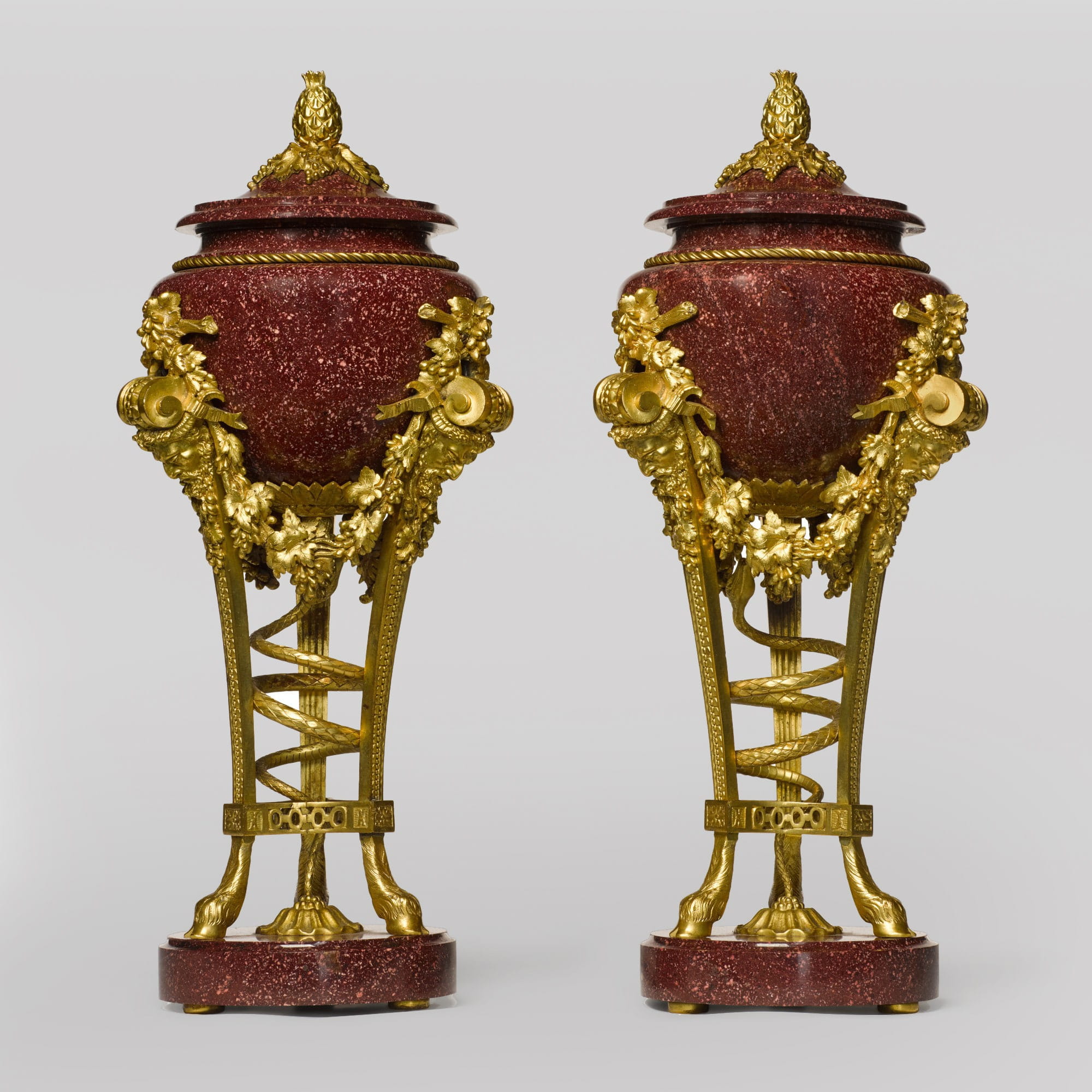
A Pair of Louis XVI Style Gilt-Bronze Mounted Porphyry Urns, After the Model by Pierre Gouthière.Each urn is of neo-classical design, each with a...
Dimensions
Height: 49 cm (20 in)Width: 20 cm (8 in)
Depth: 14 cm (6 in)

 Print
PrintDescription
A Pair of Louis XVI Style Gilt-Bronze Mounted Porphyry Urns, After the Model by Pierre Gouthière.
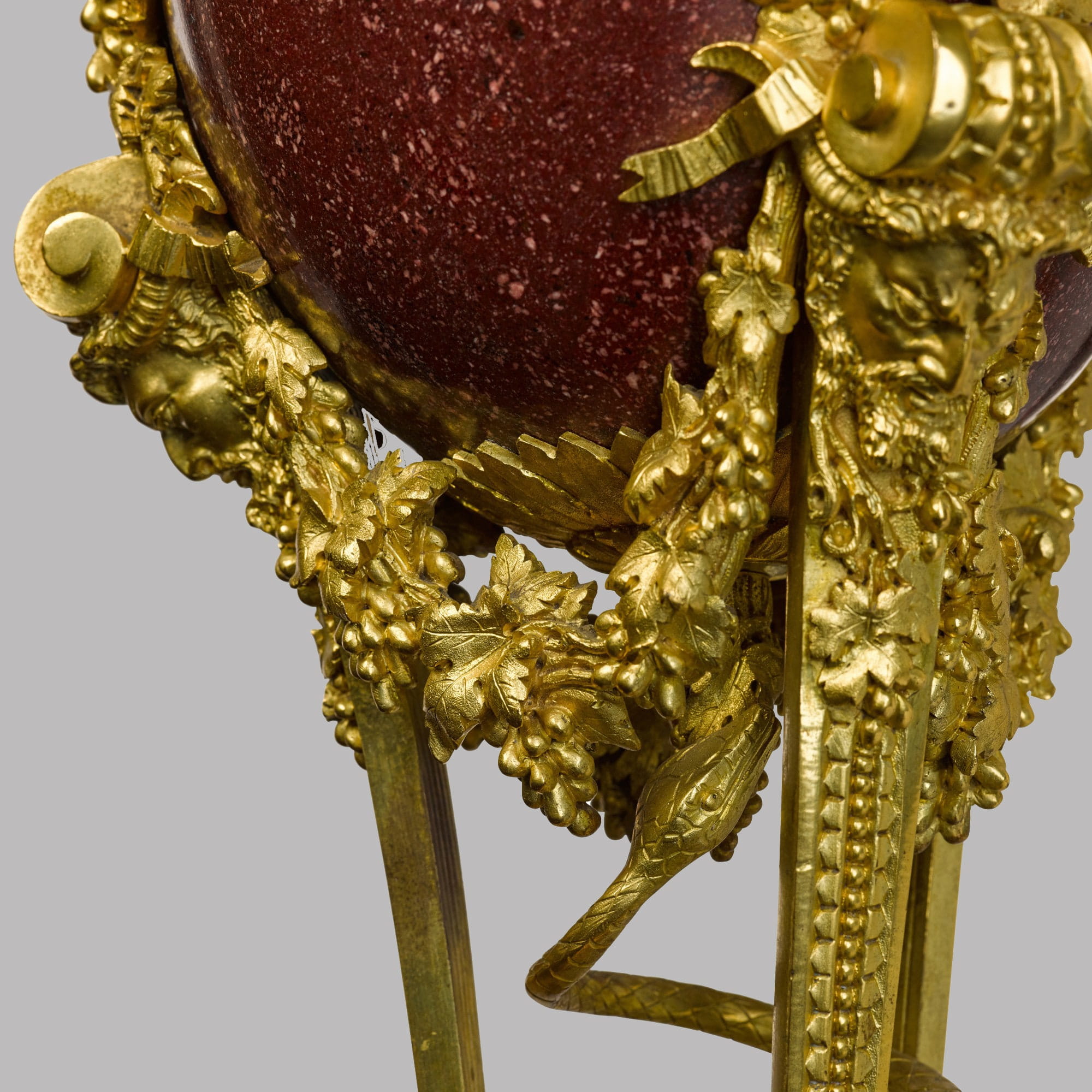
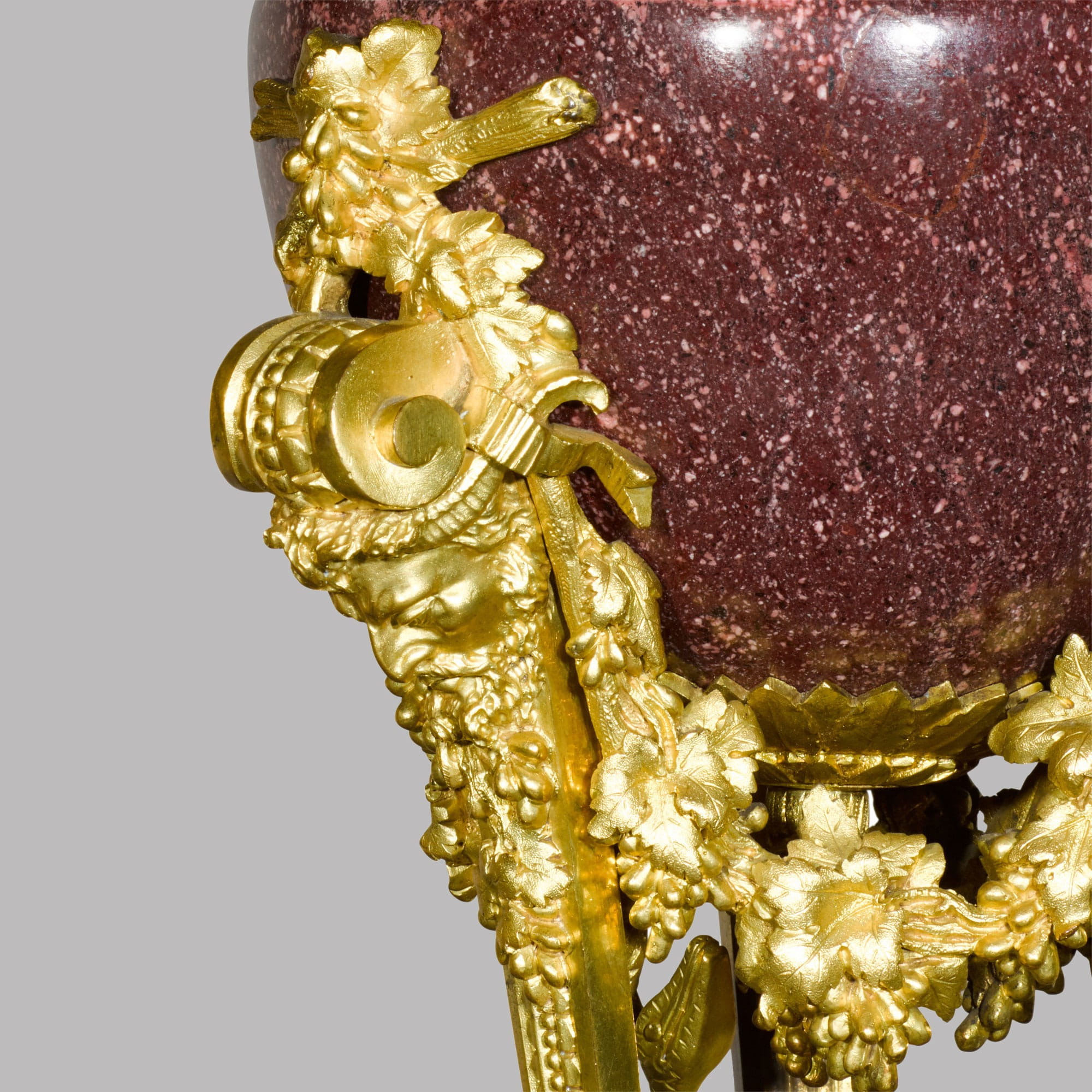
Each urn is of neo-classical design, each with a circular base and a triform frame with a coiled snake in the centre. The gilt-bronze supports are cast with a satyr’s mask amidst a fruiting vine and terminate in hairy hoof feet. The urn shaped porphyry bodies have fixed covers surmounted by gilt-bronze fruiting vine finials.
The vases illustrate the enduring fascination for porphyry since Antiquity and the French taste to have the valuable stone mounted with rich and finely chiselled gilt-bronze mounts in the Louis XVI style.
The model for the present urns is related to the famous Duke of Aumont perfume burner, now in the Wallace Collection, London (illustrated in Hughes, op. cit., p. 1341, no. 275, F292). The perfume burner features the same scrolled supports with vine leaf and grape swags joined by a pierced guilloche stretcher centred by a serpent as on the present pair.
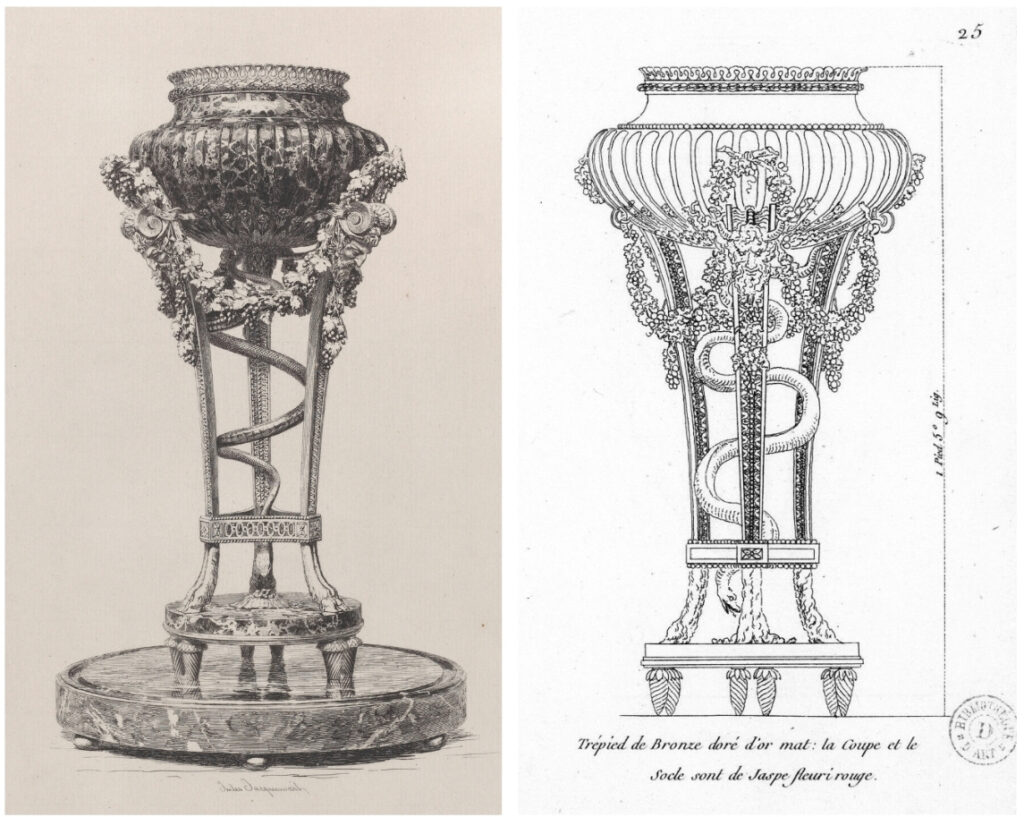
The Wallace perfume burner, probably after a design by François-Joseph Bélanger was recorded in the inventory after the death of the Duc d’Aumont in 1782. The mounts were securely attributed to Gouthière based on the statement in the d’Aumont sale catalogue, where it appeared under the heading `tous les Ovrages de son (Gouthière’s) exécution …’ which were indicated by the letter G. There is also an engraving in the d’Aumont sale catalogue of the perfume burner. The sale of the Duke of Aumont’s collection was a great success, with Marie-Antoinette and Louis XVI acquiring some of the most important objects.
Ornamentalists and bronziers were inspired too by these masterpieces and disseminated new models where their imagination merged with these models.
Porphyry is a remarkably hard, durable rock, which in antiquity derived its name from the fact that its intense, dark red colour, speckled with white inclusions, is similar to the purple colour called purpura by the Romans. The name was extended by association to the massif where porphyry was quarried in Egypt, which the Romans called Mons Porphyrites.
The Romans began to quarry porphyry in the First Century BC, employing it in such large quantities that by the Fifth Century AD the quarries were nearly exhausted. Porphyry was used extensively for monumental elements, and it became invested with an Imperial symbolism, perhaps on account of its analogy with the purpura, which from ancient times had been the prerogative of regal dignity. The use of Porphyry was in fact limited by Diocletian to the Imperial family.
This sacred and celebrative significance was felt and appreciated in the Renaissance courts: porphyry was among the materials most sought – after by Sixteenth Century collectors. In Florence, Grand Duke Cosimo I, had a particular liking for this stone and sponsored its use in large-scale sculptural works. Given that the ability to execute large sculptural works in this arduous material had long since been lost, such works represented a remarkable technical accomplishment.
French, Circa 1870.
Date
Circa 1870
Origin
France
Medium
Porphyry
Hughes, The Wallace Collection, Catalogue of Furniture, Vol. III, London, 1996, p. 1341, no. 275 (F292).