 Ref no: B77401
An Early Victorian Ebonised Vitrine Cabinet-on-Stand
England, Circa 1840
£48,000
- Date
- Circa 1840
- Origin
- England
- Medium
- Ebonised Wood
- Height
- 181 cm (72 in)
- Width
- 154 cm (61 in)
- Depth
- 58 cm (23 in)
Description
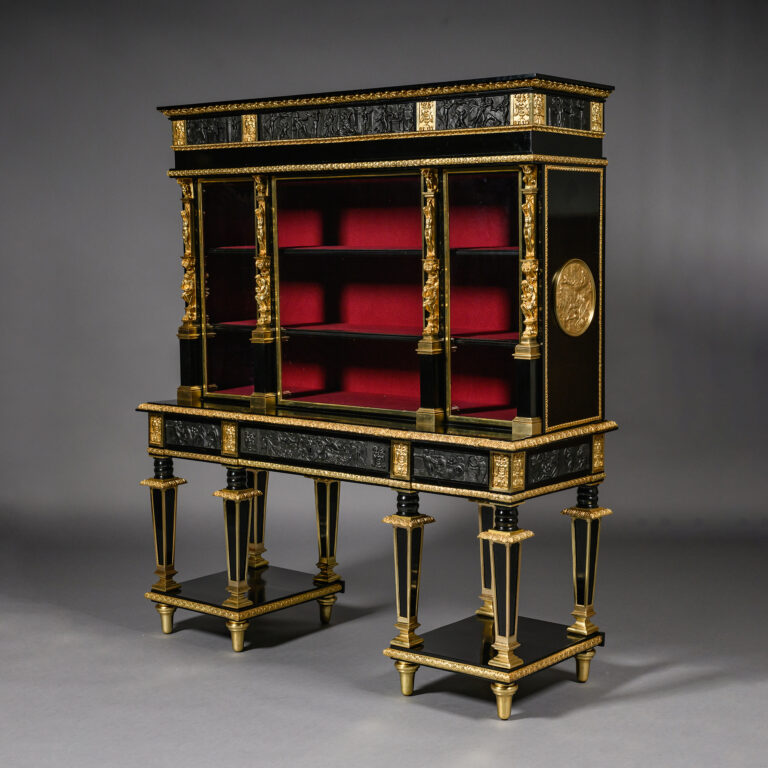
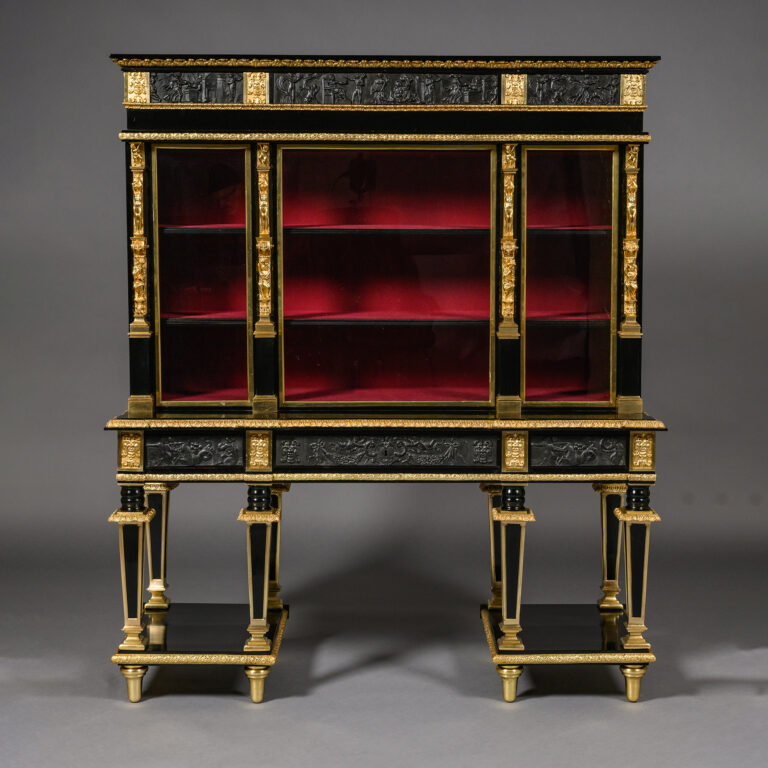
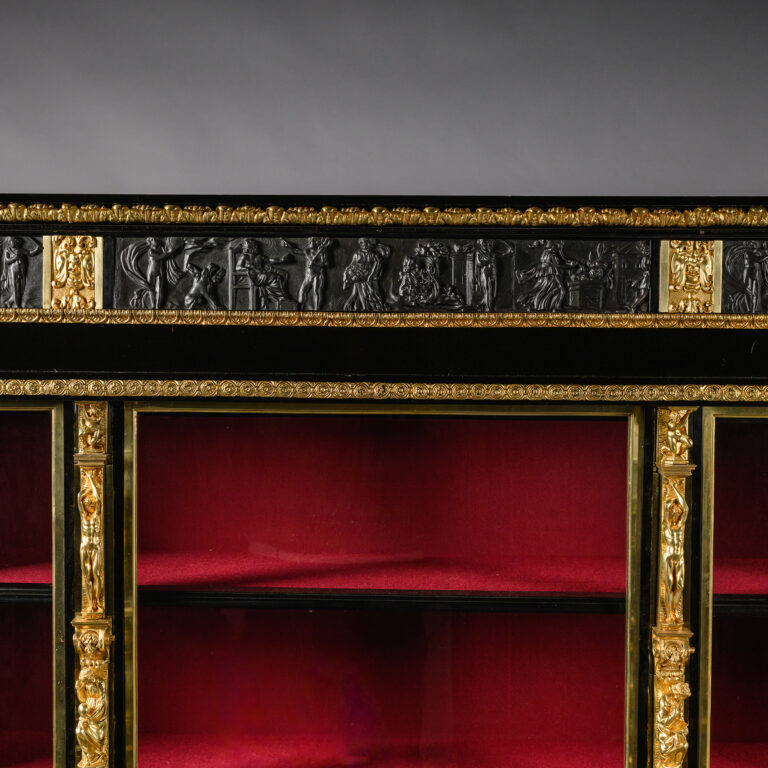
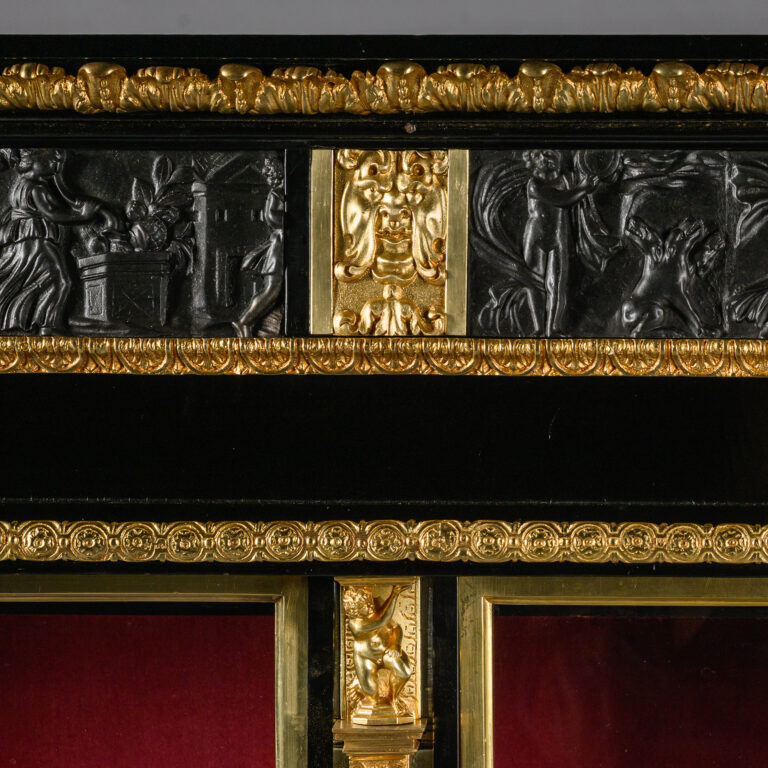
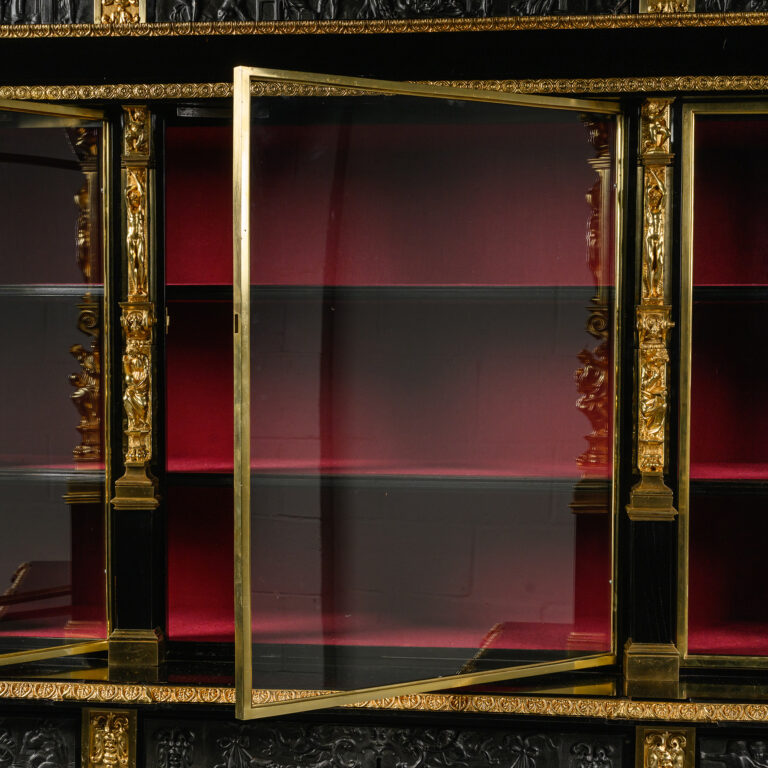
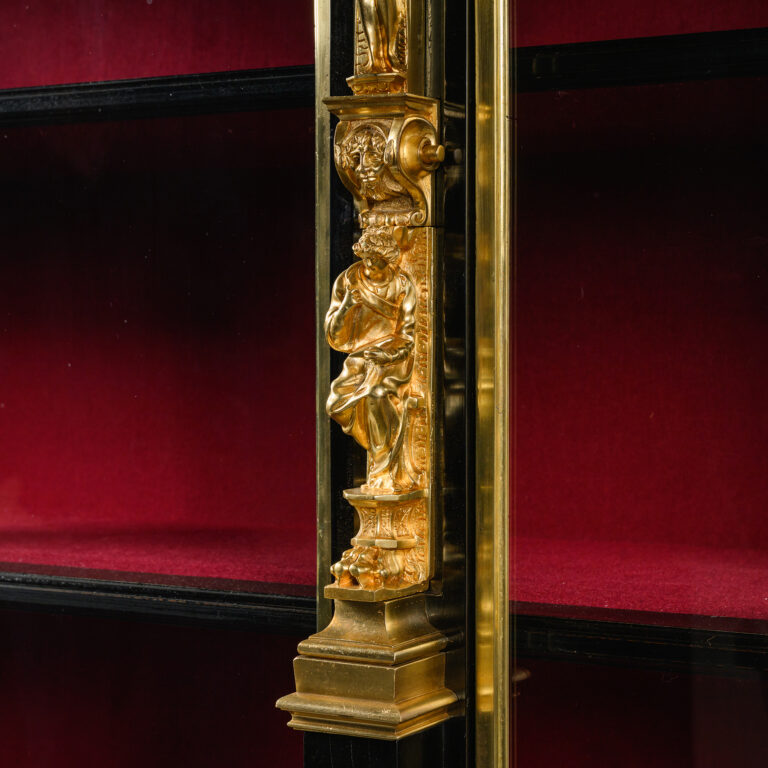
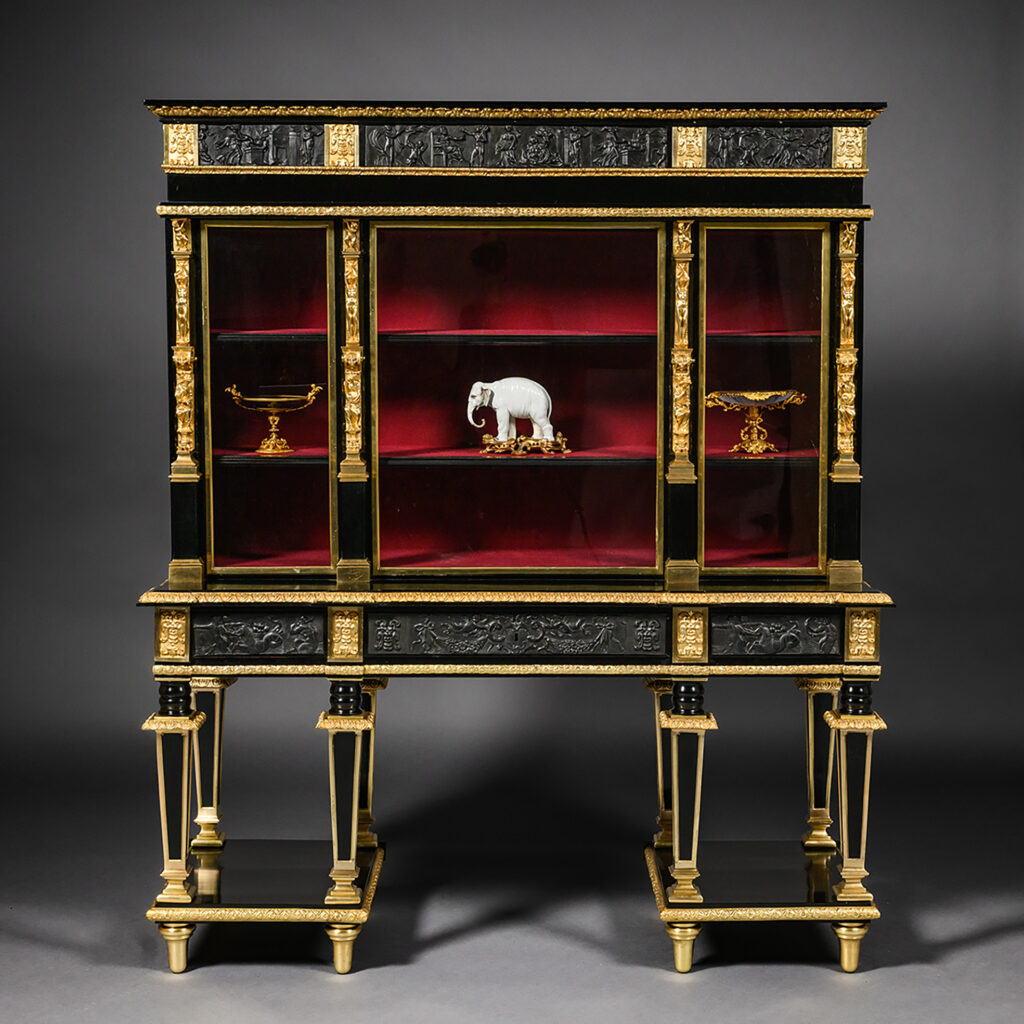
An Early Victorian Patinated-Bronze and Gilt-Lacquered Brass-Mounted Ebonised Vitrine Cabinet-on-Stand.
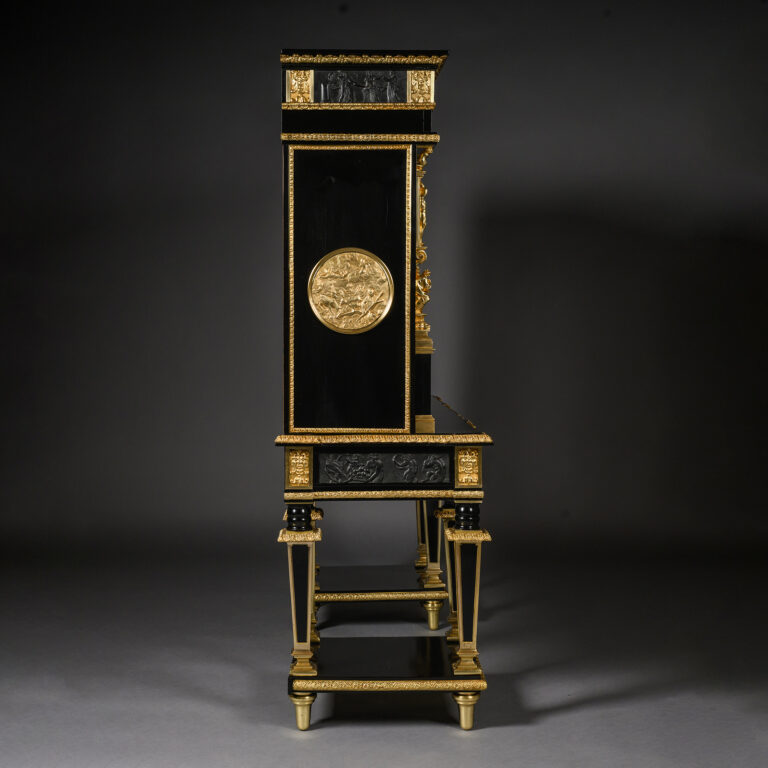
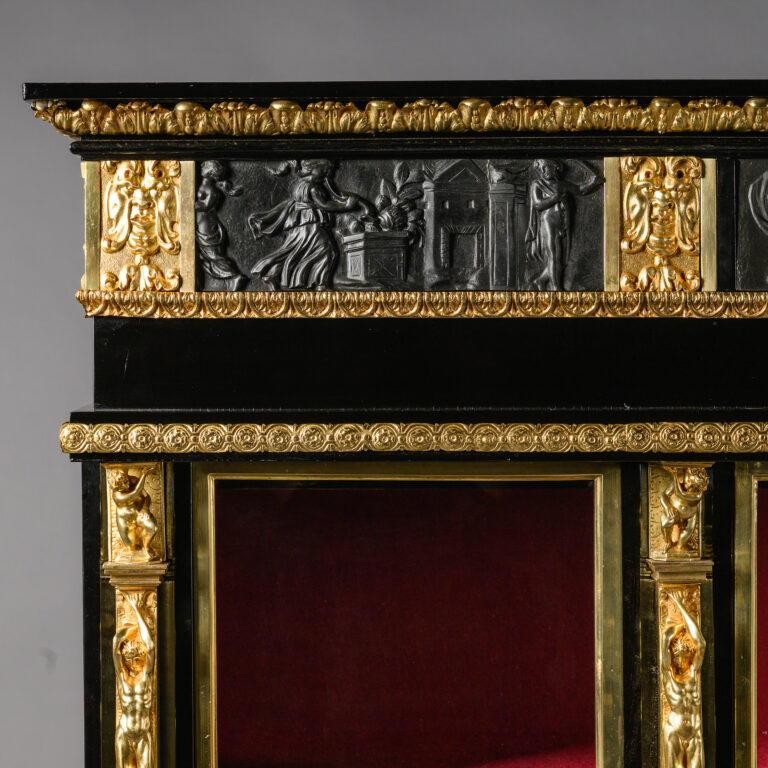
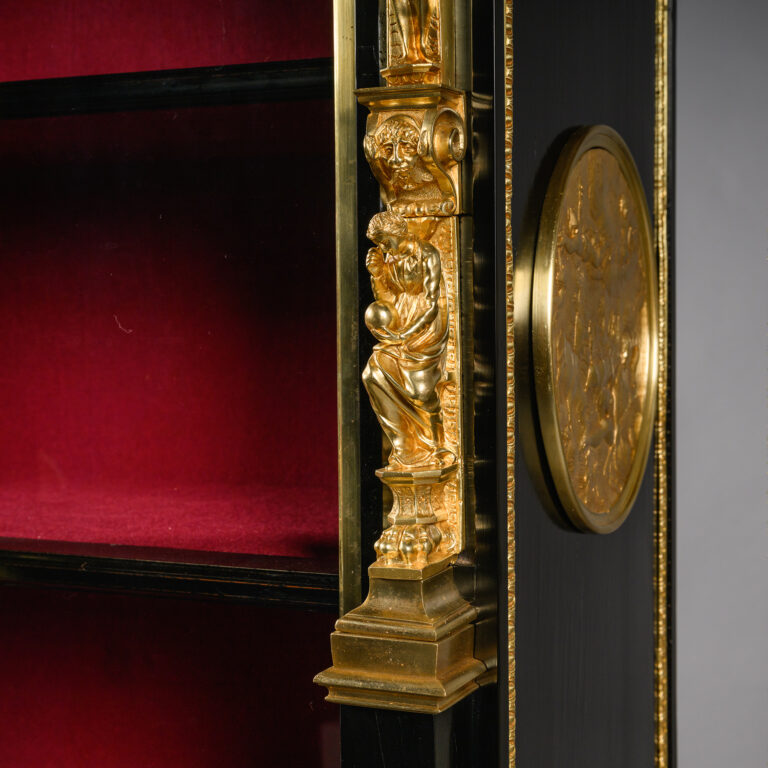
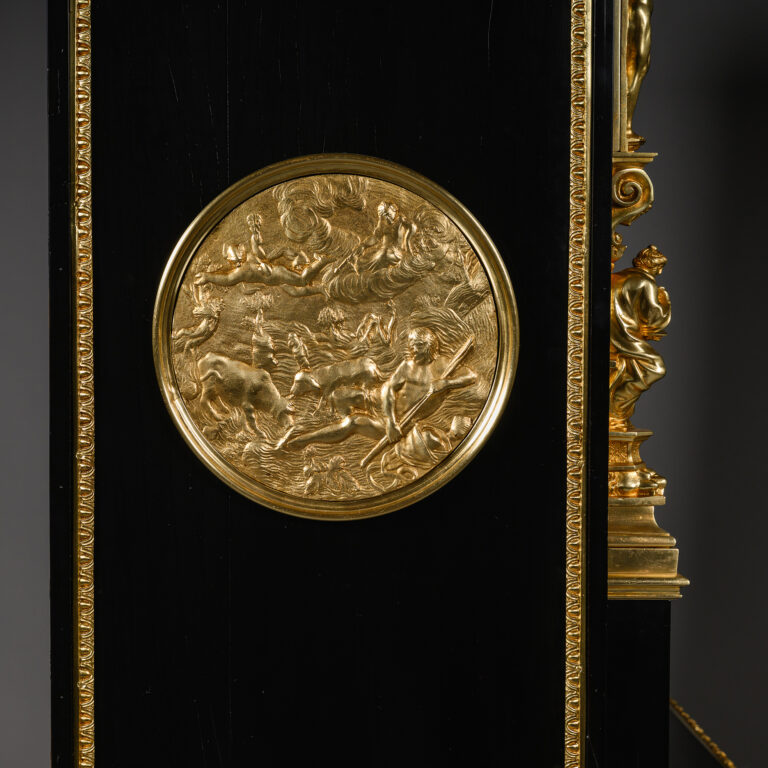
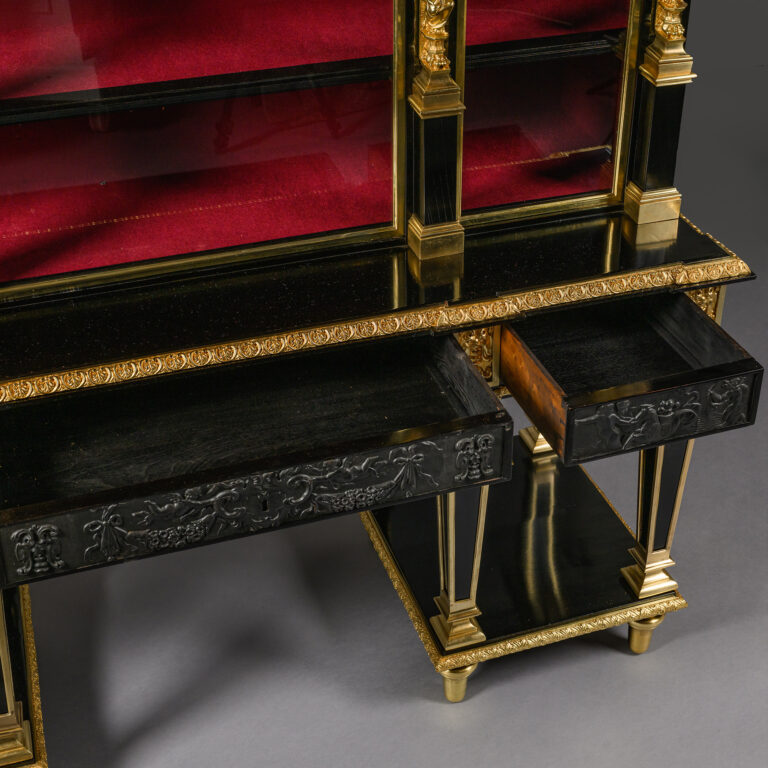
The entablature set to the front and sides with relief-cast bronze plaques depicting mythological scenes of processions and offerings with Green Man masks between. The front with a central hinged glass door flanked by smaller doors and divided by figural pilasters. The claret-coloured baize lined interior with two shelves. The sides with gilt-brass roundels depicting the Annunciation to the shepherds. The stand fronted by three drawers with relief-cast bronze plaques depicting mythological scenes of putti, ribbon-tied garlands, cornucopias and hippocamps with Green Man masks between. Raised on square tapered legs united by twin under tiers, on gilt-brass toupie feet.
England, Circa 1840.
The cabinet’s unusual historicist design recalls French cabinets of the mid-17th century, decorated with carved relief scenes. Their figural carving was influenced by craftsmen who migrated to Paris from the Low Countries, and drew on biblical narratives, classical mythology and Roman history. Ebony, often imported from India, was regarded as an exotic and precious material, and elaborately carved cabinets became enduring symbols of wealth and prestige.
Keenly sought after by antiquarian collectors in the 19th century, such cabinets inspired renewed interest among wealthy patrons. In 1855, one notable example was acquired by Baron Mayer Amschel de Rothschild (1818–1874) for his newly built residence, Mentmore Towers, Buckinghamshire.
Now in the Victoria and Albert Museum, London, the cabinet has traditionally been associated with Marie de’ Medici and is commonly known as the ‘Marie de’ Medici cabinet’. Its elaborate gilt-bronze mounts, rather than the carved ebony decoration found on many comparable cabinets, have prompted debate over whether it was embellished by the dealer Alexander Barker (c. 1797–1873) before its sale to Baron Mayer Amschel de Rothschild.
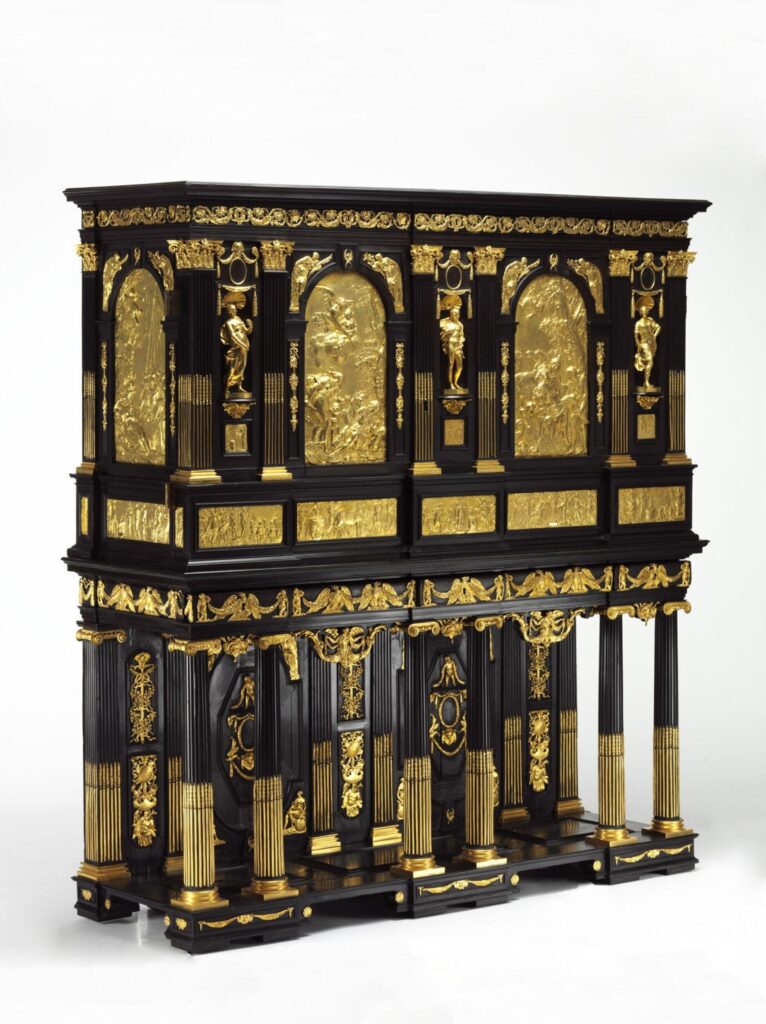
The ‘Marie de Medici’ cabinet, ca. 1630 – ca. 1660 (made), ca. 1840 – 1855 (re-modelled) © Victoria and Albert Museum, London.
Beyond its stylistic parallels, the ‘Marie de’ Medici cabinet’ illustrates the renewed enthusiasm for French Louis XIV furniture during the mid-19th century. Entrepreneurial English cabinetmakers such as Thomas Parker, Robert Hume, Edward Holmes Baldock and Robert Blake actively adopted and adapted the ‘French style’. Town & Emanuel, another prominent firm, advertised themselves as ‘suppliers of the finest and most superb designs of Louis 14th’ (C. Payne, British Furniture 1820–1920: The Luxury Market, Woodbridge, 2023, p. 90).
The present cabinet belongs to this revival, reinterpreting the visual language of 17th-century French furniture through the materials and techniques of the Victorian period. Its use of relief-cast bronze plaques in place of carved ebony is a distinctive variation, while the concealed spring latches that release the doors demonstrate mechanical innovation and the ingenuity of contemporary cabinetmaking.

Literature
C. Payne, British Furniture 1820–1920: The Luxury Market, Woodbridge, 2023, p. 90.