 Ref no: B67450
Louchet Frères
A Grand Neo-Gothic Gilt-Bronze Lantern
France, Circa 1900
£45,000
- Date
- Circa 1900
- Origin
- France
- Medium
- Gilt-Bronze and Glass
- Signature
- Stamped ‘LOUCHET’.
- Height
- 103 cm (41 in)
- Width
- 105 cm (42 in)
- Depth
- 50 cm (20 in)
Description
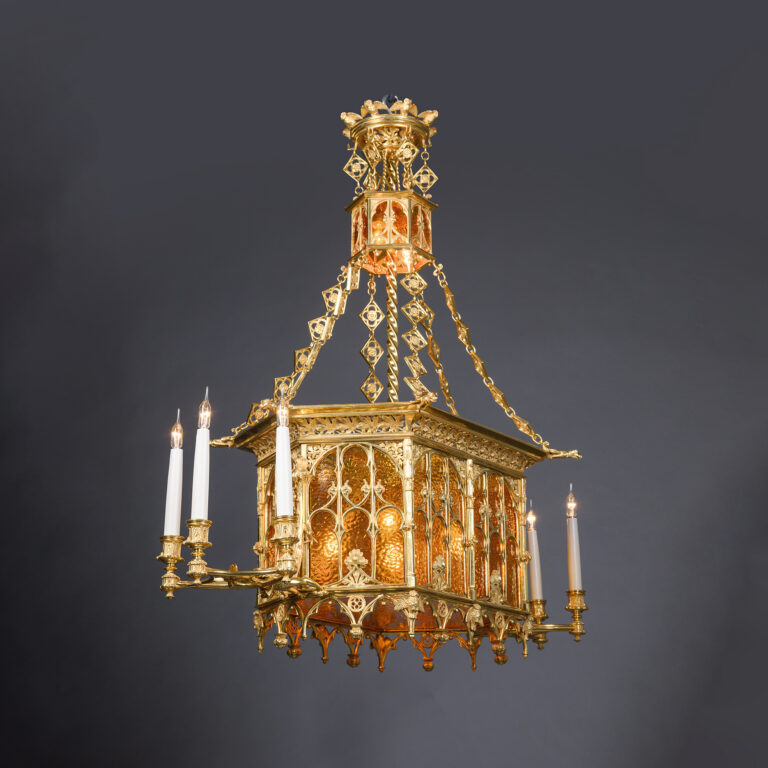
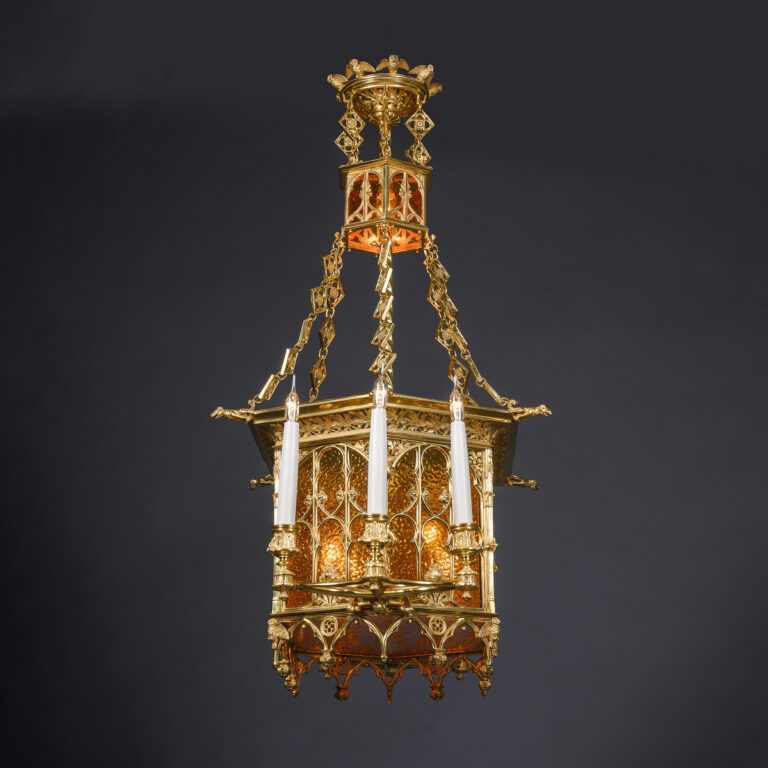
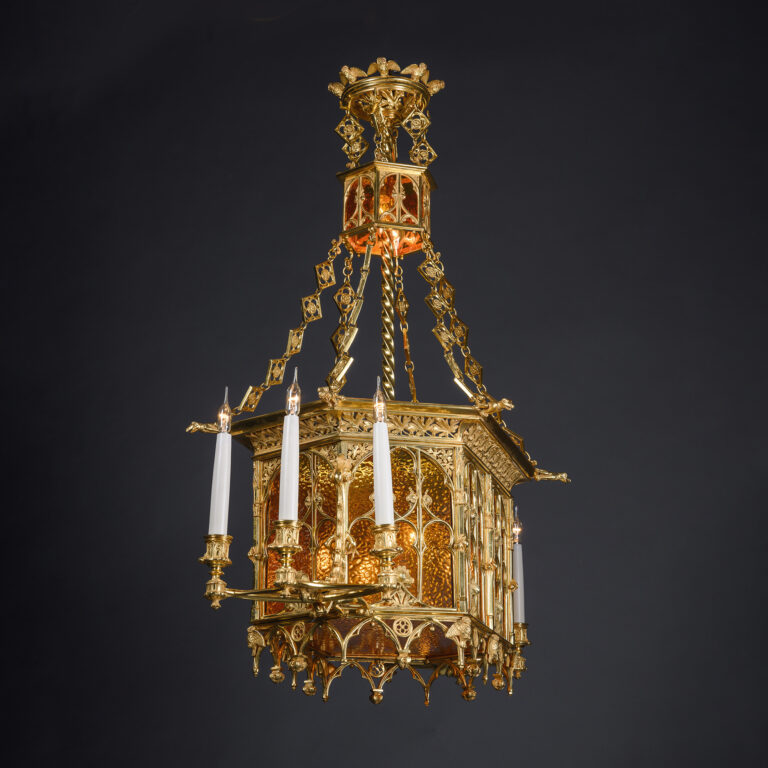
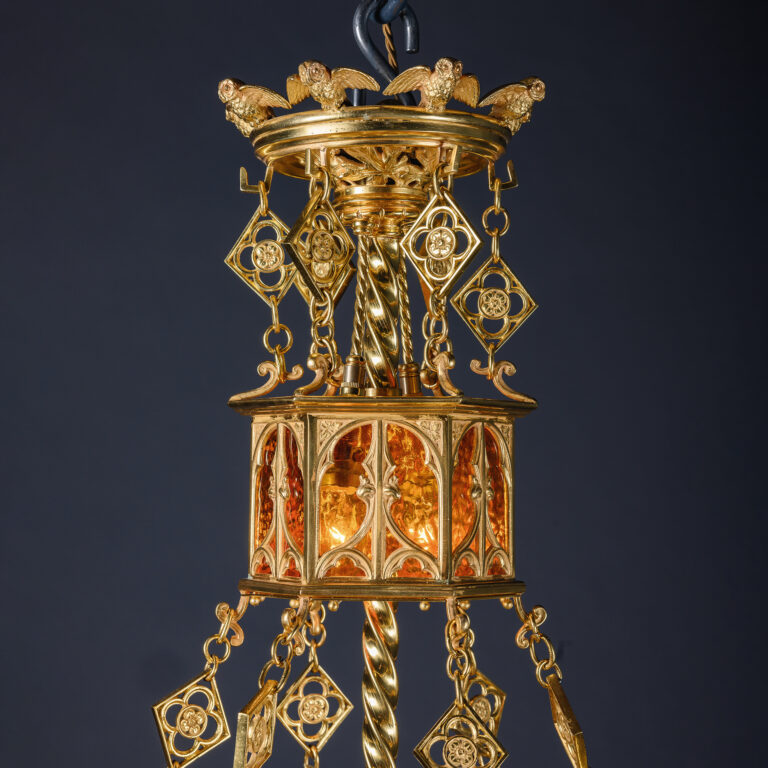
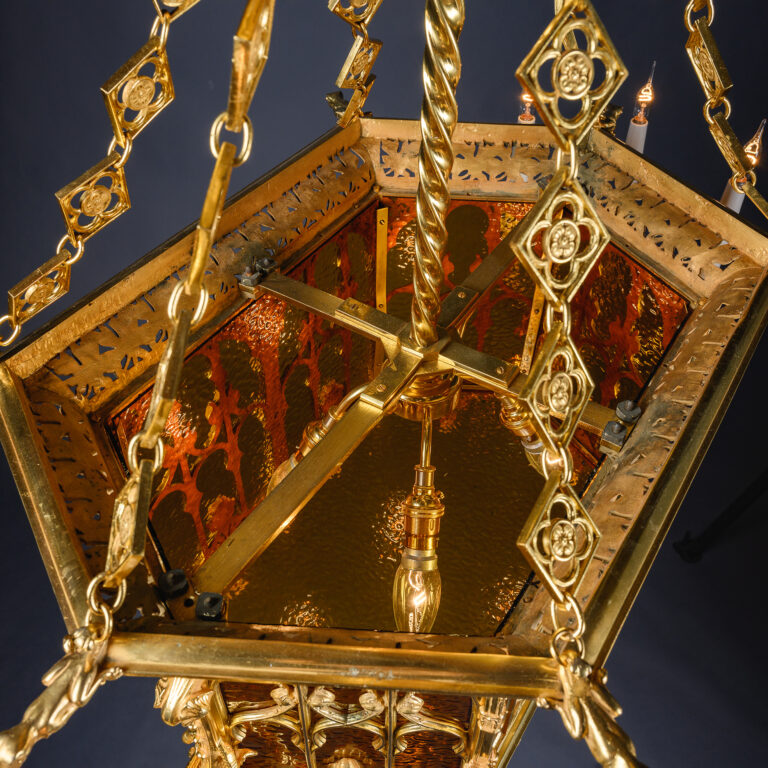
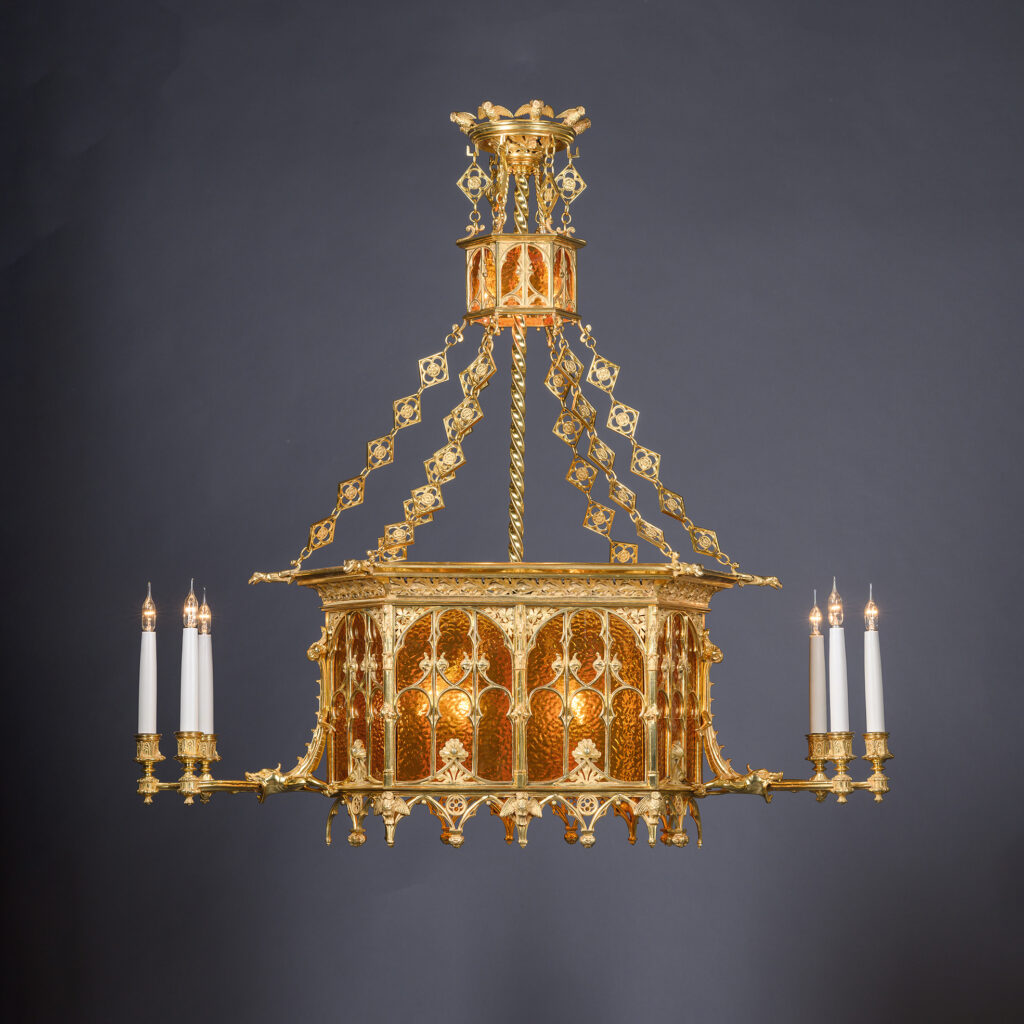
A Grand Neo-Gothic Gilt-Bronze Lantern, By Louchet Frères, Paris.
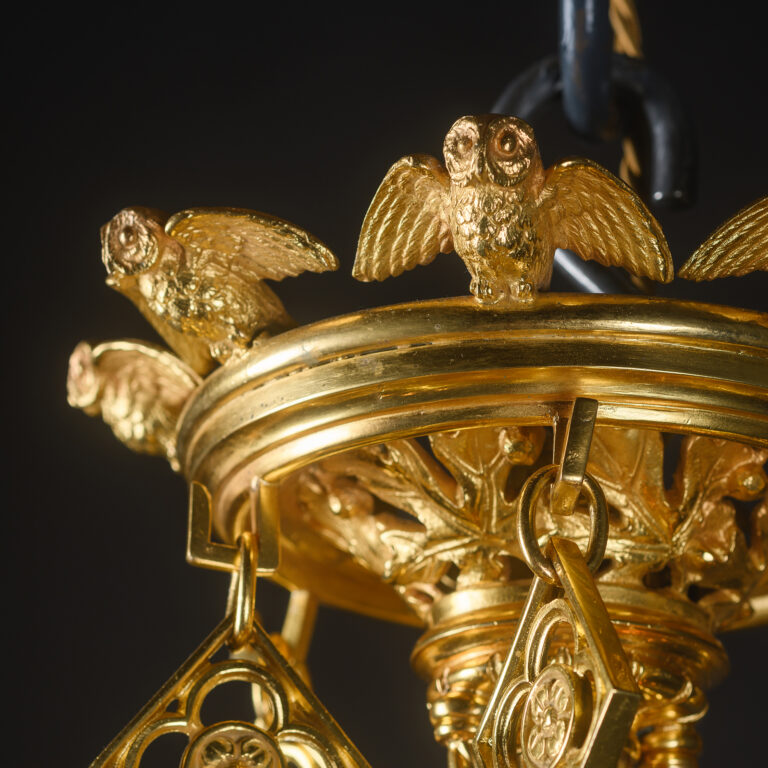
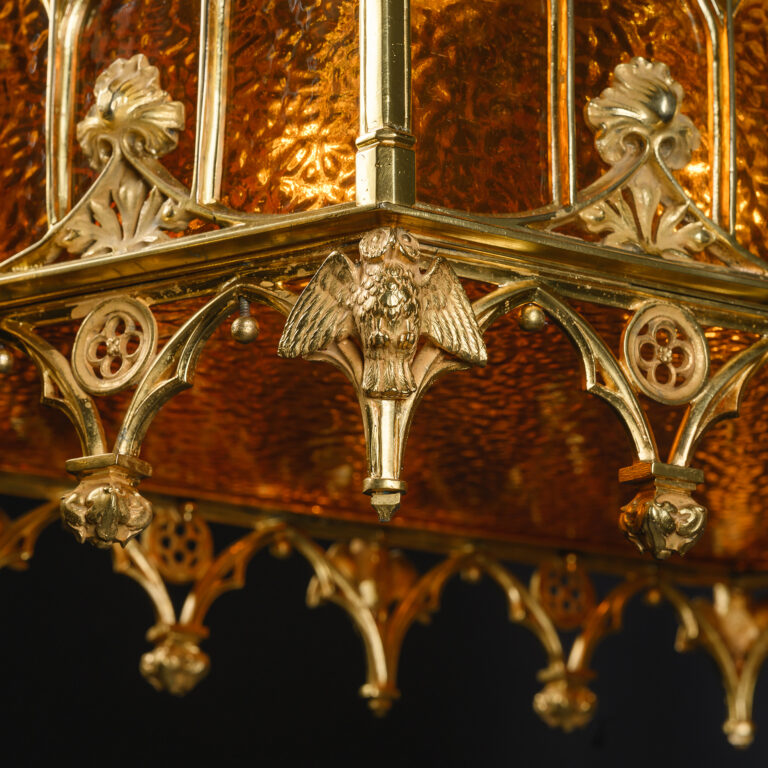
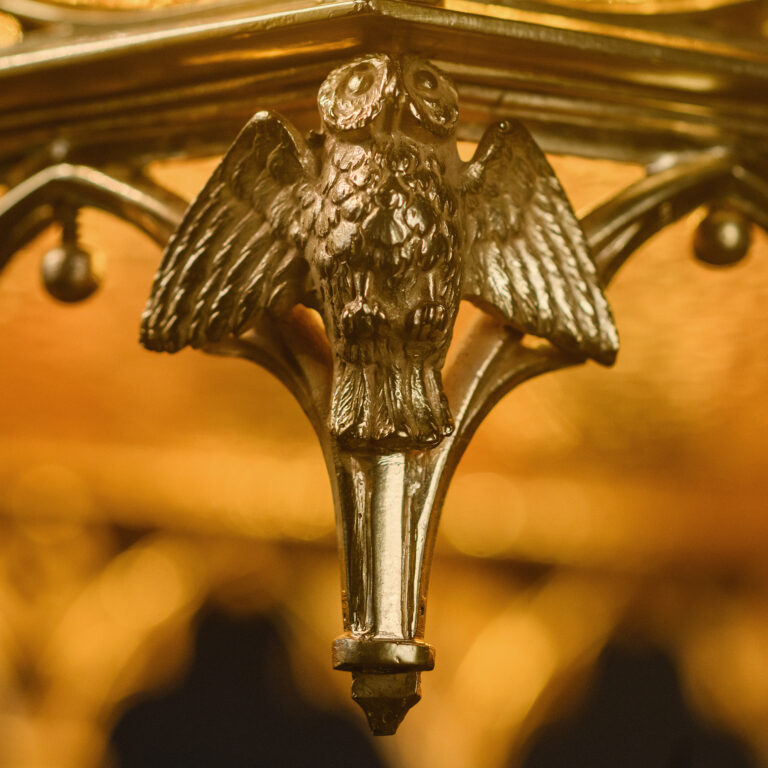
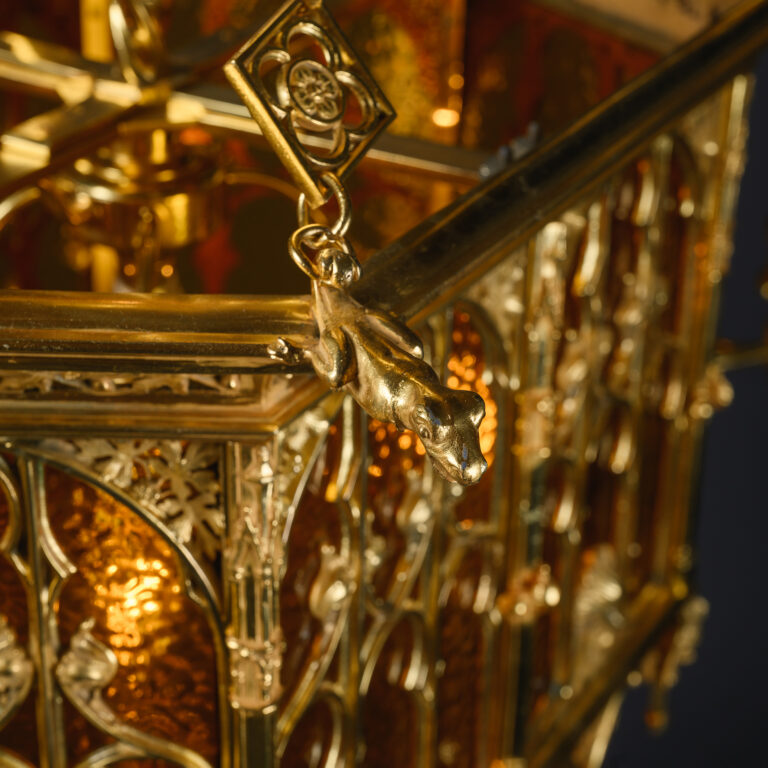
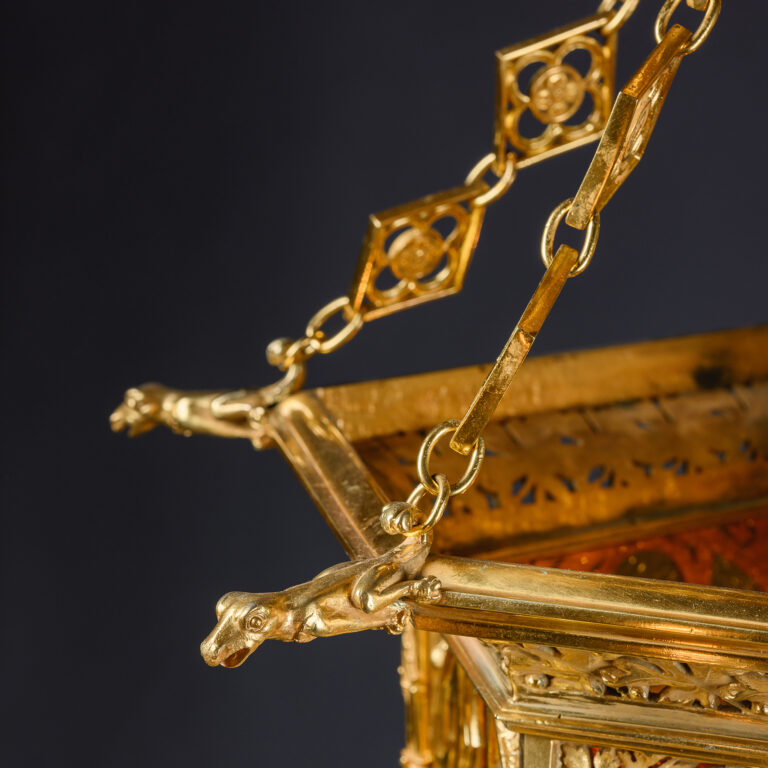
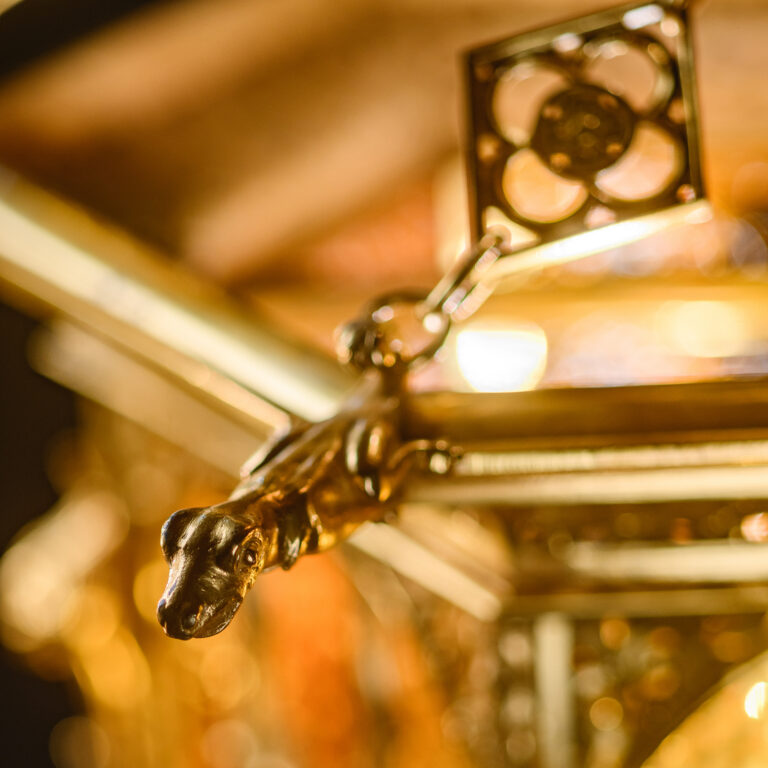
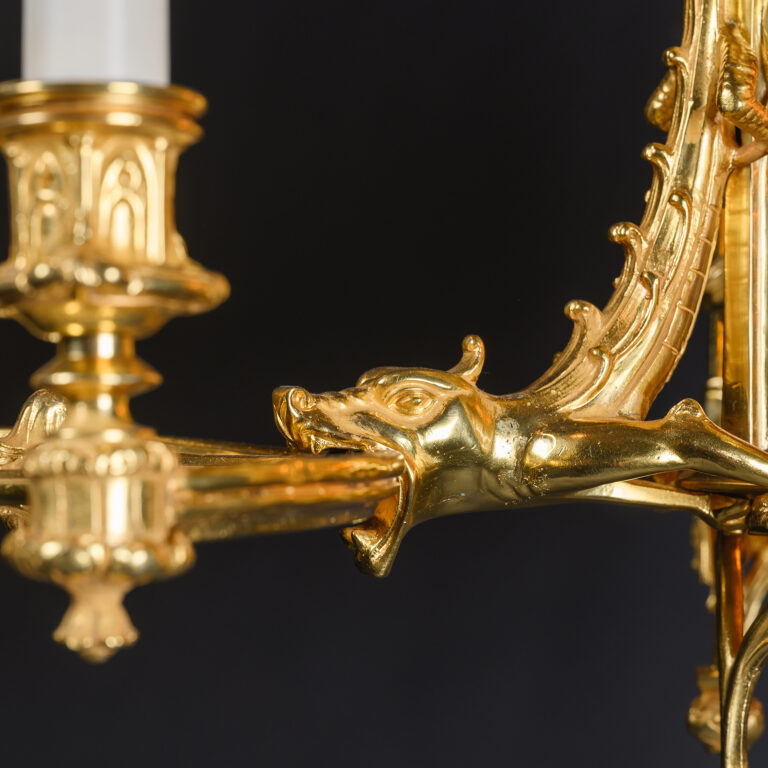
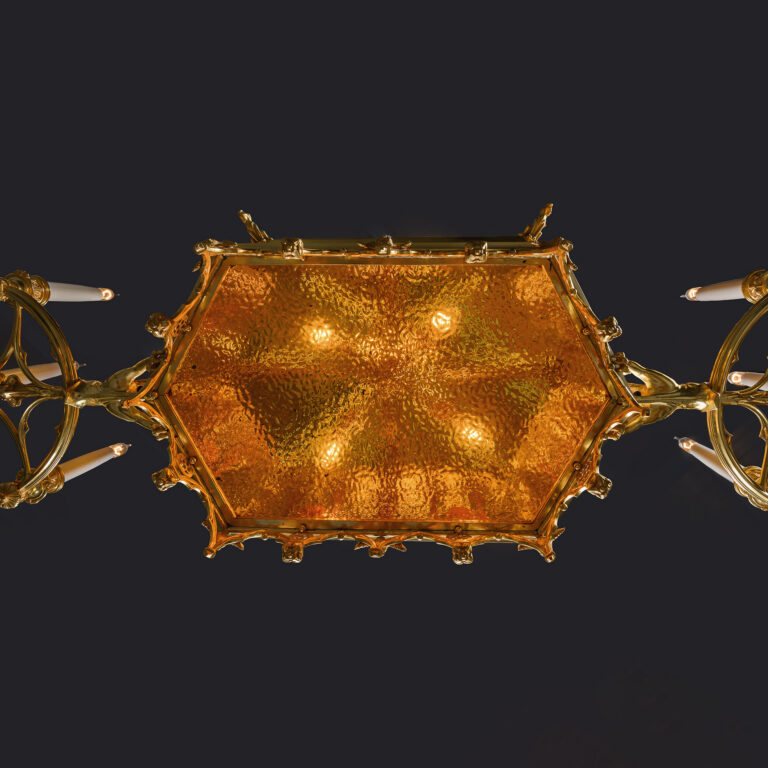
The hexagonal-shaped lantern with yellow glass tracery windows. Issuing gargoyle three-light candle arms to the sides. Chain hung from a ceiling rose modelled with owls above a smaller top lantern joined by a spirally twisted rod. Wired for electricity.
Stamped ‘LOUCHET’.
France, Circa 1900.
The Gothic Revival was an architectural and artistic movement that grew in England in the 18th and 19th centuries. Inspired by the medieval gothic cathedrals, the movement spread throughout Europe and the Americas. It was linked to Romanticism and the idea that there was a purity to medieval architecture that made it closer to God. In France, it was promoted by Eugène Viollet-le-Duc (1814-1879) who theorised on the subject and became famous for restoring medieval French landmarks, including Notre-Dame de Paris.

Louchet Frères
Paul Louchet (French, 1854-1936) exhibited at the Paris Salon from 1882 to 1931. He was a painter, engraver, jeweller and bronzier.
In 1878 he established, with Henri Louchet, the maison Louchet Frères which specialised in bronze-making. Paul was president of the French bronze manufacturers’ association. In 1884 he was joined by his brother Charles. They sign ‘Louchet Fondeur Paris’, ‘Paris Louchet Ciseleur’ and with the stamp ‘Louchet’.
Louchet Frères exhibited bronze works of art at the 1893 Chicago World’s Fair. Adopting the Art Nouveau style, they collaborated with Louis Majorelle, René Lalique and the Daum brothers. At the 1900 Paris International Exhibition they exhibited Art Nouveau bronzes and objects. At the Liège International Exhibition in 1905, Louchet exhibited jewellery and ceramics with gilt metal plating, vases and small bronzes, and were awarded a Grand Prix.

Louchet’s Stand in the French section of the Palace of Manufactures, Louisiana Purchase Exhibition, St. Louis 1904 World Fair. (D83313 St. Louis Public Library, Public Domain)
They had a shop at 3 rue Auber and premises at 20 rue Notre-Dame de Nazareth, then at 8 rue Boudreau from around 1905, from when until around 1920 Paul was succeeded by his son Robert Louchet.
Literature:
E. & R. Kashley, Nineteenth Century French and Western European Sculpture in Bronze, New York, p. 278.
Literature
E. & R. Kashley, Nineteenth Century French and Western European Sculpture in Bronze, New York, p. 278.